Portuguese
  Spanish


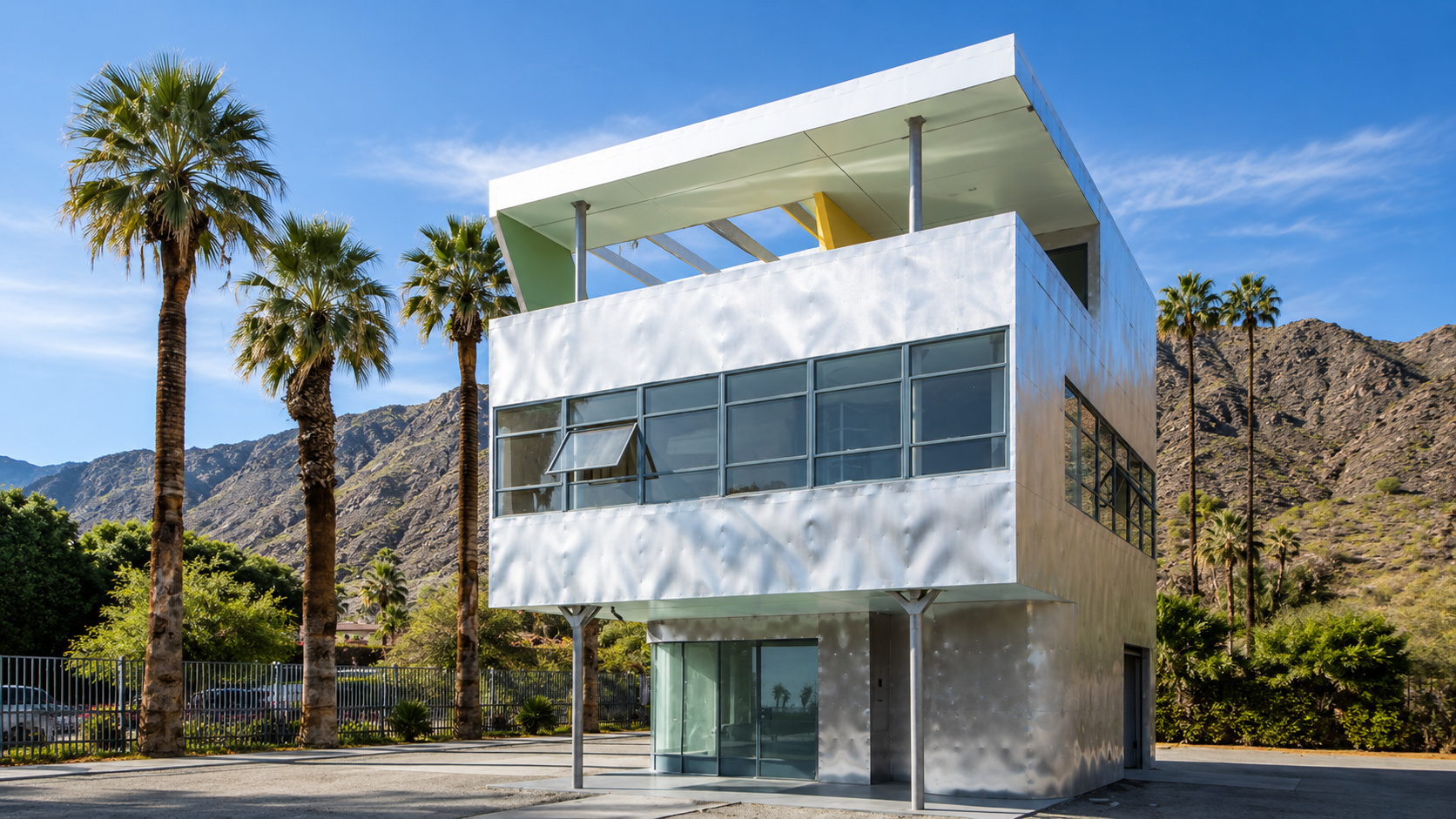

The Aluminaire House anticipated the idea of a prefabricated metal house, showed that rapid construction was already possible in 1931, used cheap industrial materials, and became a reference for those observing the advancement of modular housing today
A metal house from 1931 was erected in just 10 days, had three floors, and seemed to come from a much more advanced era. The Aluminaire House was born as a radical experiment in modern housing, made with industrial materials and designed for quick assembly.
The information was released by the Palm Springs Art Museum, California art museum. The construction was designed by A. Lawrence Kocher and Albert Frey, with about 111 square meters, five rooms, and a proposal that deviated from the domestic standard of the time.
The practical impact lies in the contrast with the present. While the construction industry still discusses faster, more economical, and efficient projects, this house showed, almost a century ago, an idea close to today’s prefabricated houses and demountable housing.
-
How to Prevent Brown Recluse Spider Bites: Common Hiding Spots and Free Tips to Reduce Risks

-
Natto: The Unusual Japanese Superfood Gaining Popularity on Social Media and Driving Record Exports
-
Brazilian Mayor Goes Undercover as Homeless for 24 Hours to Assess Public Services

-
15-Year-Old Entrepreneur Malu Lira Publishes 20 Children’s Books on Financial Education, Earns $500,000, and Expands Her Project to the Amazon Rainforest




A three-story metal house questioned the traditional way of building
The Aluminaire House emerged in 1931 with an appearance that broke with the common residential model. At that time, the domestic standard was still marked by wood, brick, and traditional ornaments.

The proposal was different. The house was conceived as a dwelling made with cheap industrial materials, metal structure, and quick assembly. Instead of resembling a common house, it resembled a solution created for the future.
This detail made the project intriguing. An entire metal residence, with three floors and five rooms, seemed like too bold an idea for the time, especially for treating housing as something that could be assembled with industrial parts.
Construction in 10 days anticipated the logic of current modular houses
The assembly in just 10 days is the point that most closely aligns the Aluminaire House with current discussions on rapid construction. Today, many people see modular houses as a modern solution, but this experience was already testing this path in 1931.
The logic was simple: reduce construction time, use ready-made materials, and make the building more efficient. The result was a compact, functional house with a completely different appearance from traditional residences.
The idea of a demountable dwelling also draws attention. The house went through dismantling, relocations, and risk of loss before being preserved. This trajectory reinforces how the project was unusual from the start.
Cheap industrial materials gave the house a look that seemed from another time
The Aluminaire House stood out because it did not try to hide its industrial origin. The use of metal and quick-assembly materials gave the construction a cleaner, more direct, and functional presence.

For those who saw the house in 1931, the look might have seemed strange. After all, a metallic residence strayed from the visual comfort associated with wood, brick, and common decorative details.
Even so, this choice is precisely what keeps the project relevant. The house showed that architecture could seek more practical solutions, with cheap industrial materials and less reliance on traditional methods.
Palm Springs Art Museum turned the house into a museum piece
Palm Springs Art Museum, California art museum, detailed the preservation and reassembly of the Aluminaire House as an exhibition in Palm Springs. The house ceased to be just an architectural experiment and came to occupy space as a historical piece.
This destiny helps explain its importance. The construction became known not only for its metallic appearance but also for representing an old vision of the future for housing.
After decades of changes and risk of loss, preservation gave new meaning to the project. The house began to show the public how the pursuit of quick construction and industrialized housing existed long before the popularization of modular homes.

The house from 1931 shows that innovation in construction was not born now
The history of the Aluminaire House dismantles the idea that industrialized construction is a recent topic. In 1931, Kocher and Frey were already testing a house made to be assembled quickly with industrial materials.
The project was about 111 square meters, five rooms, and three floors. This data helps to understand that it was not just a small demonstration structure, but a real proposal for modern housing.
The most curious thing is that the house seemed too advanced for its time. Today, this same aspect makes it a strong example of how ideas considered strange can become a reference decades later.
An old experience talks with the challenges of current civil construction
Civil construction is still looking for ways to reduce construction time, simplify processes, and use materials more efficiently. The Aluminaire House already touched on these points almost a hundred years ago.
The metallic house showed that a dwelling could be thought of as a set of pieces, with quick assembly and an industrial appearance. This concept appears today in debates about prefabricated houses, housing modules, and more agile constructions.
Therefore, the Aluminaire House remains relevant. It combines historical curiosity, architectural innovation, and a question that remains current: how to build better, faster, and with less waste?
The metallic house from 1931 became a museum piece, but its idea still seems alive. The assembly in 10 days, the use of industrial materials, and the futuristic look show that some old solutions remain very close to current challenges.
The case draws attention because it reveals a simple truth: not all innovation is born in the present. Do you think metallic and prefabricated houses can still change the way of living in the coming decades?