Portuguese
  Spanish


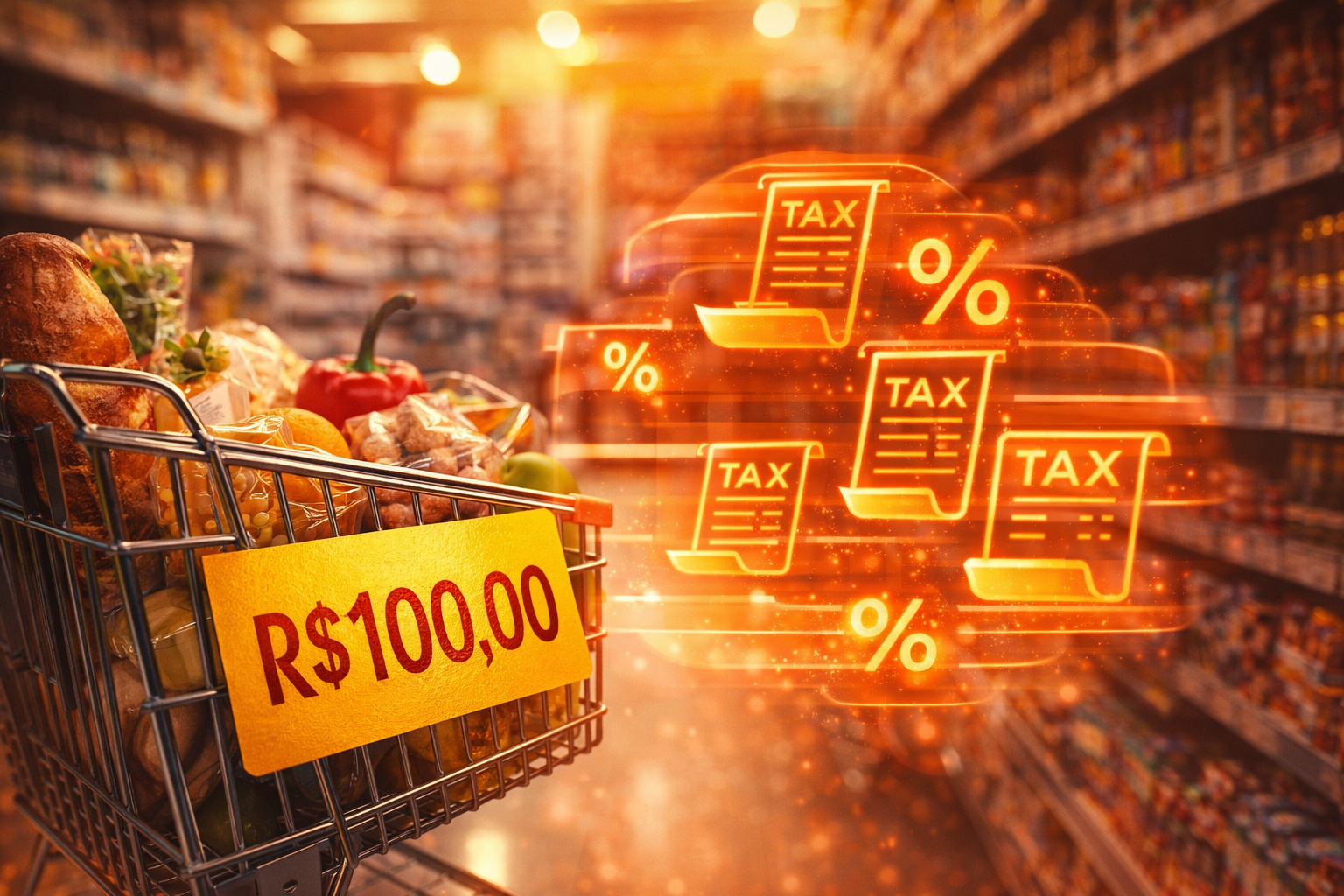

There is a Little-Known — and Extremely Powerful — Factor That Raises the Price of Just About Everything in Brazil Without Clearly Appearing on the Invoice: the Cascading Tax.
You enter the supermarket, fill up your car, pay your electricity bill, or buy an appliance and feel that everything is too expensive. The most common explanation is always the same: inflation, the dollar, crisis.
But there is a little-known — and extremely powerful — factor that raises the price of just about everything in Brazil without clearly appearing on the invoice: the cascading tax.
It is called “silent” because the consumer pays, but cannot see where it starts or where it ends.
-
Brazil to Issue “Panda Bonds” in China, Aiming to Raise Up to 5 Billion Yuan at Lower Interest Rates Than Dollar Debt
-
NATO Faces Internal Tensions as U.S. Pushes for Increased Defense Spending, Targeting 5% of GDP by 2035, with Warnings for Countries Near 2% Level

-
Brazil to Introduce B16 Diesel with Increased Soybean Oil Content for Trucks by 2026
-
Brazil’s July Bolsa Família Payments May Include Extra $150 and $50 for Families with Children, Pregnant Women, and Updated CadÚnico Registration


What Is the Silent Tax That Weighs on the Brazilian Consumer
Unlike a single visible tax, such as IPVA or IPTU, the silent tax acts throughout the entire production and distribution chain.
In Brazil, the main villain is the cascading taxation, which occurs when one tax is levied on another tax at various stages.
It Works Like This:
- the industry pays tax;
- transport pays tax on an already taxed value;
- the wholesale pays again;
- the retail passes all this on to the end consumer.
Result: the tax becomes part of the price, but no one explains to you how much you are really paying.

ICMS: The Main Protagonist of This Distortion
The ICMS, state tax on the circulation of goods and services, is the best example of this problem.
It levies on:
- industrialized products;
- fuels;
- electricity;
- transport;
- communication.
And the most shocking detail:
the ICMS is included in the calculation of other taxes, creating a snowball effect.
In some products, more than 30% of the final price is just tax — not counting indirect fees embedded along the way.
Energy, Fuel, and Food: Where the Impact Is Most Felt
The Brazilian feels this silent tax mainly in three areas of daily life:
Electricity
Even with Brazil having one of the most renewable energy matrices in the world, the electricity bill remains high.
A large part of the value comes from:
- state ICMS;
- sectoral charges;
- cross-subsidies embedded in the tariff.
Fuels
In the price of gasoline and diesel, taxes represent a huge slice of the final value — impacting all transportation of goods, increasing everything in the supermarket.
Food
The tax is not just on the final product, but:
- on fertilizers;
- on transportation;
- on refrigeration;
- on storage.
When the food reaches the shelf, it has already carried taxes at each stage of the process.

Why Almost Nobody Realizes That They Are Paying for All This
The Brazilian tax system is complex, fragmented, and not very transparent.
In practice:
- the tax does not appear clearly;
- the consumer cannot compare;
- the cost becomes “normal.”
While in other countries the tax is visible and direct, in Brazil it is diluted and invisible, making any societal reaction difficult.
How Much This Invisible Tax Costs the Consumer
Industry studies indicate that:
- a common product can carry up to 40% of its price in taxes;
- lower-income families feel the impact more, as they spend a larger portion of their income on consumption;
- the silent tax erodes purchasing power without warning.
In the end, Brazilians work more hours to buy less — without knowing exactly why.
Why This Affects the Country’s Growth
In addition to weighing heavily on the consumer’s pocket, the silent tax:
- reduces industrial competitiveness;
- raises export costs;
- discourages investments;
- increases informality.
It is one of the factors that help explain why Brazil is expensive even for those who produce here.
The Tax You Pay Without Seeing — and Without Discussing
While the public debate focuses solely on high prices and inflation, the silent tax continues to operate behind the scenes, raising costs and reducing real income.
And the most curious thing: most people don’t even know that they are paying all this.