Portuguese
  Spanish


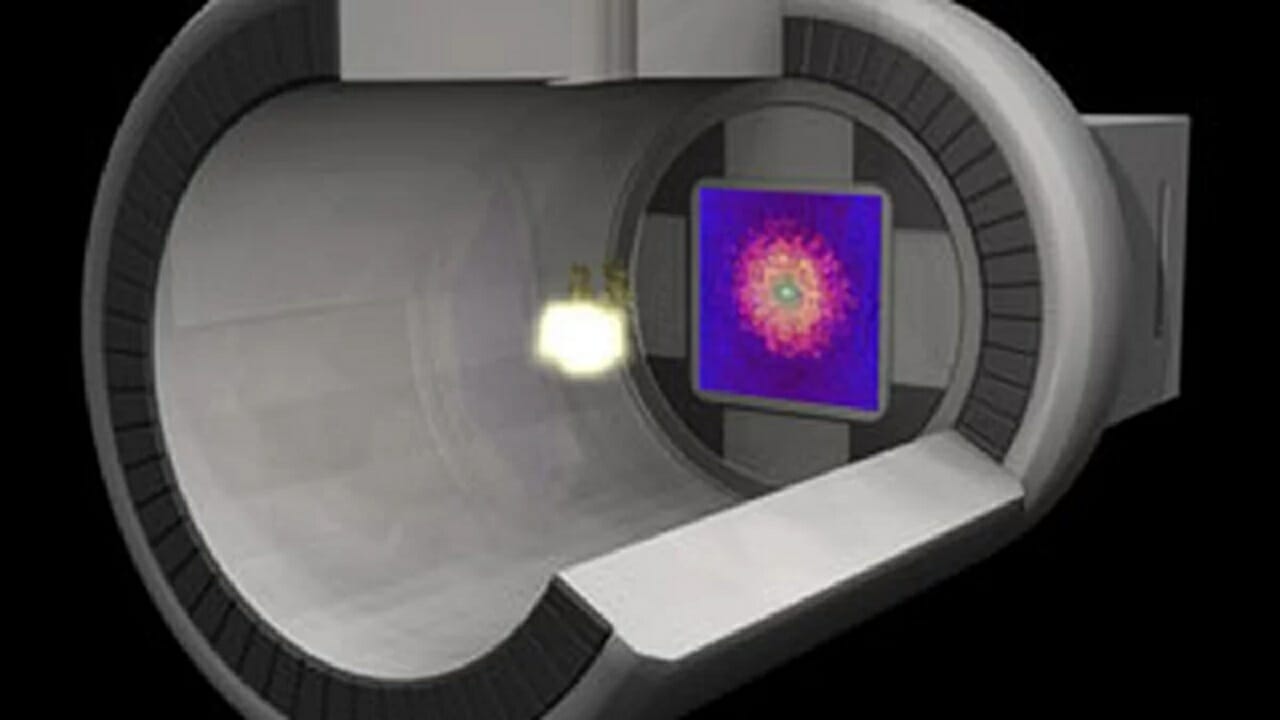

Scientists Concluded The Upgrades Of The World’s Most Powerful Laser, Capable Of Observing Electric Charges And Revolutionizing The Industry.
An X-ray laser, located in Menlo Park, California, developed to be the most powerful laser in the world, has just generated its first beams. The equipment was launched in 2009 and has recently been undergoing renovations to enhance its capabilities. The updates will enable the development of high-speed films of ultra-fast processes at subatomic levels, even allowing the observation of electric charges jumping around atoms during a chemical reaction.
X-ray Laser Produces 1 Million Pulses Per Second
The upgrade of the world’s most powerful laser, known as the Linac Coherent Light Source (LCLS), from the SLAC National Accelerator Laboratory, cost about US$ 1.1 billion and has been underway for more than a decade.
The renovations have increased the beam’s brightness by 10,000 times and the pulse rate per second by over 8,000, thus generating 1 million X-ray pulses per second. The new changes to the X-ray laser will allow for a clear view of rare molecular events that have never been observed before, creating entirely new possibilities.
-
16-Year-Old from Brazil’s Sertão Wins Young Scientist Award for AI Predicting Rainfall with 94.5% Accuracy to Aid Farmers

-
Netherlands Reports First Child Euthanasia Case Since Rule Expansion for Minors

-
Brazilian Innovator Survives Homemade Submarine Dive in Paraty Despite Hatch Leak and False Oxygen Alarm
-
China Develops Custom 140-Ton Electric Mining Truck with 770 kWh Swappable Battery, Deploys 290 Units in Xinjiang’s Largest Zinc Mine




The LCLS, now called LCLS-II, will enable research into quantum materials, unravel photosynthesis, and develop new electronics for computing systems. The original most powerful laser was the first equipment of its kind to be developed in the world.
Its operation combined the probing capabilities of high-energy ‘hard’ X-ray atoms with the speed of a laser. The laser featured a 3 km particle accelerator that sent electrons from a copper tube. These particles were pumped by two magnetic undulators, causing them to move back and forth and generate X-rays.
Check Out The Main Changes After The X-ray Laser Update
In the updated version, part of the copper tube was replaced with niobium cavities cooled to about -271 degrees Celsius. At this temperature, the material turns into a superconductor, transporting electrons with almost no resistance and making it possible to achieve the pulse rate more quickly. The scientific community is excited about the possibilities the laser renovations will provide.
Junko Yano, molecular biophysicist at the Lawrence Berkeley National Laboratory, stated that the upgrades will allow him to delve deeper into his research on photosynthesis, aiming to understand how this process occurs to mimic it in solar fuel production systems.
The completion of the renovations of the world’s most powerful laser was expected to occur in 2020; however, due to various factors such as the COVID-19 pandemic, its conclusion has been delayed. Currently, the SLAC team is excited about finishing the update and is evaluating research proposals from scientists around the world who are requesting to use the LCLS-II to expedite their studies.
Other Laser Studies
Scientists are constantly on the lookout for possible signs of extraterrestrial life. For this, it has become essential to develop analytical equipment that can be sent on missions and explorations without taking up much space. This time, a team of scientists developed a compact laser device that can contribute to these discoveries.
The device weighs less than 8 kg and can analyze samples from a location and point out biological signatures. It consists of two tools, one of which is a pulsed ultraviolet laser that can remove small planetary samples. The other tool is an Orbitrap, an analyzer that provides high-resolution data on the chemical composition of a sample.