Portuguese
  Spanish


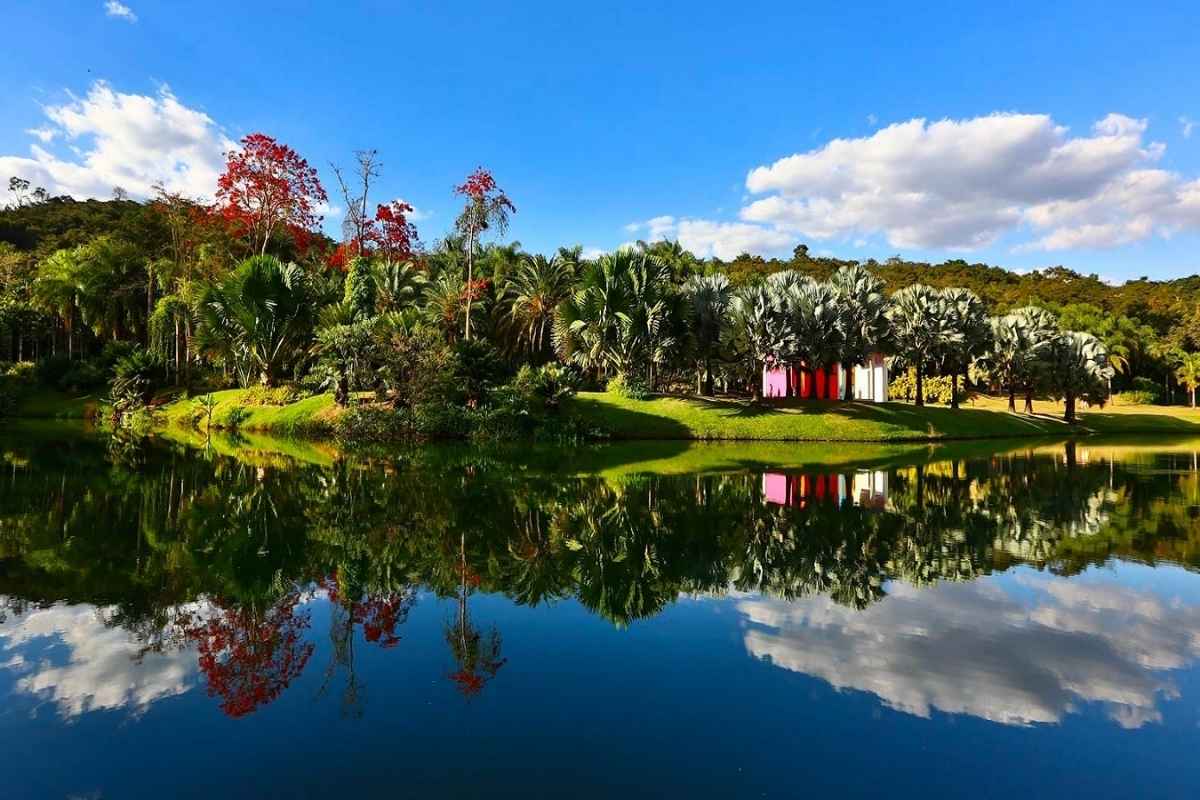

With an Area of 200 Football Fields and a World-Class Art Collection, the Inhotim Institute in Minas Gerais Solidifies Itself as the Largest Open-Air Museum on the Continent.
In the municipality of Brumadinho, Minas Gerais, lies one of Brazil’s most impressive cultural and natural treasures. The Inhotim Institute is not an ordinary museum; it is a unique experience that combines one of the world’s most important contemporary art collections with a garden of exuberant beauty, widely recognized as the largest open-air museum in Latin America.
According to the institute itself, which provides information on its official website and platforms like Google Arts & Culture, the history of Inhotim is one of a personal dream that transformed into a global heritage of significance. Its scale, its collection, and its proposal to integrate art and nature make it a unique destination on the planet.
The Farm in Minas Gerais That Turned into a Museum
The story of Inhotim begins in the 1980s on the private property of miner businessman Bernardo de Mello Paz. With the help of his friend, the renowned landscaper Roberto Burle Marx, he started transforming his farm into a vast and spectacular garden.
-
The Story of Jesús Malverde: The Legendary Mexican “Saint of Drug Traffickers” Known as a Robin Hood Figure

-
German Man Sells Everything, Embarks on 5,000 km Jet Ski Adventure Across 13 Countries with Girlfriend and Dog, Spending Over 7,000 Euros on Fuel

-
Strawberry Moon to Be Visible in Brazil on Monday (29th); Here’s When and How to Watch

-
Driver Crosses 100-Year-Old Railway Bridge Over Uruguay River, Encounters Rural Couple Preserving Traditional Farming Methods




At the same time, Paz was building an impressive contemporary art collection, focusing on major Brazilian and international names. The desire to share this space with the world materialized in 2006, when the Inhotim Institute was officially opened to the public.
The Scale of a Giant: A Museum the Size of 200 Football Fields
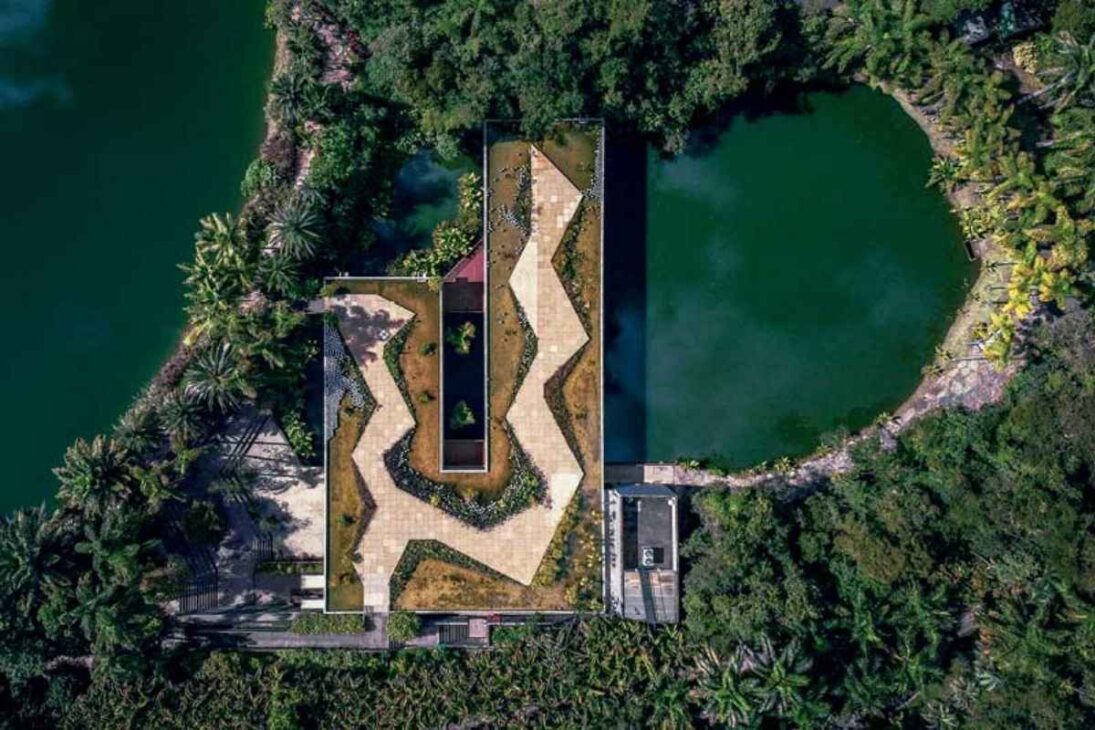
The grandeur of Inhotim can be measured in numbers. Its visiting area is 140 hectares. To give you an idea, this area is approximately equivalent to 196 official football fields.
In this vast space, there are 24 galleries and pavilions immersed in nature, many of which are dedicated to a single artist, creating a total immersion experience in the work.
The Contemporary Art Collection: A Dialogue with the Landscape
The heart of Inhotim is its art collection, with over 700 works by around 200 artists from different countries. The installations are arranged to engage with the landscape, creating a unique experience where art and nature blend.
Among the Brazilian artists, notable names include Hélio Oiticica, Lygia Pape, Cildo Meireles, and Adriana Varejão. On the international scene, the collection features works by artists like Japanese Yayoi Kusama and Danish Olafur Eliasson. Some of the most iconic works include the Sonic Pavilion by Doug Aitken, which captures the sounds of the Earth in real-time, and Narcissus Garden by Kusama, featuring her 500 floating steel spheres on a water mirror.
The Botanical Garden: One of the Largest Collections of Plants on the Planet
Inhotim is not only an open-air museum of art; since 2010, it has also been an officially recognized Botanical Garden. Its botanical collection is just as impressive as its art collection.
The garden houses around 4,300 species of plants, representing 28% of all known plant families on the planet. Inhotim is famous for having the largest collection of palm species in the world, with over 1,400 different types.
Inhotim in Perspective

The analysis of the facts confirms: the Inhotim Institute is indeed the largest open-air museum in Latin America. Its combination of area, scale of installations, and the unique integration of a world-class art collection with a globally significant botanical garden place it in a unique category.
It is important to note, however, that Inhotim is a private, non-profit institution founded by a private individual. Although it may receive public and private funding, its management is not governmental, which distinguishes it from major national museums maintained by the State.