Portuguese
  Spanish


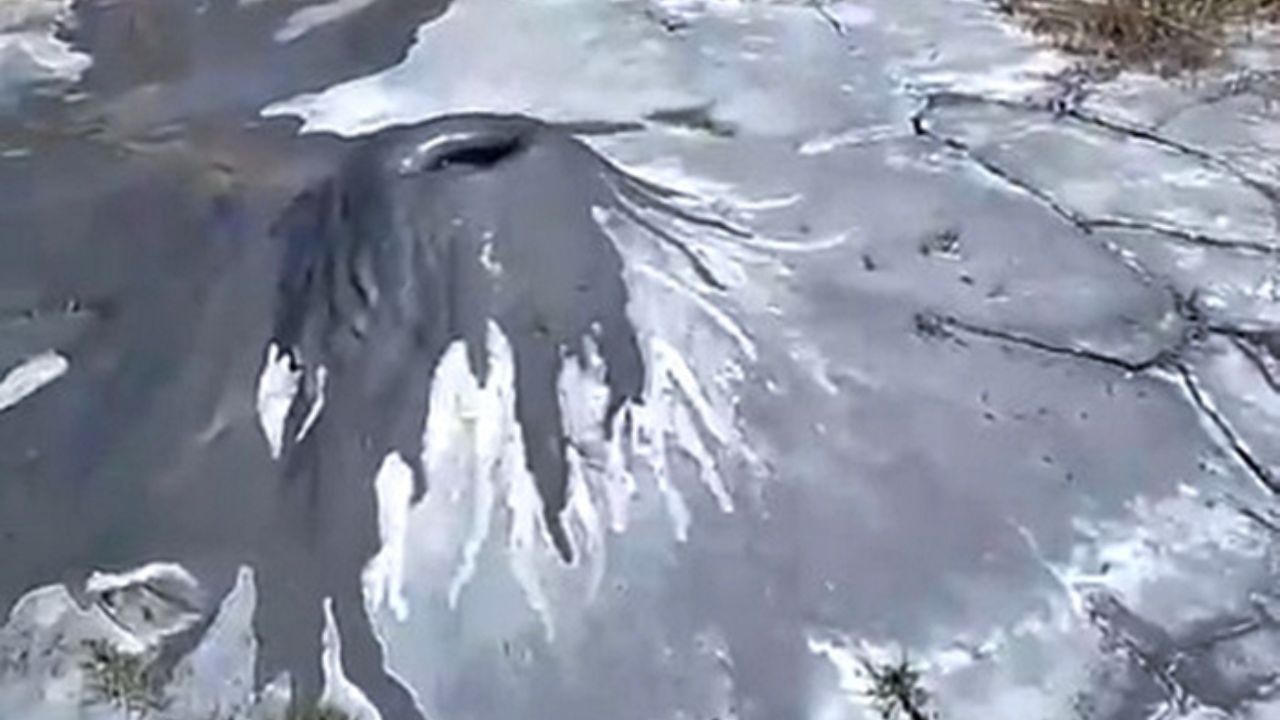

Structure About 2.5 Meters That Exhales Bubbling Mud Appears in Field and Intrigues Residents, But Experts Reveal the Truth Behind the Phenomenon.
Residents of a rural province in Cusco, Peru, were surprised by the sudden appearance of a small hill. The structure, nicknamed “the smallest volcano in the world”, exhales gases and bubbling mud. The phenomenon, although fascinating, has generated concern in the local community and attracted the attention of experts to explain its true nature.
Surprising Discovery After Thunder in the Region of Cusco
The emergence of the small structure occurred in the province of Canas, a rural area of Peru. Local residents reported having heard a loud thunder before discovering the novelty in one of their fields.
Quickly, the site became a point of curiosity. People approached to film and observe the unusual activity, which resembled a miniature volcano in full activity.
-
College Dropout Turned Window Cleaner Builds $1 Million Cleaning Business with Subscription Model After 18 Years of Door-to-Door Work

-
North Korean Soldier Risks Crossing One of the World’s Most Dangerous Borders, Detained in South Korea

-
Stingless Bee Honey from Brazil Can Cost Up to $120 a Liter, Surprises with Flavors of Wood, Citrus, and Even Cheese
-
Woman Claims to Have Spotted a Technical Pattern in Recent FIFA Tournaments, Predicts Possible World Cup Winner


What Is the Structure That Intrigues Residents?
The formation is approximately 2.5 meters tall. From its top, a mixture of mud, sludge, and hot gases constantly emanates. The material bubbles and flows down the sides of the small hill.
The images recorded by the residents themselves clearly show the continuous flow of material, creating an impressive and unusual scene for the region.
Reaction of the Local Community
According to The Sun, the reaction of the population was mixed. While many are fascinated by what they call the “smallest volcano in the world”, there is also a feeling of caution and apprehension. Residents keep their distance for safety.
They requested the presence of experts to analyze the structure. The goal is to understand the risks and obtain a clear explanation about the origin of the phenomenon that altered the local landscape.
What Is the “Small Volcano” Really?
An expert from the Geological, Mining and Metallurgical Institute of Peru (Ingemmet) analyzed the case. He clarified that the structure is not a traditional volcano. It is a “mud volcano”, also technically known as “salse”.
This phenomenon occurs due to the emanation of underground gases, such as methane. These gases mix with saline water and organic matter underground, being expelled to the surface. It is believed that the heavy recent rains in the region triggered the eruption. Although common in northern Peru, they are rare in Cusco.