Portuguese
  Spanish


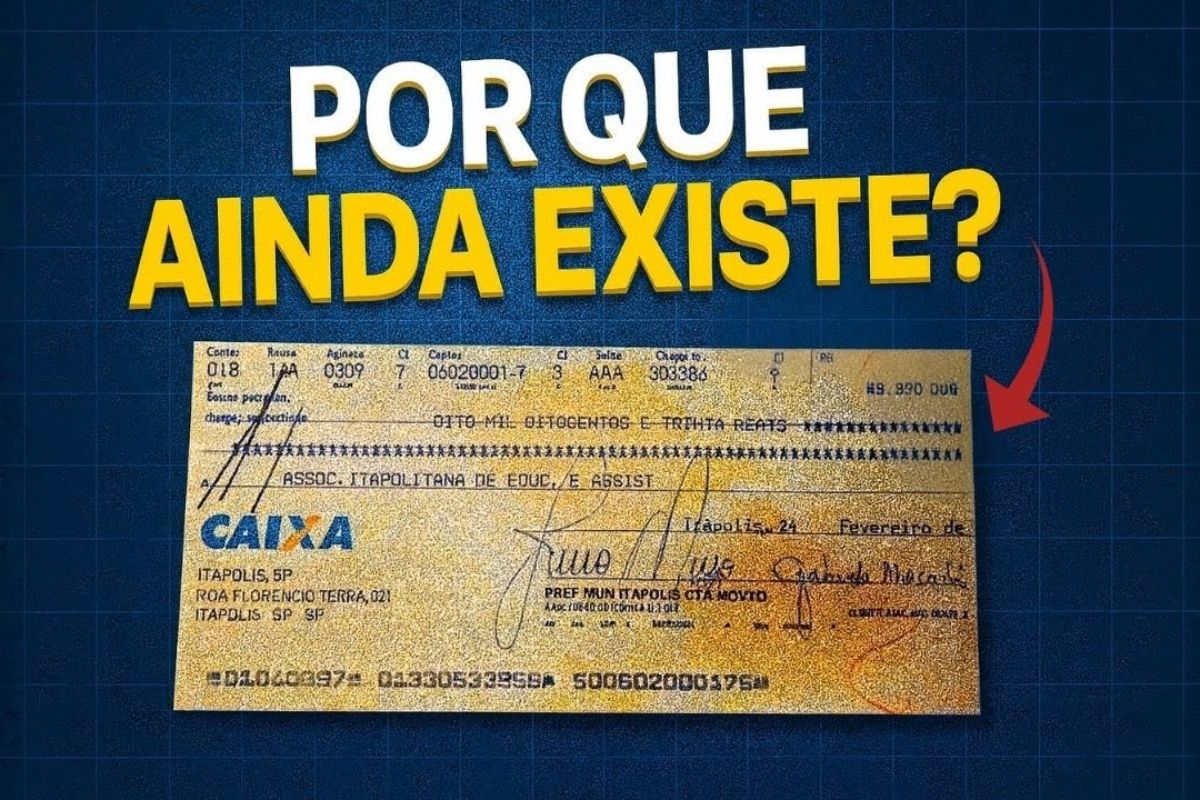

Even After the Advancement of Instant Transfers, Checks in Brazil Still Resist: More Than 130 Million Units Compensated in 2024, Amounting to Billions of Reais Moved. But What Keeps This Payment Method Alive in the Digital Age?
The check in Brazil seemed doomed to extinction with the emergence of Pix, contactless cards, and digital wallets. However, the numbers show a different reality: 137 million checks were compensated in 2024, moving billions of reais. This data reveals that, even amid financial digitalization, this piece of paper still holds relevance for part of the banking and business system.
The phenomenon intrigues economists and analysts: why does a medium considered obsolete still move such high values? There are practical explanations, such as its use for interest-free installments, but there are also cultural, structural, and even gray area reasons that help understand why checks continue to exist in the country.
The Peak of Checks: Status, Confidence and Bureaucracy
In the 1990s, the check was synonymous with credibility. Having a checkbook meant good banking relationships and financial respectability. In 1995, the country compensated 3.3 billion checks, moving over R$ 2 trillion, reflecting a pre-card and pre-internet economy.
-
White Martins CEO Plans $200 Million Investment by 2026, Boosts Focus on Industrial Gases and Green Hydrogen in Brazil

-
$1.5 Billion Project to Deploy 2,000 LNG Trucks and Establish Brazil’s Largest Gas-Powered Heavy Transport Network
-
Major Appliance Manufacturer Closes Factory in Argentina, Shifts Production to Brazil, and Restructures in Latin America with Mexico Closure, Investing Up to $165 Million

-
China to Revive $3.6 Billion Mega-Dam Project in Myanmar, Stalled Since 2011, Promising 6 GW Capacity and Completion in Eight Years


The post-dated check functioned as the “popular credit card”: it was possible to finance purchases interest-free, simply by agreeing on compensation dates.
For consumers, it was an accessible way to acquire higher-value goods; for merchants, it guaranteed sales. However, the system also created a permanent risk: the bounced check, which caused losses and distrust.
Still, variants such as the cleared and crossed check tried to balance security and practicality, consolidating the document as a pillar of Brazilian commerce.
The Decline and Partial Rebirth of Checks
With the advancement of banking technology, checks were replaced by cards and electronic transfers. Starting in 2010, the usage curve plummeted, and Pix delivered the final blow by making transactions instant and free.
Even so, the system still processes tens of millions of checks per year, with high average values.
The explanation lies in the profile of users. In many cases, traditional companies, freelancers, and regions with poor digital infrastructure still use checks as an informal credit medium.
Additionally, the instrument allows for personalized terms and negotiations, something that the digital system has not fully replaced in certain commercial transactions.
The Behind-the-Scenes of Persistence: The Practical Side and the Gray Side
Part of the strength of the check in Brazil comes from its flexibility. It allows for interest-free installments, works without formal credit approval, and reduces fees for those who receive, benefits especially valued in low-margin businesses.
In high-value operations, the check also replaces the transport of physical cash.
However, there is another less visible side: the lack of complete traceability. A bearer check can be cashed by anyone, making it difficult to trace origin and destination.
This makes the instrument an ambiguous tool: legitimate for those needing flexibility, but also useful in operations seeking to avoid taxes or digital controls.
Experts point out that this gray area helps explain why checks persist even in an increasingly digital environment.
Between Tradition and Distrust: The Brazilian Financial Culture

The check survives as a symbol of personal trust. In many regions, the signature and the word are still worth more than an app.
Small businesses, rural producers, and self-employed individuals continue to use checks out of habit, tradition, and distrust towards electronic means.
The slowness in digitalization in some areas of the country reinforces this reality.
For the financial system, however, the maintenance of checks imposes costs and risks. Fraud, counterfeiting, and defaults continue to occur, requiring constant monitoring.
Banks and the Central Bank have drastically reduced physical compensation and are betting on total digitalization, but the definitive end of checks still has no scheduled date.
The check in Brazil is now a survivor from another era: an artifact of trust amid the automation of finances.
It persists due to utility and convenience, but also due to structural and cultural gaps that the country has yet to overcome.
And you? Do you believe that the check still has a legitimate function in the current market, or should it be phased out completely? Share your perspective in the comments as it may reveal how Brazil handles the transition between paper and digital.