Portuguese
  Spanish


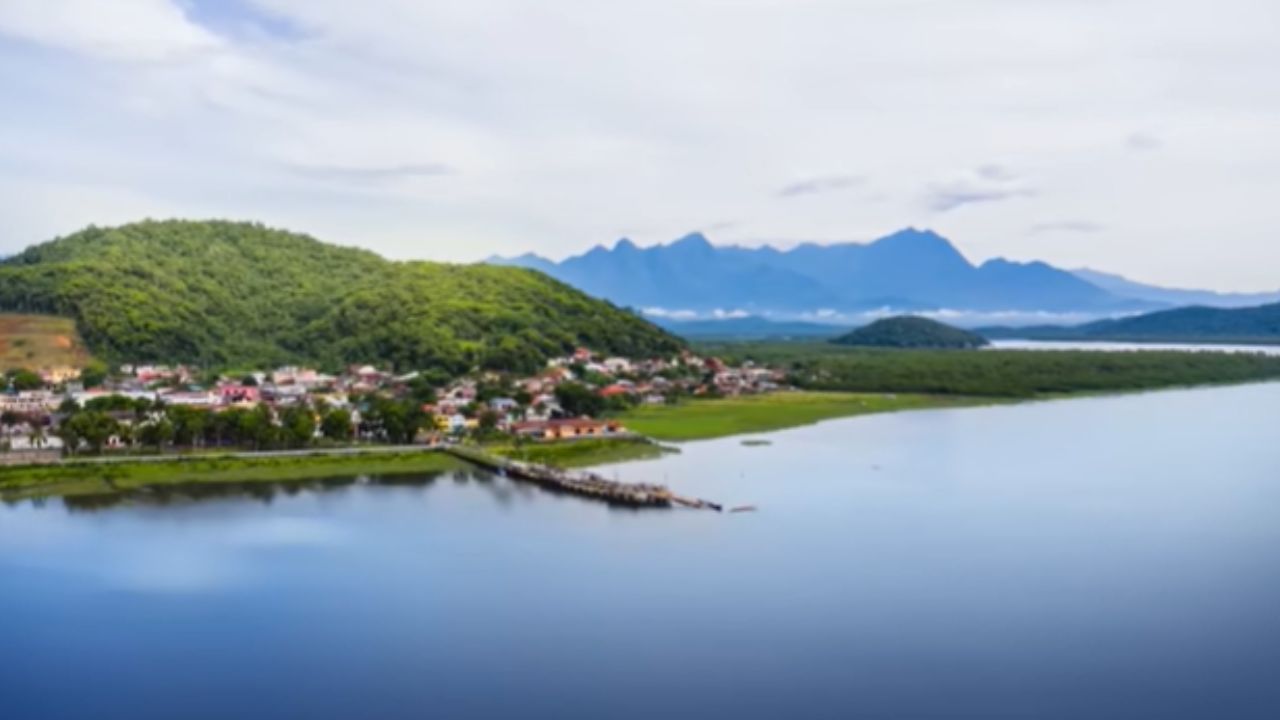


Understand The Historical And Geographical Factors That Made The Interior More Attractive Than The Coast Of Paraná, Despite The Importance Of The Port Of Paranaguá.
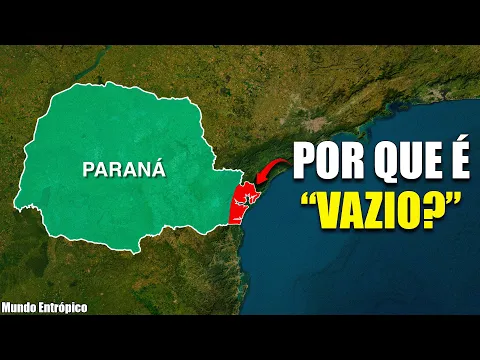
The coast of Paraná presents an intriguing demographic paradox. While neighboring states, such as Santa Catarina, concentrate nearly half of their inhabitants on the coast, Paraná sees only 2.6% of its population (around 300,000 people) living in the coastal area. With 11.8 million inhabitants in total, the state has developed its largest economic and population hubs far from the ocean, leaving the coast relatively isolated and underexplored.
But what explains this population “void”? The answer, according to an in-depth analysis by the channel Mundo Entrópico, is not singular. It involves a complex combination of imposing geographical barriers, such as the Serra do Mar, historical economic decisions that prioritized the interior, and a development model focused on seasonal tourism that failed to create a robust and permanent economy in the region.
The Historical Legacy That Ignored The Coast

The initial history of Paraná’s settlement started on the coast, with the founding of Paranaguá in 1648, propelled by a brief gold mining cycle in the 17th century. However, as detailed by Mundo Entrópico, the rapid depletion of mineral resources caused the colonial economy to shift to other activities. The extraction of yerba mate and cattle driving became the new economic engines, but their activities were concentrated in the Plateau regions, benefiting the interior and the capital.
-
The United Kingdom is transforming dog feces left on trails into gas to light a streetlamp through an unlikely and surprising project that shows how even one of the most rejected wastes in cities can generate energy.

-
Goodbye traditional Air Fryer: Philips surprises with a version featuring two baskets, steam cooking, self-cleaning, 9-liter capacity, recipe synchronization, and technology that makes food crispy on the outside and soft on the inside.
-
Russia has built a colossal radio telescope nearly 600 meters in size, composed of 895 metal panels in a gigantic ring, which uses the Earth’s rotation to capture invisible signals coming from the Sun and the most distant regions of the universe.
-
The United Kingdom launched 146 giant concrete coffins into the sea, towed the structures through the English Channel, and erected a colossal artificial port in front of the Normandy beaches in a few days.


When Paraná became an autonomous province in 1853, separating from São Paulo, the migratory flows that defined the state did not head toward the sea. Colonization projects and the search for fertile lands led European and Brazilian immigrants (notably from São Paulo and the Northeast) to the interior, especially the north and west. This resulted in the founding of now-prosperous cities such as Londrina, Maringá, and Cascavel. Curitiba solidified its position as the administrative center, while the coast, including the historic Antonina, entered stagnation after the end of the economic cycles that sustained it, retaining only small caiçaras and indigenous communities.
The Serra Do Mar: The Geographical Barrier That Isolated The Coast
The geography of the coast of Paraná is a determining factor for its low occupation. The Serra do Mar rises abruptly a few kilometers from the coast, creating a true natural wall that has historically hindered access. For centuries, the link to the plateau depended on steep trails. The first minimally structured road, the Estrada da Graciosa, only allowed carts in 1873, and a modern highway, BR-277, was inaugurated only in 1967.
In addition to the mountain range, the coastal plain is restrictive. With a narrow width, ranging from 10 to 20 km, it is composed of large swampy areas, mangroves, estuaries, and large bays (such as Guaratuba, Paranaguá, and Antonina), which fragment the territory. The channel Mundo Entrópico points out that these conditions hinder the expansion of large continuous cities, favoring only small and isolated urban centers.
The region also houses one of the largest remnants of primary Atlantic Forest in the country, with several conservation units (such as the Superagüi National Park and the Ilha do Mel Ecological Station) that legally restrict urban expansion. To this, add an unstable and humid climate, very close to the mountain range, which generates frequent and intense rains, responsible for natural risks such as landslides and floods, discouraging dense and continuous occupation.
The Success Of The Interior Vs. The Seasonal Economy Of The Beach
The contrast with other states is striking. In Santa Catarina, 44% of the population lives on the coast, in cities like Florianópolis, Itajaí, and Joinville. In Bahia, this number reaches 53%. In Paraná, the interior has thrived with diversified economies: industrial hubs in Londrina and Maringá, a benchmark agribusiness in Cascavel, and a robust axis in the Metropolitan Region of Curitiba (3.6 million inhabitants), home to multinationals like Bosch, Volvo, Eletrolux, and Renault.
On the other hand, the coast of Paraná has developed a fragile economy, highly dependent on seasonal tourism. Data from the 2022 Census indicate that towns like Matinhos, Pontal do Paraná, and Guaratuba have between 33% and 43% of their properties classified as “occasional use” (vacation homes). This pattern creates true “urban deserts” outside the summer season, with entire neighborhoods empty, compromising the stability of municipal revenue and the maintenance of quality public services throughout the year.
The Port of Paranaguá, while one of the busiest and most strategic in Brazil, has not reversed this scenario. As highlighted by Mundo Entrópico, it generates many jobs in logistics, but few in the local industry. Unlike what happened in the Itajaí Valley (SC), where ports (Itajaí, Navegantes) and industrial hubs (Joinville) integrated, the Paraná port remained a logistics enclave, without a coordinated regional development project that generated qualified jobs for the coastal population.
Can The Coast Of Paraná Change? Investments And Challenges
Recently, a state government effort seeks to change this historical dynamic. Structural investments, particularly the construction of the Guaratuba Bridge (which will eliminate dependence on the ferry) and the new Infrastructure Strip in Matinhos (focused on mobility, drainage, and accessibility) are seen as crucial. Although initially focused on tourism, these works may stimulate permanent occupation, which is already showing slight signs of growth.
Recent data (Census 2010-2022) show that municipalities like Matinhos and Pontal do Paraná have seen significant population growth (Pontal grew 45% during the period). This movement seems to be linked to the expansion of second homes, migration of retirees, and residents from the Metropolitan Region of Curitiba, in search of quality of life, lower costs, and driven by the advancement of remote work.
However, the channel Mundo Entrópico warns that just tourist infrastructure is not enough. For the coast of Paraná to cease being just a vacation destination and transform into a territory with continuous urban life, a consistent economic development project is vital. The region needs conditions to attract families and young professionals, which necessarily involves expanding the supply of qualified jobs and diversifying the economy, leveraging its strategic assets, such as the port, rich biodiversity, and proximity to the capital, for new sectors, such as marine biotechnology or renewable energy.
The paranaense coast faces a historical challenge: transforming its seasonal vocation into a permanent and robust economy. With the new investments in infrastructure, such as the Guaratuba Bridge, the region is facing a new opportunity.
Do you believe that the coast of Paraná will be able to develop like that of Santa Catarina, or will its vocation always be seasonal tourism? Leave your opinion in the comments; we want to hear from those who know the region in practice.