Portuguese
  Spanish


Scientists Analyze Samples From Chang’e-6, Revealing That The Soil On The Dark Side Of The Moon Is “Softer” And Different From Previous Samples
For the first time in history, Chinese scientists have revealed new and fascinating details about the dark side of the Moon. The samples collected by the Chang’e-6 mission brought back to Earth a type of lunar material never seen before, significantly different from the basaltic rocks collected from the visible side. What does this discovery represent for space science and the understanding of lunar evolution?
Chang’e-6 Mission
The Chang’e-6 mission, part of China’s ambitious space program, was the first to bring back samples from the dark side of the Moon, collected from the South Pole-Aitken basin — the largest, deepest, and oldest impact basin lunar.
This mysterious region, constantly facing away from Earth due to the lunar orbital sync, remained unexplored for decades.
-
Pennsylvania Mine Creates Ice in Summer Heat and Melts in Winter, Turning a Mountain Crevice into a Reverse Natural Refrigerator

-
China Accelerates Global Expansion of Robotics: From Smart Vacuums to Industrial and Humanoid Machines, Millions Exported to Over 150 Markets
-
Polar Air Mass to Hit Brazil: Temperatures to Plummet in Nine States, Near Freezing in the South with Frost Risk Until Monday
-
Chinese “dark factories” produce electric cars 24/7 with minimal human intervention, as Zeekr assembles 800 units daily, raising concerns in Brazil.





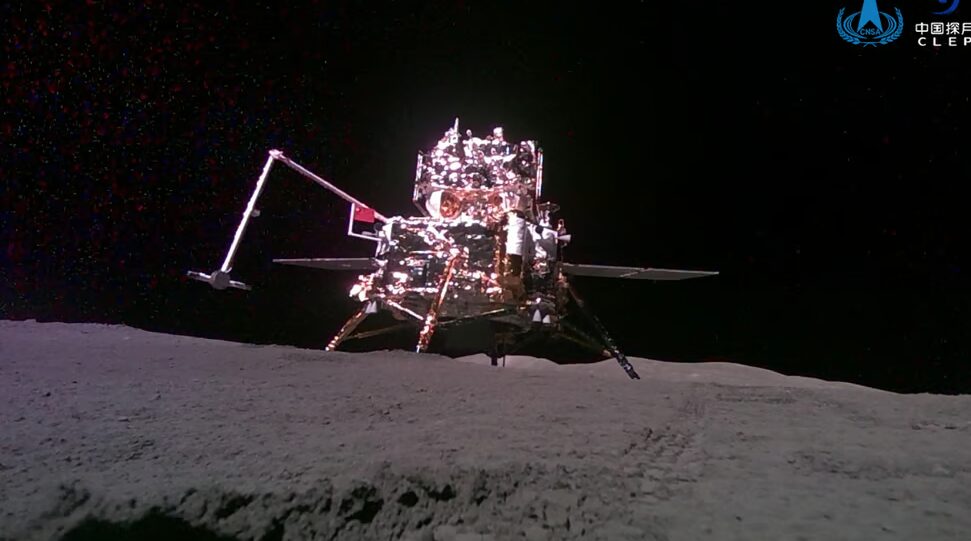
What was revealed by the samples is a unique mixture of basalts and newly ejected materials, very different from the volcanic rocks previously analyzed from the visible side.
The first analysis of these samples was published in less than three months after the material returned to Earth. Scientists from the Lunar and Deep Space Exploration Laboratory of the Chinese Academy of Sciences (CAS) revealed that the new samples contain surprising characteristics.
Compared to previous lunar samples, all from the visible side since the Apollo mission in 1969, the new samples are significantly more porous, looser, and contain a greater amount of clear particles, such as glass and feldspar.
Differences Between The Sides Of The Moon


One of the main discoveries of this mission is the clear difference between the samples from the visible and dark sides of the Moon. While samples from the visible side were primarily composed of basaltic volcanic rocks, those from the dark side exhibit a more complex composition.
The lower density of these samples indicates that they are much looser and more porous, suggesting that the lunar soil on the dark side is different in its nature.
Researchers believe that these differences may have arisen due to the choice of collection site and the frequency of impacts the dark side experiences.
As the far side of the Moon is always facing away from Earth, it is constantly bombarded by more meteorite impacts and other celestial bodies. This may have contributed to the mixing of materials on the surface, including deeper lunar soil exposed by the impacts.
Moreover, the landing site in the South Pole-Aitken basin is particularly interesting to scientists. It is believed that this basin, being a deep impact crater, provides access to soil samples from deeper layers of the lunar crust, something that previous missions on the visible side were unable to reach.
The Scientific Importance Of The Samples
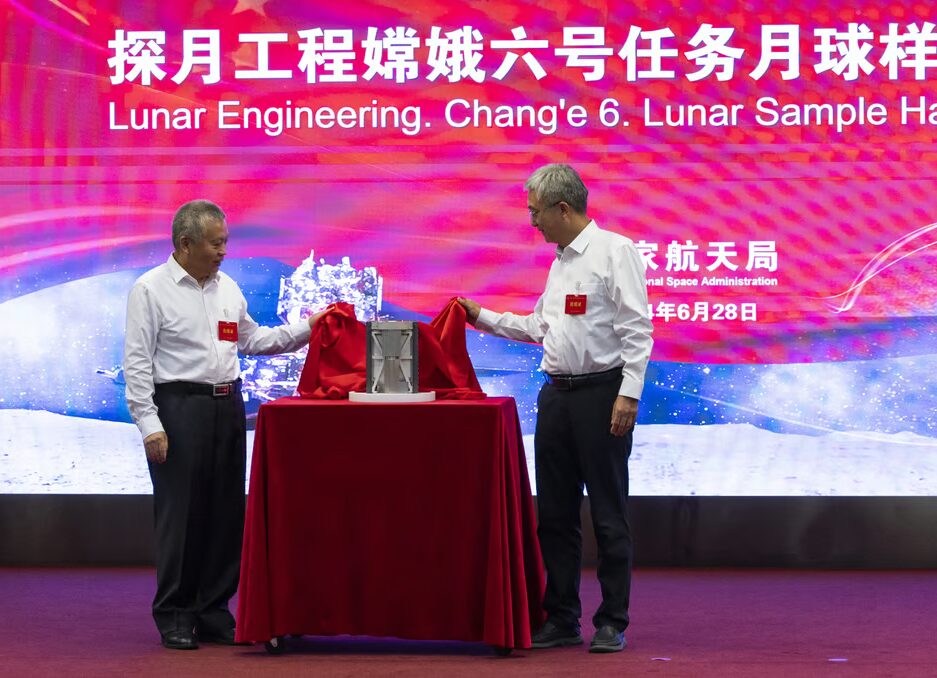
The team responsible for the Chang’e-6 mission samples considers this material highly significant for advancing scientific research. According to scientists, these samples provide a unique opportunity to study the history of volcanism on the dark side of the Moon and gain insights into the lunar crust of the highlands.
Non-basal fragments may also provide valuable clues about impact melt processes and possibly even about the deep lunar mantle.
These discoveries expand our understanding of the geological evolution of the Moon and shed light on the fundamental differences between the two sides of the satellite.
According to researchers, samples from the visible side, collected by previous missions, do not capture the full geological diversity of the Moon. Therefore, studying both sides of the lunar surface is essential for a more comprehensive understanding of the origin and evolution of Earth’s natural satellite.
Impacts On Planetary Science
The collection of natural lunar samples has played a crucial role in planetary scientific research. Each new sample recovered enhances existing knowledge about the Moon and its role in the evolution of the solar system.
In 2021, for example, scientists discovered that the Chang’e-5 mission recovered the youngest rocks ever found on the Moon, formed from volcanic magma about 2 billion years ago. This updated the information from the Apollo missions, which suggested that lunar magmatism had ceased about 3 billion years ago.
The samples from Chang’e-6 may bring even more updates to scientific knowledge, providing fundamental data for future research on the Moon’s early evolution, its magnetic field, and the differences between the visible and dark sides.
The samples collected by the Chang’e-6 mission represent a milestone in lunar exploration and the advancement of planetary science. Ongoing research, still in its early stages, could revolutionize our understanding not just of the Moon, but also of the formation and evolution of the solar system as a whole.
Scientists around the world are eagerly awaiting the next analyses, which could offer new theories and concepts about the origin of our natural satellite.
This mission marks a significant step for China in leading space exploration and highlights the importance of international cooperation in advancing lunar and planetary science. The Moon still holds many secrets, and each new sample brings us a little closer to unveiling its mysteries.