Portuguese
  Spanish


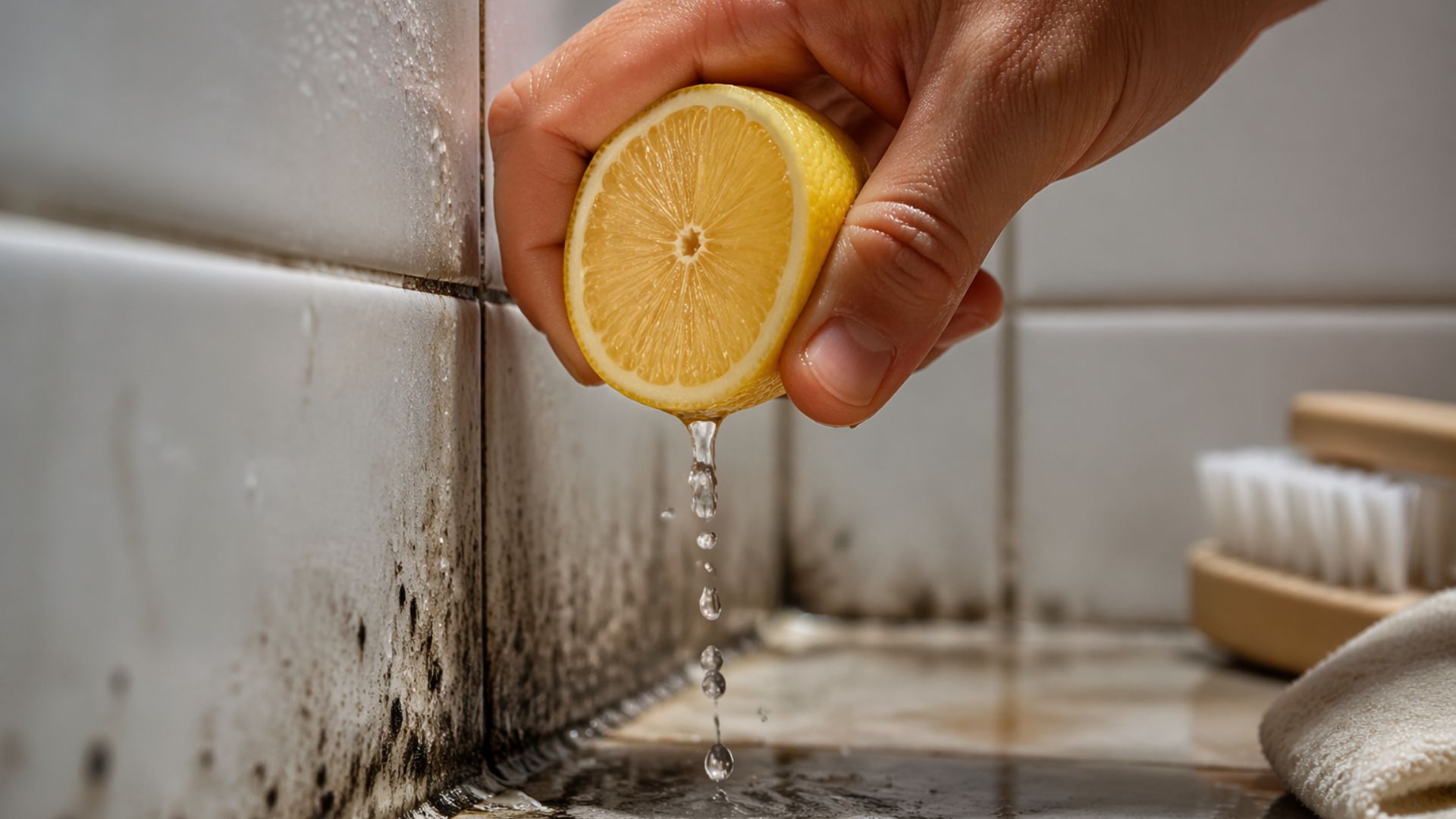

Home remedy with lemon draws attention for the promise of reducing odors and stains in bathroom corners, while the actual effectiveness depends on adequate ventilation, type of surface, and strict moisture control, factors that directly influence the presence of mold in these environments.
The use of lemon in cleaning bathroom corners has gained traction as a domestic alternative to reduce musty smells and remove dirt adhered to grout, but its effectiveness depends more on the conditions of the environment, ventilation, and proper drying than on a deep disinfecting action.
According to guidelines from agencies such as the EPA and CDC, mold control begins with moisture removal, mechanical cleaning, and complete drying of affected areas, especially when there are porous surfaces where microorganisms tend to adhere more easily.
Inside bathrooms, corners accumulate condensation, splashes, and less air circulation, creating ideal conditions for water retention on surfaces like grout, aged silicone, and rough finishes, which favors the emergence of dark stains and persistent odors.
-
Thailand Converts 8 Tons of PET Bottles into 3,500 School Backpacks, Showcasing Circular Economy with Over 40 Factories Involved

-
Mysterious Bats Spotted in Paris’s Père Lachaise Cemetery, Drawing Tourists to the “Vampire Cemetery”

-
From Selling Street Food to Leading a $300 Million Construction Firm: The Journey of a Brazilian Entrepreneur

-
Abandoned Penthouse in Houston Reveals Million-Dollar Suite with 24-Karat Gold, Tiffany Crystals, and Opulence Even Elvis Might Have Snubbed




This behavior explains why darkening often occurs first in these areas and why the smell of a closed environment lingers longer, as evaporation occurs slowly and moisture remains active for extended periods.
In addition to visible water, porous materials accumulate organic residues, soap remnants, and microscopic particles, forming an environment conducive to the proliferation of microorganisms that settle not only on the surface but also in small cavities of the material.
According to the EPA, fungi can grow in internal spaces and crevices of these materials, making complete removal difficult when cleaning only addresses the outer layer, without reaching areas where growth remains active.
Why bathroom corners darken faster

The explanation is mainly related to the dynamics of air and moisture in closed environments, where areas with less circulation tend to retain vapor for longer, hindering the natural drying of surfaces after bathroom use.
When water remains on walls, floors, and joints between tiles, it creates a favorable environment for the development of biofilms and stains, accelerating the darkening process and making these areas more susceptible to visual degradation.
In this context, common fungi in indoor environments emerge, including species from the genera Cladosporium, Aspergillus, and Penicillium, often associated with places of high humidity and low ventilation, although not every dark stain represents exactly the same organism.
Still, the relationship between persistent humidity and fungal growth is widely recognized, being one of the main factors that explain the recurrence of stains even after frequent cleanings with conventional products.
The characteristic odor of these spaces is not only linked to stagnant water but also to microbial activity on accumulated residues, especially when cleaning only removes the superficial layer without eliminating the source of continuous moisture.
For this reason, the smell tends to return within a few days if the conditions that favor water accumulation and low air circulation remain unchanged within the environment.
What the acidity of lemon really does
Lemon has relevant acidic characteristics, with a pH generally ranging between 2 and 3, in addition to a variable concentration of citric acid that can reach approximately 49 grams per liter, depending on the variety and growing conditions.
This acidity helps dissolve mineral residues and some of the dirt adhered to surfaces, which can improve the appearance of grout and reduce odors associated with the accumulation of organic matter.
However, there is no solid basis to claim that lemon, on its own, is capable of deeply disinfecting the bathroom or eliminating colonies established inside porous materials, where superficial cleaning does not easily reach.

Furthermore, the domestic use of lemon does not replace practices recommended by health authorities, which include cleaning with detergent, possible use of specific solutions, and, above all, the physical removal of contaminated material.
In this process, scrubbing the surface, removing visible residues, and ensuring immediate drying remain fundamental steps to interrupt the cycle of mold proliferation.
Another relevant point involves the comparison with vinegar, often cited in contexts of domestic cleaning, but which does not support the idea that lemon is significantly more acidic in all situations.
As the pH of vinegar is also low and varies according to the formulation, the difference between the two products does not justify broad promises of deep disinfection on porous surfaces.
Where lemon can help and where it does not solve
On washable surfaces and without advanced wear, lemon can act as a cleaning aid, helping to remove light dirt, reduce odors, and improve the visual appearance of areas affected by accumulated residues.
Still, more consistent results appear when the use of lemon is combined with scrubbing, rinsing, and complete drying, as mechanical action plays an essential role in the effective removal of dirt.
On the other hand, in deteriorated grout, old silicones, or places with constant infiltration, the tendency is for the problem to return quickly, regardless of the product used for cleaning.
In these situations, porous materials may be compromised in depth, making it difficult to completely eliminate mold without more structured intervention, such as replacing the affected material.
This pattern explains why some bathrooms appear to be clean right after cleaning but quickly show stains and odors again, especially when moisture remains present.
With the repetition of this cycle, the surface accumulates water again, drying remains incomplete, and the environment becomes favorable once more for the proliferation of microorganisms.


Moisture control is more important than any product
Mold prevention is directly linked to moisture control, being this factor more decisive than the choice between lemon, vinegar, or conventional disinfectants used in the household routine.
Measures such as improving ventilation, using exhaust fans, fixing leaks, and drying surfaces after using the bathroom contribute more effectively to preventing the reappearance of the problem.
Additionally, regular cleaning of grout and critical areas reduces the accumulation of residues that serve as a base for the growth of microorganisms in humid environments.
In this scenario, lemon can be considered a complementary resource, useful in certain situations, but insufficient as a standalone solution to eliminate mold in depth.
The available evidence indicates that, without moisture control and proper removal of contaminated material, the tendency is for stains and odors to return, keeping the cycle active within the home environment.