Portuguese
  Spanish


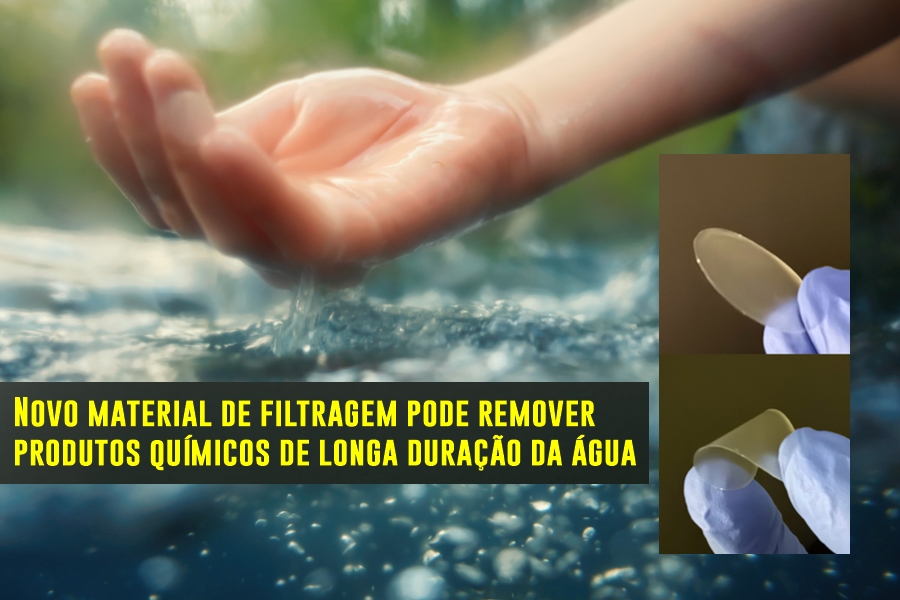

Revolutionary Innovation: MIT Develops Nature-Inspired Filtration Material Capable of Eliminating Persistent Chemicals from Water, Bringing a Sustainable Solution for Purification
Researchers at MIT have developed a new filtration material based on natural silk and cellulose, capable of removing contaminants, including the so-called “forever chemicals” and heavy metals, from water. This innovation is a promising solution to the growing problem of water contamination by chemical compounds, which are widely used in modern technology and found in various consumer products.
The “forever chemicals,” also known as PFAS (perfluoroalkyl and polyfluoroalkyl substances), are notoriously difficult to remove from the environment. They are present in products such as cosmetics, food packaging, water-repellent clothing, firefighting foams, and non-stick coatings.
A recent study by the Centers for Disease Control and Prevention in the U.S. revealed that 98% of tested individuals had detectable levels of PFAS in their blood, representing a growing concern for public health.
-
New Study Finds Brief Stress Episodes Can Alter Blood and Increase Risk of Clot Formation

-
Ukraine Escalates War Efforts with Plan to Deploy 25,000 Ground Drones, Test Phantom MK-1 Humanoid Robot, Use Armed Mini-Tanks, and Expand Automated Attacks up to 15 km from Frontline

-
New Superfiber Developed by Imperial College Researchers and Approved by the EU Promises to Increase Satiety and Help Prevent Weight Gain
-
Harvard Researchers Develop Biological Clock to Estimate Life Expectancy, Potentially Transforming Human Aging Studies


According to Benedetto Marelli, a professor of civil and environmental engineering at MIT, and Yilin Zhang, a postdoctoral researcher and lead author of the study published in the journal ACS Nano, the new material offers a nature-based solution using silk proteins and cellulose, two natural and sustainable components.
The initial technology that led to the development of this filtration material was originally designed to combat seed counterfeiting but has evolved into an application for water treatment.
The Growing Problem of Forever Chemicals
Recent studies have shown that PFAS chemicals are contaminating thousands of sites in the U.S., and the United States Environmental Protection Agency estimates that the cost of removing PFAS from drinking water could reach US$ 1.5 billion per year.
Current solutions for removing PFAS are limited, often ineffective, or very costly. Zhang explains that due to this limitation, the development of a solution based on natural materials like silk and cellulose has significant potential to be more economical and sustainable.
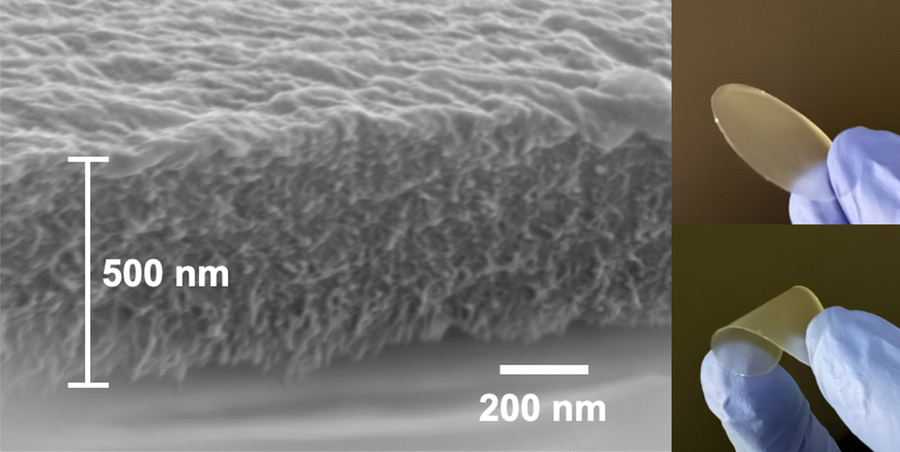
The development of the hybrid material began with the creation of silk nanofibrils, an environmentally benign process at room temperature, where silk proteins were processed into small uniform crystals.
However, the initial attempts to use only these nanofibrils were not effective in removing contaminants. The team then added cellulose, a widely available substance, to improve the material’s effectiveness.
The Union of Silk and Cellulose
The combination of cellulose and silk was key to the success of the filtration material. Cellulose, which can be obtained from agricultural wood pulp waste, was used to create nanocrystals that served as “seeds” to organize the silk molecules. This allowed for the formation of a hybrid material with enhanced properties both for contaminant removal and for resistance to fouling, one of the main problems with current filtration membranes.
One of the most important discoveries was that cellulose imparted antimicrobial properties to the material, which prevents the formation of biofilms of bacteria and fungi, responsible for degrading filtration membranes over time. This antimicrobial feature can significantly extend the lifespan of filters, reducing costs and increasing the efficiency of the purification process.
Promising Performance and Next Steps
In laboratory tests, the new filtration material proved to be significantly more effective than commonly used activated carbon filters. It was able to remove orders of magnitude greater amounts of contaminants from water, such as metal ions and persistent chemicals, outperforming traditional materials across various metrics.
Although it is a proof of concept, researchers are optimistic about the potential to scale up production of this material for broader applications, including large-scale filtration systems for cities and water supply systems. However, there are challenges to overcome, such as the durability of the material and the availability of silk proteins in sufficient quantities to meet global demand. Marelli mentions that silk can be obtained as a byproduct of the textile industry, but he is also exploring protein alternatives that could serve the same role at a lower cost.
Potential Applications
Initially, the team expects the material to be used in small household filters, such as those connected to kitchen faucets. However, Zhang envisions the possibility of scaling it up for larger systems, such as municipal water supplies, as long as tests ensure that there is no risk of introducing contamination into the water supply.
A positive aspect of this new material is that both silk and cellulose are safe substances for food use, which makes the risk of contamination almost non-existent. This puts it in an advantageous position compared to other filtration methods that use synthetic materials, which may eventually release harmful chemicals during the purification process.
With the increasing need for effective and sustainable solutions for water treatment, the filtration material developed by MIT is a promising innovation. Combining silk and cellulose, abundant and low-cost materials, it not only offers an efficient way to remove dangerous contaminants from water but also has the potential to surpass current options in terms of durability and environmental impact. If scaled for mass production, this new material could transform the way we approach water purification in the future.