Portuguese
  Spanish


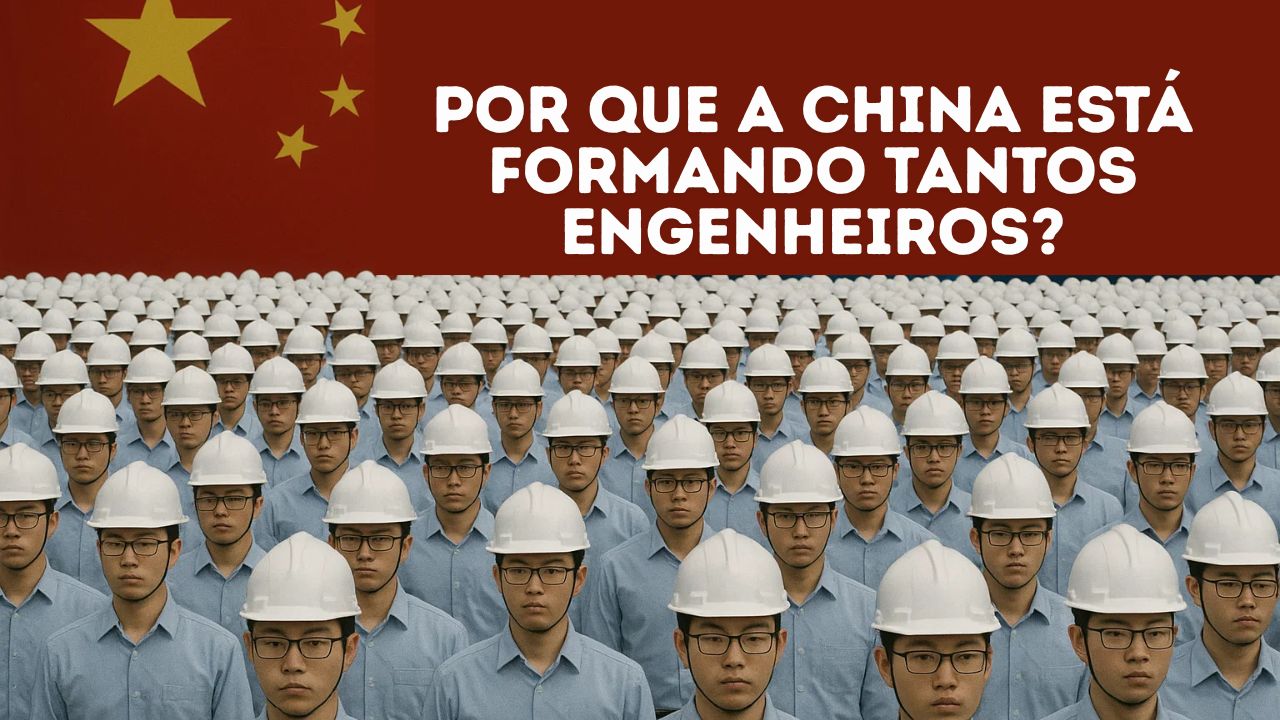


China Trains More Than 3.5 Million Engineers Per Year and Leads the Artificial Intelligence Revolution with a Decades-Long Educational Plan.
Beijing has a plan — and it’s working. While the world viewed China as the center of global industrial production, the country was quietly investing in something much more strategic: large-scale scientific education. After four decades of focus on areas such as science, technology, engineering, and mathematics (the so-called STEM fields), the results are starting to become clear: China is becoming the largest hub of innovation in artificial intelligence (AI) in the world.
Currently, the Asian country trains more than 3.5 million engineers per year.
It is a massive workforce, shaped to drive emerging technologies, fuel digital ecosystems, and compete with the giants of Silicon Valley.
-
Brazilian Researcher Uses Low-Cost Sensors to Measure Cyclists’ Pollution Exposure in São Paulo

-
18 Iron Age gold coins discovered by a teacher using a metal detector in a Suffolk field sell for £33,200 at auction, exceeding estimates.
-
Chinese Farmer with No Formal Education Builds Over 60 Homemade Robots from Scrap Metal, Each Bearing His Surname
-
Telescope Set to Discover 100,000 New Planets Arrives at Launch Site, Ushering in a New Era of Astronomy


The Turning Point Begins in the Classroom: Education as the Engine of Transformation
The process of transforming China into a technological powerhouse began in the late 1970s.
After the end of the Mao era, the country needed to modernize — and saw science as a central tool for that.
From then on, a series of educational reforms placed technical and scientific courses at the center of the national strategy.
The government invested in training young people, including sending thousands of them to Western universities with the goal of learning, specializing, and then returning to apply that knowledge back in China.
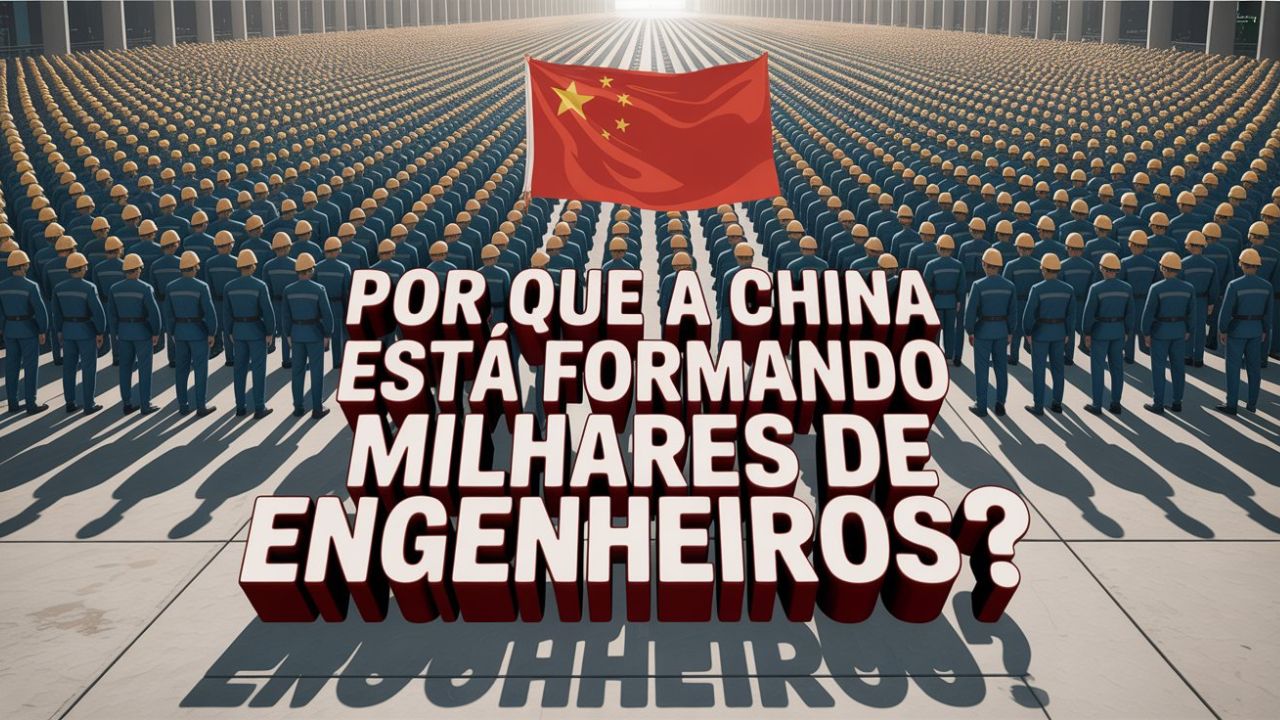
These professionals returned with new academic standards, new visions, and a clear objective: to transform the scientific foundation of China.
They were nicknamed “hai gui” — or “sea turtles” — referring to their return to their homeland with a new arsenal of knowledge.
Chinese Universities Gain Global Recognition
This investment resulted in a leap in the quality of Chinese institutions. In the 2000s, universities such as Tsinghua and Beijing began to rank among the most productive in the world.
Their scientific publications became international references — and this didn’t happen by chance.
China doubled its investment in education in just a decade.
Today, over 4% of its GDP goes to the sector. By prioritizing engineering, computer science, data science, and areas related to AI, the country created a true factory of specialists.
This model was not limited to higher education. In various regions, children are already in contact with computational logic and robotics even in elementary school.
The country is training engineers from childhood.
Chinese Engineers Gain Ground in Top Companies
The impact of all this can already be seen in the largest technology companies in the world.
In recent years, engineers trained in China have taken leadership roles in artificial intelligence projects in the United States, Europe, and Asia itself.
Four of these engineers — Shengjia Zhao, Hongyu Ren, Jiahui Yu, and Shuchao Bi — recently made headlines by leaving Meta for OpenAI, joining teams responsible for developing systems like GPT-4 and GPT-4o, the most advanced language models ever created.
All of them started their education at elite Chinese universities and completed their PhDs at renowned institutions in the United States, such as Stanford and Berkeley.
Brain Drain or Global Strategy?
Chinese talent has become so sought after that many experts consider this phenomenon a new “race for knowledge.”
According to a study by the Paulson Institute, about 38% of AI professionals currently working in the U.S. originally graduated from China.
This growing presence has generated reactions. The U.S. government, for example, has adopted stricter policies for Chinese students, citing national security concerns.
However, experts warn that restricting this exchange could jeopardize American technological advancement.
Meanwhile, China remains focused on its plan: to train more engineers, increase its scientific autonomy, and lead global artificial intelligence development.
It’s Not Luck: It’s Decades of Planning in China
China’s rise in the field of AI is not a product of chance.
It results from strategy, long-term vision, and education centered around science and technology.
Training millions of engineers per year is not just a statistic.
It is a national choice that understood that in the 21st century, technical knowledge will be the most valuable currency on the planet.
And whoever holds this currency sets the rules of the game.
Engineers as Pillars of Technological Power
By transforming scientific education into state policy, China has created an engine that fuels its technological advancements.
The engineers who today graduate from the country’s universities are at the forefront of a new era — an era where algorithms, artificial intelligence, and automation shape the economy and global power relations.
With scale, consistency, and vision, China is using its engineers as bridges to the future. And the whole world is starting to notice.
Source: Xataka