






 Portuguese
  Spanish


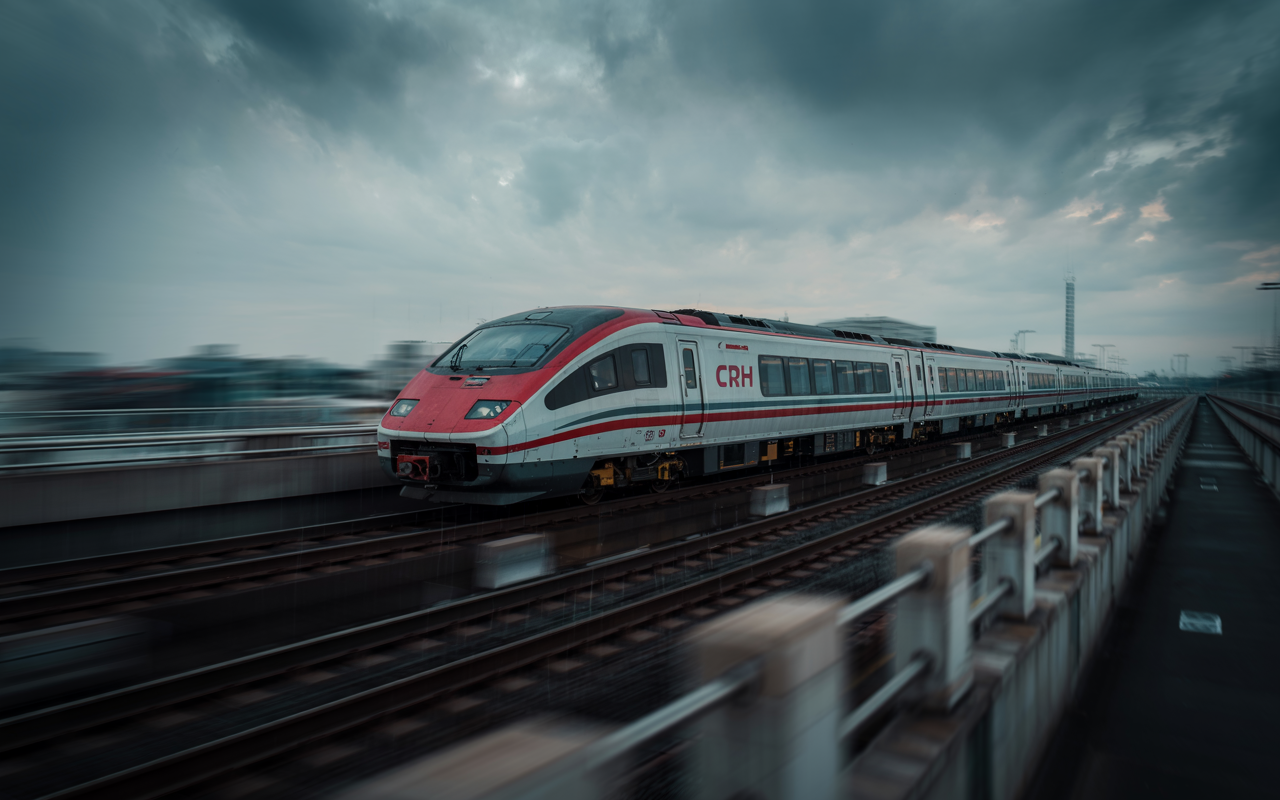


China Built The Largest High-Speed Train Network In The World, But Faces Billion-Dollar Losses On Several Routes. Understand The Challenges Of Chinese Railway Infrastructure And The Future Of High-Speed Trains.
China has built the largest high-speed train network in the world. With tracks extending over 42,000 kilometers — enough to circle the Earth — the country has revolutionized its railway infrastructure in record time. Designed to operate at an impressive 350 km/h, China’s high-speed train has become a symbol of modern development and national technological power. However, behind the efficiency, speed, and international visibility lies a less ideal scenario: billion-dollar losses on some high-speed lines that raise doubts about the financial sustainability of the model.
The Birth Of The High-Speed Rail Network In China
The ambitious Chinese railway plan began in the 2000s, with massive investments from the central government in an interconnected national transportation system. The first high-speed line was inaugurated in 2008 between Beijing and Tianjin. Since then, growth has been exponential, driven by the Communist Party’s goals to economically integrate different regions of the country, reduce travel time, and stimulate urban growth.
Today, high-speed rail connects almost all major Chinese cities. The high-speed train technology in China was developed in partnership with foreign companies like Siemens, Alstom, Bombardier, and Kawasaki, but was quickly nationalized and improved locally by CRRC (China Railway Rolling Stock Corporation), consolidating domestic technological dominance.
-
Latin America’s Largest Port Invests $400 Million in Rail System with Trains Up to 2.4 Kilometers Long
-
New Smart Radar Begins Issuing Fines to Solo Drivers in Carpool Lanes, Uses Cameras to Count Occupants, Changing Traffic Enforcement Rules on Busy European Roads

-
Why can the crane operator only obey the correct signalman on the construction site: among dozens of workers, a hand raised by the wrong person can confuse the maneuver and turn a load of tons into an immediate risk.
-
What changes with the new public transportation rules that can reduce pressure on fares and pave the way for zero fare in Brazil?

Why Is China’s High-Speed Train Considered The Most Advanced In The World?


China not only has the largest high-speed rail network but also leads in operational speed, service reliability, energy efficiency, and material innovation.
The most modern trains, like the Fuxing Hao, are capable of maintaining an average speed of 350 km/h with comfort, stability, and reduced emissions. The aerodynamic design, artificial intelligence-based signaling system, and state-of-the-art tracks make the Chinese network a globally admired model.
Moreover, major train stations have been transformed into logistics and commercial hubs, with full integration among urban, rail, and interstate transport.
The Cost Of Ambition: Colossal Investments
The expansion of the network has been costly. According to data from the Chinese Ministry of Transport and the World Bank, total investments have exceeded US$ 1.3 trillion in just over two decades. Much of this funding came from public financing, bonds issued by state railway companies, and partnerships with local governments.
Main operators, like China State Railway Group Co. (China Railway), have accumulated debts exceeding US$ 900 billion. And while the most popular routes, such as Beijing–Shanghai or Guangzhou–Shenzhen–Hong Kong, generate profit and operate at high occupancy, this is far from the norm.
In many less dense regions, passenger traffic does not cover operational, maintenance, and debt amortization costs.
High-Speed Train Losses: What Do The Numbers Say?
According to the financial report from China Railway released by Bloomberg and the South China Morning Post, railway operations are accumulating significant operational deficits on several inland lines. Among the most cited cases is the Lanzhou–Ürümqi line, which connects the desert regions of the west of the country. The average occupancy reaches just 30% of capacity, making operations unprofitable.
Additionally, the company’s annual report indicates that only three out of twenty major high-speed routes are profitable. The others rely on subsidies or are in debt, with a return expected only in 20 or 30 years — if there is population and urban growth in the served regions.
In 2023, the sector’s consolidated debt exceeded 6.3 trillion yuan (approximately US$ 870 billion), and there are signs that new expansions may be suspended or reevaluated for economic viability.
Political Motivations Behind The Rail Expansion
Experts point out that building the high-speed network has not always adhered to economic criteria. In many cases, the motivation was geopolitical and strategic, especially in the interior of the country, where the government aimed to stimulate development and reduce regional inequalities.
Lines built in areas with low population density — such as Tibet, Xinjiang, and parts of Inner Mongolia — were conceived as instruments of national integration, security, and power projection, rather than necessarily as profitable investments.
According to analyst Andy Mok from the Center for China and Globalization, “railways are not just logistical infrastructures — they also play a political role. The Communist Party sees them as tools of national cohesion.”
The Impact On Urban Mobility And The Local Economy
Despite the financial challenges, the positive impact of the Chinese high-speed train on mobility, tourism, and the real estate market in urban areas is undeniable. Medium-sized cities like Zhengzhou, Wuhan, and Changsha have transformed into logistical and industrial hubs after connecting to major routes.
Furthermore, high-speed rail has reduced travel time between megacities from hours to minutes, encouraging business, migration of skilled professionals, and a new city-region model, similar to what occurs in Europe.
The model is also recognized as environmentally superior to air transport, contributing to China’s decarbonization and energy transition goals.
International Criticism And Economic Risks
The Chinese railway model has been studied with interest and caution by economists and urban planners from other countries. One of the main criticisms involves the low return on investment in unprofitable regions, as well as the risk of excessive debts burdening the public budget in the long term.
Economist Nicholas Lardy from the Peterson Institute argues that the project is financially unsustainable unless there is a careful reevaluation of the next phases of expansion. “China may have built the most impressive infrastructure of the 21st century, but it will pay a high price if the trains run empty.”
Aware of the imbalance between physical growth and economic sustainability, the Chinese government has made adjustments. Expansion targets have been slowed since 2022, and the current focus is on optimizing the operation of existing routes, reducing costs, improving occupancy, and renegotiating some debts.
Among the ongoing strategies:
- Reducing frequencies on unprofitable routes
- Integrating high-speed trains with regional and freight trains
- Adjusting fares and increasing promotional policies for passengers
- Stimulating domestic tourism focusing on connected cities
Comparison With Other Countries
While Japan maintains a highly efficient and profitable bullet train network (Shinkansen), with an average occupancy above 80%, China bets on the scale and political impact of its infrastructure. In the United States and Brazil, attempts to implement high-speed systems have stumbled over costs, slow regulatory processes, and lack of political priority.
China has excelled in achieving what no other country has done so far: constructing thousands of kilometers in less than two decades. However, the current phase demands more than speed and engineering: it requires efficiency, management, and sustainable returns.
The Future Of Chinese High-Speed Rail
The Chinese railway infrastructure remains a global reference. The next generation of trains, such as the 600 km/h Maglev, is under development and could once again transform the concept of fast transport.
But the big question looming over the future of the system is economic: will it be possible to maintain this colossal network without compromising the financial health of the country? The government promises balance, but analysts remain skeptical.
Meanwhile, for millions of Chinese, the high-speed train continues to be one of the greatest symbols of modern progress — even though, behind the steel and glass curtain, there are empty lines and red balances.







Trem de alta velocidade como esse é inviável, para ser usado como transporte, em todo o Brasil. Em seus trajetos, não podem existir curvas muito acentuadas, presentes em grande parte das ferrovias brasileiras. Alem disso, se torna impossível ver paisagens, em trens com velocidades de 300km/h, sendo que o ideal são os trens, com velocidades de até 150Km/h. Para não haver escassez de passagens, por grande procura, os trens ideais que levam muitos passageiros, seriam trens de vagões com andar, que tambem, exigem curvas menos acentuadas. Contudo, com o sistema de linhas com bitolas largas, para garantir maior estabilidade e maior velocidade. Os túneis, viadutos e altas pontes, também, precisam ser duplicados e adaptados para circular trens de vagões com andar. Todavia, nesse País, isso aínda é coisa do futuro.