Portuguese
  Spanish


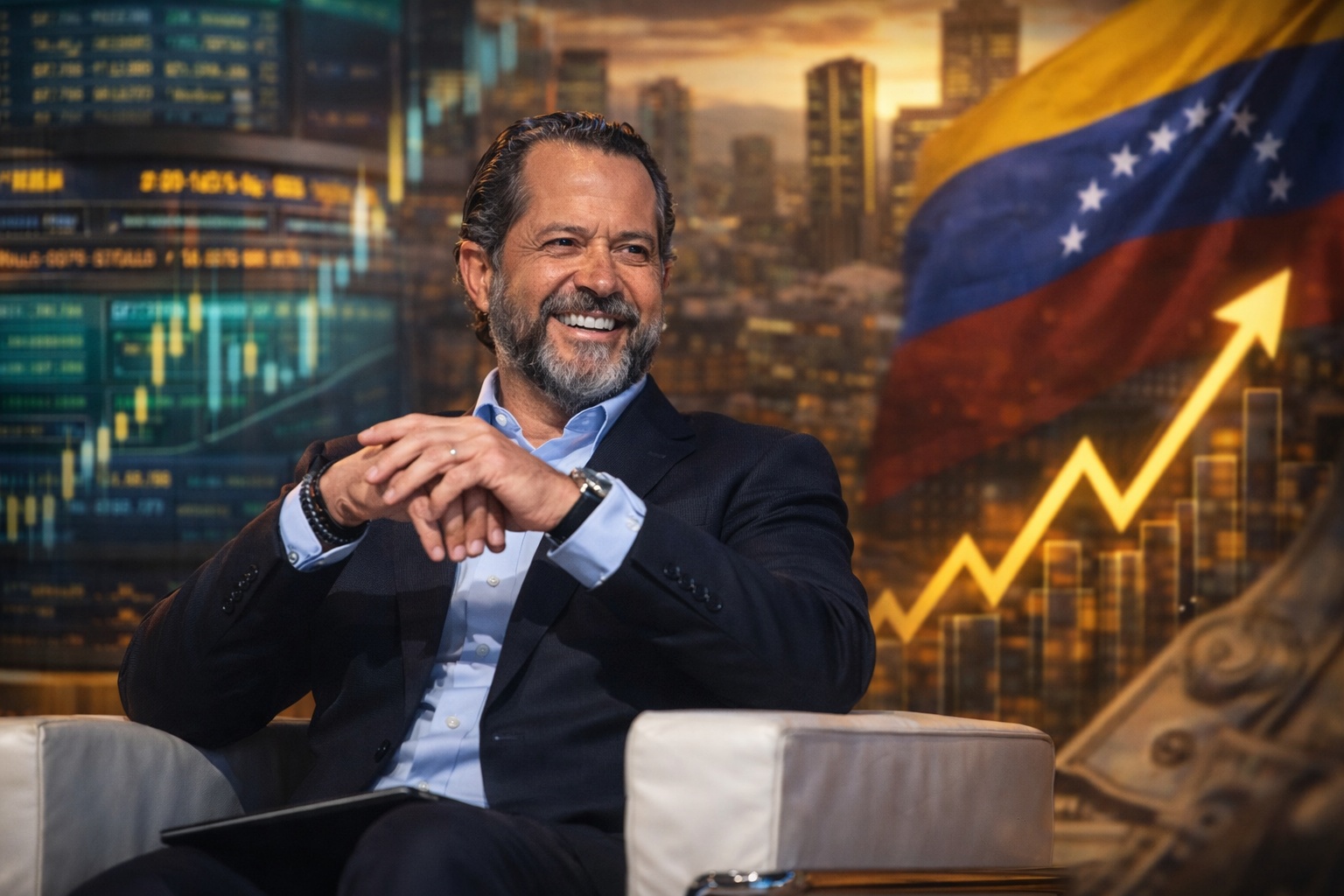


The Only Billionaire of Venezuela Made His Fortune in the Financial Sector, Not in Oil, and Accumulates Over US$ 7 Billion According to International Rankings.
Venezuela continues to be one of the countries most associated with oil in the global imagination. It’s no exaggeration: approximately 99% of Venezuelan exports were made up of oil and derivatives in certain years, according to data from the OPEC and the World Bank. This imbalance shaped the economy, exchange rates, public policies, and Venezuelan society throughout the 20th century. This is where the plot gets interesting: unlike the oil magnates of the past, Juan Carlos Escotet, the only current Venezuelan billionaire, built a private banking empire that expanded into Europe and consolidated an estimated net worth of over US$ 7 billion.
And it’s this trajectory, little known outside financial circles, that caught the attention of the international media in recent years. Meet Juan Carlos Escotet, founder of the financial group Banesco.
The Venezuelan Economy and the Weight of Oil in Historical Context
To understand the contrast, it’s necessary to look at the Venezuelan economic structure. Since the discovery of large hydrocarbon reserves in the early decades of the 20th century, Venezuela came to depend almost exclusively on oil.
-
Rare fox feared “extinct” found alive on Caribbean island after over two decades without official sightings

-
21-Year-Old Brazilian Student Turns Homemade Popsicle Hobby into $100,000-a-Month Business

-
Australia Dumps Hundreds of Thousands of Tons of Gravel into Rivers to Restore Natural Barriers and Reverse 150 Years of Erosion

-
Bird-Inspired Robot Glides on Air Currents up to 10 m/s, Balances Itself, and Aims to Save Energy in Industrial Inspections and Meteorological Balloons



The state-owned PDVSA (Petróleos de Venezuela S.A.) became one of the largest oil companies in the world, and the country held the ranking for largest proven oil reserves for years.
This situation created what economists call the Dutch Disease: when an extremely dominant sector (in this case, oil) discourages other productive sectors, like industry, agriculture, and specialized services.
Over time, few private conglomerates managed to escape this logic, and even fewer were capable of internationalizing.
Therefore, the emergence of a billionaire from the financial sector — and not from oil — in such a concentrated economy is a socioeconomic phenomenon that deserves analysis.
The Rise in the Financial Sector and the Birth of a Conglomerate

The trajectory of the protagonist in this story begins in the banking sector. By the end of the 20th century and the beginning of the 2000s, the expansion of private financial services in Venezuela opened space for mergers, acquisitions, and banking consolidation.
It was in this environment that institutions like Banesco emerged, which would become one of the largest private financial institutions in the country, operating in checking accounts, credit, insurance, payment methods, and remittances, areas little explored compared to the gigantism of PDVSA.
This initial expansion allowed the creation of a universal bank structure with the capacity for internationalization.
The decisive step came years later, with entry into markets such as Spain, Portugal, and Latin American countries, a process that transformed the Venezuelan operation into a transnational group.
Internationalization and the Impact of the Venezuelan Crisis
The 2010s marked a turning point. While Venezuela was undergoing a deep political and economic crisis, with hyperinflation, exchange rate instability, and recession, the financial group decided to transfer some of its strategic operations to Europe.
This move had two central consequences:
It shielded the conglomerate from part of the local risk, as the banking sector is very sensitive to inflation and monetary volatility.
It positioned the group in the European market, especially after operations in Spain and Portugal, focusing on retail banking and credit.
In Europe, the group adopted constant strategies of acquisitions and restructurings, something documented by the Spanish and Portuguese financial press. For analysts, it was precisely this process of internationalization that consolidated the entrepreneur’s wealth and placed him on Forbes lists.
The Fortune of Juan Carlos Escotet and International Recognition
Forbes first registered Juan Carlos Escotet as a billionaire in the mid-2010s, with a net worth estimated between US$ 1 to 2 billion, depending on the year and methodology. In 2025 and 2026, the estimated net worth exceeds US$ 7 billion, placing him as the only Venezuelan among the global billionaires listed by the magazine.
The contrast is striking: while dozens of billionaires from Saudi Arabia, Qatar, Norway, or the United States built fortunes linked to oil, gas, or mining, the only billionaire from Venezuela operated precisely in the sector farthest from the oil industry, banking.
Why This Matters for the Future of the Venezuelan Economy
The case raises important questions about the potential for economic diversification in Venezuela.
Economists have argued for decades that the country will only break the cycles of crisis when it reduces its dependence on oil.
In this sense, the emergence of a billionaire linked to commercial banking, payment methods, and global financial services can be interpreted as a weak but real signal that alternative sectors can prosper.
Moreover, the case demonstrates that internationalization and integration into the European financial system were essential to protect value, generate profit, and attract capital — something unthinkable in purely domestic models.
Who Is He?
He was born in Caracas, began his career young in the banking sector, founded the Banesco group, became chairman of its board, and after the international expansion, took on significant stakes in banks in Spain and Portugal.

His name is Juan Carlos Escotet Rodríguez, founder of Banesco and controller of Abanca in Spain — the man who challenged the oil logic of the Venezuelan economy and built a fortune that already exceeds US$ 7 billion.
The story of Escotet shows that there is room for private initiatives outside of oil, but it also highlights how rare it is for them to thrive.
And, in the case of Venezuela, this rare deviation from the path ended up producing something no one expected: the only billionaire in the country did not come from oil, and perhaps that’s exactly what makes the story so emblematic.