Portuguese
  Spanish


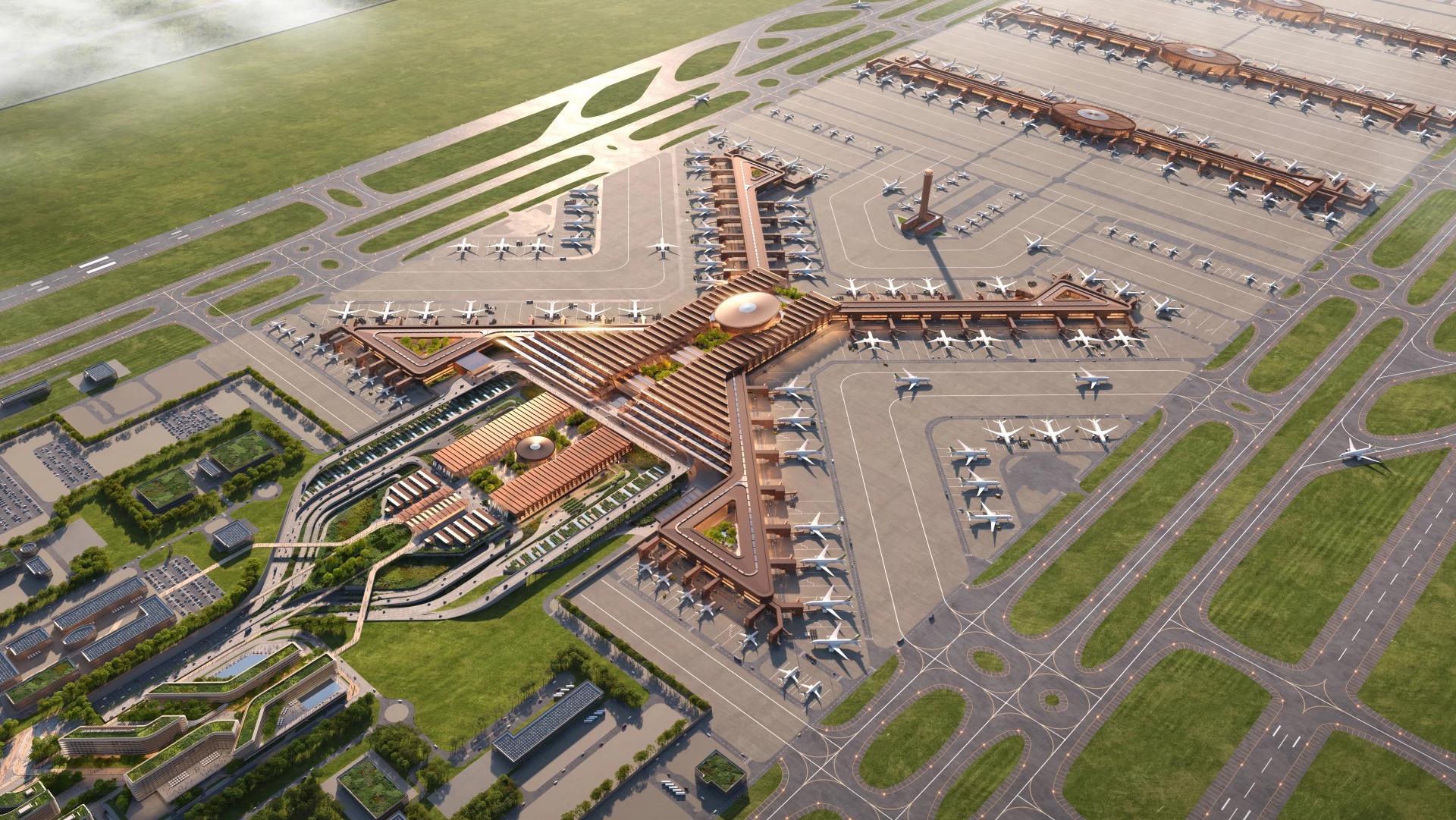


The Futuristic Airport Designed by Zaha Hadid Architects, Under Construction South of Addis Ababa, Ethiopia, Will Have 660 Thousand Square Meters, X-Shaped Inspired by the Rift Valley, Construction in Phases and Final Capacity Estimated at Up to 110 Million Passengers Per Year
The futuristic airport Bishoftu International Airport, designed by Zaha Hadid Architects and commissioned by the Ethiopian Airlines Group, is under construction south of Addis Ababa, Ethiopia, covering 660,000 m² with a goal of 110 million passengers per year, redefining African airport infrastructure.
Futuristic Airport in an X Shape Establishes a New Scale Benchmark
With approximately 7 million square feet, the terminal adopts an X-shaped design. The layout prioritizes efficient circulation, reducing internal distances and connecting piers through a central backbone inspired by the nearby Rift Valley in Bishoftu.
Each pier incorporates unique interior materiality and color palettes to reflect different regions of the country.
-
New York removed the tracks from over 2,500 subway cars and dumped everything at the bottom of the Atlantic, and what seemed like trash turned into an artificial reef teeming with fish and divers.

-
From matches sold by bicycle at age 5 to a global furniture empire: the lumberjack’s son founded IKEA at 17 in his uncle’s kitchen and transformed a small company into the largest furniture retailer on the planet.
-
The mansion in Flamengo, built in 1865 for the Baron of São Clemente and closed for 20 years, has become a spa, event hall, and gym for “Symphony,” a luxury condominium that sold 70% of its gross development value in the first month on the R$ 60 million land of the former Bennett College.

-
The Ipiranga convent, a 1924 building adjacent to the Museum that remained vacant for a decade and became home to dozens of cats, is reborn as “Alma Mater,” a luxury development worth R$ 130 million with a pool in the courtyard and a clubhouse in the former nuns’ chapel.





The spatial organization aims to minimize transfers and facilitate direct connections, allowing continuous movement to the next gate, according to the design team.
Sustainability Strategies and Local Materials Guide the Construction
The futuristic airport will use locally sourced materials and sustainability solutions. Natural ventilation, semi-open areas, and outdoor spaces aim for thermal comfort.
The goal is to achieve LEED Gold certification, with prefabricated modules and landscaping featuring drought-resistant native species.
Water Management, Solar Energy, and Phased Construction
Rainwater from runways, roads, and yards will be channeled to wetlands and basins for storage and reuse. Solar panels will generate on-site energy. Implementation will occur in phases, with inauguration scheduled for 2030.
When completed, Bishoftu International Airport will have a capacity of up to 110 million passengers per year and parking for 270 aircraft. The scale of the complex reinforces the strategy for regional air expansion and the country’s logistical integration, enhancing efficiency for transit passengers.