Portuguese
  Spanish


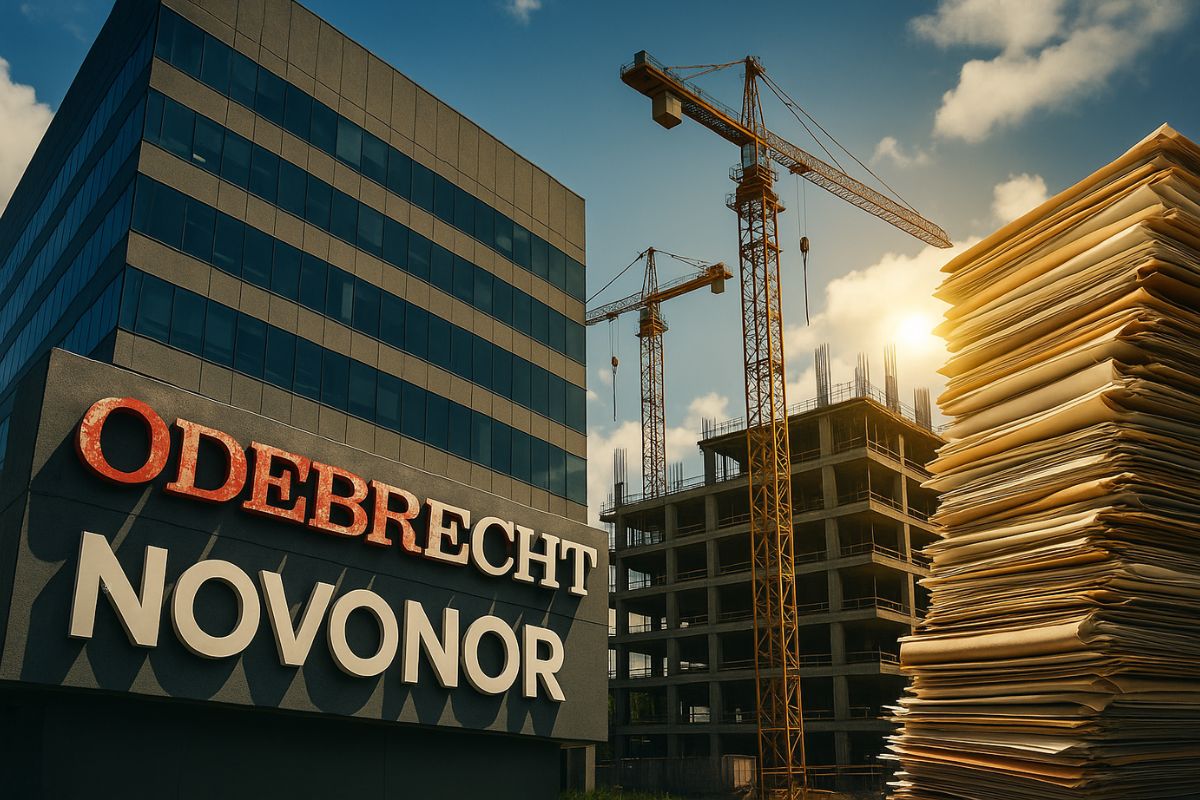

Odebrecht: From Global Construction Empire to Symbol of Corruption and Business Decadence in Brazil. The Largest Brazilian Construction Company Now Lives as a Shadow of the Past After Scandals, Bankruptcy, and Loss of Power
The Odebrecht was, for decades, synonymous with high-level engineering, major projects, and global presence. At its peak, the group generated over R$ 100 billion per year, operated in 26 countries, and led strategic projects such as hydroelectric plants, subways, World Cup stadiums, and nuclear power plants. But in December 2016, the company became the protagonist of the largest leniency agreement in world history, admitting to having paid over US$ 1 billion in bribes in 12 countries. Since then, the brand “Odebrecht” has become associated with one of the largest corruption schemes ever revealed.
The company’s history ranges from the heroism of its founder, Norberto Odebrecht, in the 1940s, to its collapse under the management of his grandson, Marcelo Odebrecht, arrested by Operation Car Wash in 2015. Even after bankruptcy and a name change to Novonor, the Odebrecht still struggles with debts, loss of contracts, and the weight of its past.
From Bahia Construction Company to Global Empire
Founded in Bahia in 1944, the Odebrecht grew by seizing opportunities in public works and cultivating strategic political relationships. In the following decades, it secured large-scale projects such as Angra 1, Galeão Airport, and works for Petrobras. Internationalization began in the 1980s, with a significant presence in Latin America and Africa, especially in Angola, where it adopted the model of “projects paid for with oil.”
-
Embraer Acquires Full Control of Mexican Aircraft Interiors Manufacturer EAI to Reduce Supplier Dependence and Protect Margins Amid Global Aviation Competition

-
Controversial Amazon Highway BR-319 to Receive $1.3 Billion for Road Upgrades and $570 Million for Territorial Governance in Brazil

-
Four Sanitation PPPs to Inject $4 Billion into 477 Brazilian Municipalities, Setting 2026 as a Record Year for the Sector

-
Brazil’s BNDES Approves $2.4 Billion for Major Urban Project Aiming to Serve 600,000 Passengers Daily and Reduce CO₂ Emissions by Over 200,000 Tons Annually


As the 2000s approached, under the command of Emílio Odebrecht, the company consolidated Braskem, the largest petrochemical company in Latin America, and expanded its role as an arm of Brazilian foreign policy, relying on billion-dollar financing from BNDES. This network of influence allowed contracts in Cuba, Venezuela, Peru, and other countries, always linking business to diplomacy.
The “Structured Operations Department”
It was during this period that the corruption scheme reached its most sophisticated level. The creation of the so-called Structured Operations Department institutionalized the payment of bribes in Brazil and abroad. With proprietary encrypted systems and offshores in tax havens, the sector operated as a “parallel bank” for illicit transactions, ensuring privileged access to tenders and million-dollar contractual amendments.
According to the 2016 agreement, Odebrecht and Braskem paid bribes to authorities, presidents, and ministers in 12 countries, influencing everything from infrastructure projects to electoral campaigns.
Operation Car Wash and Abrupt Fall
The arrest of Marcelo Odebrecht, in June 2015, symbolized the turning point of a cycle. Without contracts from Petrobras and with works halted, the company lost its main source of revenue. Countries like Peru, Panama, and the Dominican Republic suspended or canceled projects, while international investigations blocked assets and distanced Odebrecht from tenders.
On December 21, 2016, the company finalized a leniency agreement of US$ 3.5 billion in fines with Brazil, the USA, and Switzerland. It was the largest amount ever recorded globally in this type of negotiation.
Bankruptcy and Survival
With debts reaching R$ 120 billion, the Odebrecht filed for bankruptcy in 2019, the largest process of its kind in Brazilian history. The most valuable asset, the stake in Braskem, was used as collateral for creditors and became the target of a dispute with Petrobras.
In 2021, a restructuring plan allowed the company to retain some control of Braskem, but with severe restrictions: 80% of dividends go to pay debts. The brand “Odebrecht” was officially abandoned, replaced by Novonor.
The Present and the Future
In 2024, the STF annulled central evidence used in Operation Car Wash, opening loopholes for the company to contest the leniency agreement and even recover part of the fines paid. Still, experts point out that, even if there is financial relief, the Odebrecht is unlikely to return to the level of influence and revenue it had before 2015.
The company’s trajectory is, for many, a reflection of Brazilian contradictions: technical capability and global ambition, but also dependence on political relationships and tolerance for illicit practices. Today, Novonor survives as a shadow of what it was, primarily supported by Braskem, and marked by the memory of having become the ultimate symbol of the blend of public and private power in Brazil.
Do you think that Odebrecht — now Novonor — deserves a second chance to return to the market with strength, or does its history condemn it to live forever under the shadow of Operation Car Wash? Share your opinion in the comments.