Portuguese
  Spanish


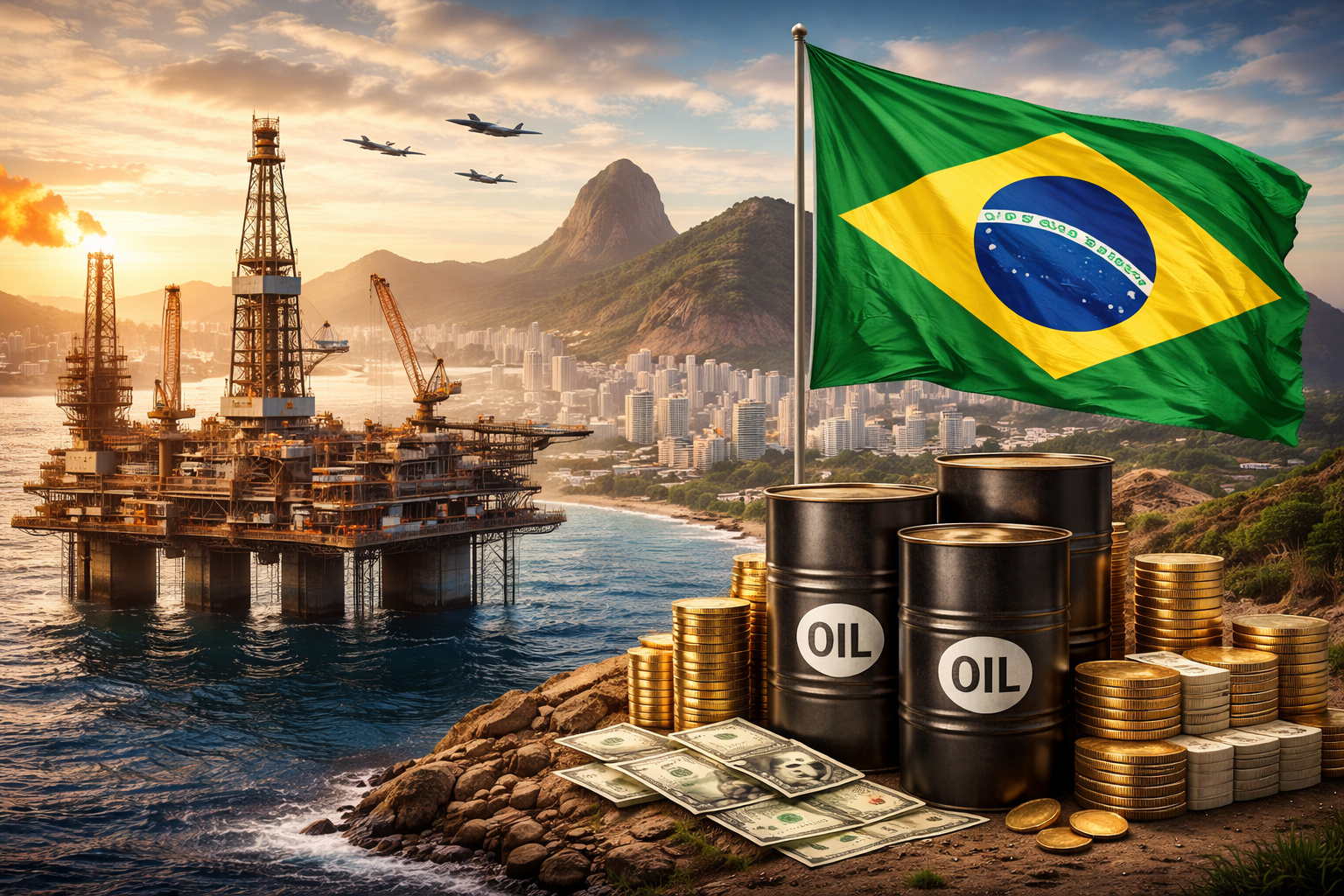

The oil has returned to the center of global economic discussions. Furthermore, it has begun to directly influence the performance of producing countries. In this context, Brazil is expected to return to the group of the largest economies in the world. This happens mainly due to the appreciation of oil in the international market.
According to the International Monetary Fund (IMF), in a projection released in 2026, the GDP of Brazil is expected to return to the 10th global position this year. Thus, the country surpasses Canada and regains space in the ranking of the largest economies.
At the same time, the outlook is even more positive for the future. According to the IMF itself, Brazil could achieve the 9th position in 2027, if the scenario remains favorable.
-
Qantas and Airbus Invest in Company Aiming to Convert Unsorted Household Trash into Jet Fuel

-
Brazil’s ANP Opens 86 New Oil Blocks in the Equatorial Margin, Expanding the Amazon River Mouth Frontier

-
OPEC+ Boosts Oil Supply by 188,000 Barrels per Day in July 2026, Leading to Price Drop from $112 to $89 per Barrel in Under Two Months

-
TotalEnergies Signs 20-Year Deal to Purchase 2 Million Tons of LNG from Alaska, Boosting Project Viability
The historical role of oil in economic growth
Historically, oil has always been linked to global economic growth. Since the early 20th century, countries with access to this resource have managed to accelerate their industrialization.
During the post-World War II period, for example, oil consumption grew rapidly. This occurred because economies began to expand their industries and transportation systems.
According to the Statistical Review of World Energy, published by the Energy Institute (formerly BP), global oil consumption increased continuously throughout the 20th century. This growth accompanied global economic expansion.
Moreover, producing countries gained relevance on the international stage. As a result, oil has consolidated itself as one of the main engines of the global economy.
How oil influences Brazil’s GDP
Currently, Brazil occupies a strategic position in the oil market. The country has even become one of the largest producers in the world in recent years.
According to the National Agency of Petroleum (ANP), Brazilian production has grown significantly with the exploration of the pre-salt layer.
Additionally, the rise in oil prices increases export revenue. Consequently, this directly contributes to GDP growth.
On the other hand, the impact is not limited to the energy sector. On the contrary, the increase in income generated by oil stimulates other sectors of the economy.
Thus, transportation, industry, and services also benefit from this movement.


The ranking of the largest economies and Brazil’s position
According to the IMF, the global economy ranking considers the size of the Gross Domestic Product (GDP). In this sense, countries like the United States, China, and Germany continue to hold the top positions.
However, Brazil is gaining prominence again. According to the IMF, the country is expected to surpass Canada as early as 2026.
Moreover, the forecast indicates an even greater advance in the short term. This is because the international scenario favors commodity-exporting countries.
Among these commodities, oil plays a central role.
Geopolitics, oil, and impacts on economic growth
Currently, the oil market is strongly linked to geopolitics. International conflicts, such as tensions in the Middle East, directly affect the price of oil.
According to the World Bank, fluctuations in oil prices can influence global economic growth and inflation.
Furthermore, when prices rise, exporting countries tend to benefit. On the other hand, importers face higher costs.
In Brazil’s case, the impact tends to be positive. This happens because the country exports oil on a large scale.
Thus, rising prices strengthen the trade balance and contribute to GDP growth.
The pre-salt and the transformation of the Brazilian economy
In recent years, the pre-salt has transformed Brazil’s role in the global oil market. Before this, the country had a more limited participation.
Additionally, the pre-salt has high productivity. This means that extraction costs can be competitive.
As a result, Brazil has become a relevant exporter on the international stage.
Consequently, oil has gained greater weight in the national economy.
Future prospects for Brazil in the global scenario
The future scenario indicates that Brazil may continue to advance in the global ranking. However, this depends on various factors.
Among them, the price of oil, economic stability, and global growth stand out.
Moreover, the demand for energy remains high. Therefore, oil will still play a relevant role in the short and medium term.
On the other hand, the energy transition is also progressing. This may impact the sector in the long term.
Even so, oil still remains one of the main economic engines.
Oil as a strategic factor for Brazil’s growth
In this scenario, it is evident that oil plays a fundamental role in Brazil’s growth. Furthermore, it directly contributes to the country’s repositioning in the global ranking.
At the same time, historical factors show that oil has always been linked to economic development. Therefore, the current moment follows this same logic.
Recent events, such as international conflicts and price variations, reinforce this dynamic.
Thus, Brazil benefits from its position as a producer and exporter.
Finally, the return to the group of the largest economies in the world shows that the country remains relevant in the global scenario. And, in this context, oil continues to be one of the main pillars of this economic trajectory.