Portuguese
  Spanish


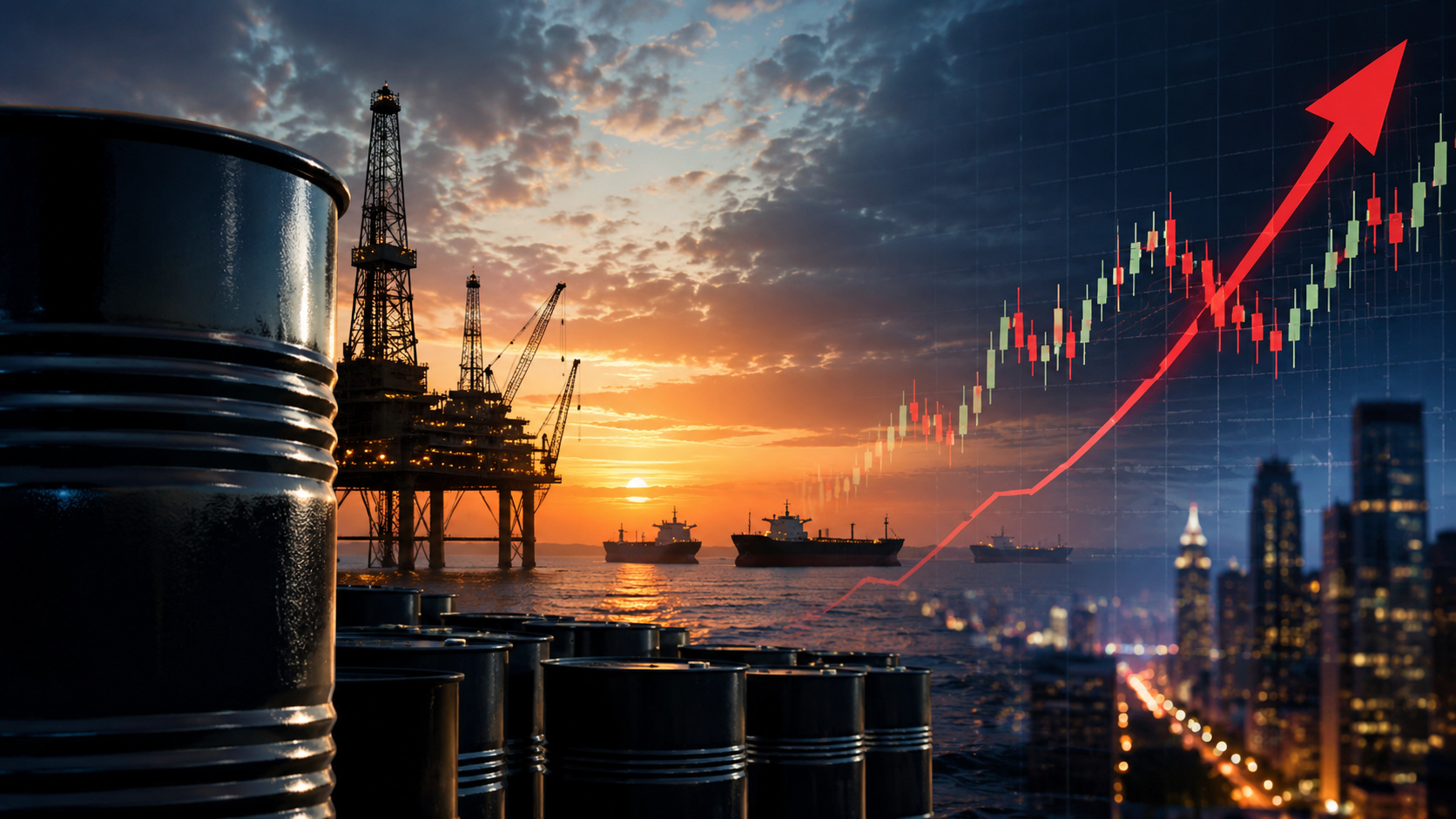

The approach of oil to the mark of US$100 per barrel has once again increased tension in international financial markets and reinforced concerns about a possible global energy crisis. On Wall Street, investors are closely monitoring the developments of geopolitical tensions in the Middle East, especially given the uncertainties involving one of the world’s main maritime routes for oil transportation.
Furthermore, the scenario reignited fears related to global inflation, rising energy costs, and economic slowdown in different countries. Financial market analysts even began to use new expressions to summarize the perception that there is no expectation of a rapid normalization in the international flow of the commodity.
Why oil started rising again
The recent rise in oil is directly linked to geopolitical tensions involving the Middle East.
-
With a record production of nearly 3 million barrels per day, Petrobras resumes importing diesel in July, highlighting the bottleneck in Brazilian refining.

-
Qantas and Airbus Invest in Company Aiming to Convert Unsorted Household Trash into Jet Fuel

-
Brazil’s ANP Opens 86 New Oil Blocks in the Equatorial Margin, Expanding the Amazon River Mouth Frontier

-
OPEC+ Boosts Oil Supply by 188,000 Barrels per Day in July 2026, Leading to Price Drop from $112 to $89 per Barrel in Under Two Months

In recent weeks, investors have become concerned about possible disruptions to strategic routes used for commodity exports.
Furthermore, the risk of maritime blockades and military conflicts has heightened the perception of instability in the global energy market.
When there is a threat to the international oil supply, prices usually react quickly due to fears of scarcity and rising energy costs.
The importance of maritime routes for oil
A large part of the world’s oil is transported by ships through strategic maritime corridors.
Among the main points of attention is the Strait of Hormuz, considered one of the most important routes for global energy supply.
According to international experts, millions of barrels pass through the region daily.
Therefore, any threat involving blockades or military conflicts in the area causes an immediate impact on international commodity prices.

The impact on Wall Street
The rise in oil increased caution on Wall Street and raised the level of concern among global investors.
Furthermore, the financial market fears that a prolonged surge in the commodity could further pressure global inflation.
In this context, shares of companies linked to consumption and transport began to experience greater volatility.
At the same time, investors seek assets considered safer during periods of geopolitical instability.


Why oil near US$100 worries the market
Oil is one of the most important commodities in the world economy.
When the barrel rises rapidly, various sectors are affected, including transport, industry, logistics, and food production.
Furthermore, high energy prices usually generate inflationary pressure in different countries.
Experts warn that persistently high oil prices above certain levels can hinder inflation control policies adopted by central banks.
The fear of a new energy crisis
The current scenario has led analysts to resume discussions about the risks of a possible international energy crisis.
Furthermore, investors are concerned about impacts on global economic growth.
Should prolonged disruptions in oil flow occur, highly import-dependent countries could face a significant increase in energy costs.
In this context, governments are closely monitoring diplomatic and military developments in the Middle East.
The impact of global inflation
The rise in oil has a direct effect on inflation.
This happens because energy influences practically all sectors of the economy, from transportation to industrial production.
Furthermore, more expensive fuels tend to raise the prices of products and services in different countries.
Experts state that a new escalation in oil prices could further complicate the work of central banks in combating inflation.
How investors are reacting
In international markets, investors adopted a more cautious stance in the face of rising geopolitical tensions.
Furthermore, assets linked to the energy sector began to register greater appreciation.
On the other hand, companies sensitive to energy costs experienced greater pressure on stock exchanges.
In this scenario, volatility once again dominated the global financial market.
The relationship between geopolitics and oil
The oil market has always been highly influenced by geopolitical issues.
Conflicts, economic sanctions, military threats, and territorial disputes frequently affect expectations related to the global supply of the commodity.
Furthermore, rumors and diplomatic statements can cause immediate fluctuations in international prices.
For this reason, investors follow every movement involving the Middle East with extreme attention.
The role of the Middle East in the global market
The Middle East concentrates some of the largest oil producers on the planet.
Furthermore, the region holds enormous strategic importance for international energy supply.
Any instability involving producing countries can directly affect global commodity prices.
In this context, the escalation of recent tensions has increased concerns about global energy security.
The impact for consumers
Although oil is traded internationally, its effects quickly reach the final consumer.
Among the main impacts are:
- Increase in fuel prices
- Rise in transportation costs
- Pressure on food prices
- Inflation in services
- Increase in industrial costs
Furthermore, importing countries tend to suffer more intense impacts in scenarios of prolonged price increases.
The behavior of central banks
Central banks in different countries are closely monitoring oil movements.
This is because the commodity has a strong influence on inflation indices.
If prices continue to rise, monetary authorities may face difficulties in reducing interest rates or stimulating economic growth.
Furthermore, the scenario increases uncertainties about the next steps of global monetary policies.
What the market fears now
The market’s main concern involves the possibility of an escalation of tensions in the Middle East.
Furthermore, investors fear that the situation could cause real disruptions in the maritime flow of oil.
In this scenario, analysts believe that the barrel could consistently surpass the US$100 mark again.
At the same time, any sign of diplomatic progress could trigger relief movements in international prices.
The future of the oil market
Experts assess that the market will remain extremely sensitive to news related to the Middle East in the coming weeks.
Furthermore, political and military decisions are expected to continue strongly influencing the commodity’s behavior.
While investors monitor possible diplomatic solutions, volatility remains high in global markets.
Finally, oil approaching US$100 reinforces how energy, geopolitics, and the international economy remain deeply connected, affecting governments, businesses, and consumers in different parts of the world.