Portuguese
  Spanish




Brent surpasses US$ 118 with a 6% rise and reignites global alert on fuels, logistics, and direct impact on diesel and gasoline in Brazil.
In April 2026, the global energy market returned to operate under strong tension after Brent crude oil surpassed the US$ 118 per barrel mark, registering a jump of over 6% in a single move, amid escalating geopolitical tension involving the United States and Iran and an unexpected reduction in US oil inventories, according to data released by financial outlets such as InfoMoney on April 29, 2026.
The move places oil back at the center of global concerns by combining supply factors, geopolitical risk, and market sensitivity to any disruption in strategic routes. The impact is not limited to the barrel price: it quickly spreads throughout the entire energy chain, affecting fuels, transport, industry, and inflation.
Continue reading below to understand why this rise reignites a global alert, how the market reacts to events in the Middle East, and what direct effects are expected in Brazil.
-
With a record production of nearly 3 million barrels per day, Petrobras resumes importing diesel in July, highlighting the bottleneck in Brazilian refining.

-
Qantas and Airbus Invest in Company Aiming to Convert Unsorted Household Trash into Jet Fuel

-
Brazil’s ANP Opens 86 New Oil Blocks in the Equatorial Margin, Expanding the Amazon River Mouth Frontier

-
OPEC+ Boosts Oil Supply by 188,000 Barrels per Day in July 2026, Leading to Price Drop from $112 to $89 per Barrel in Under Two Months
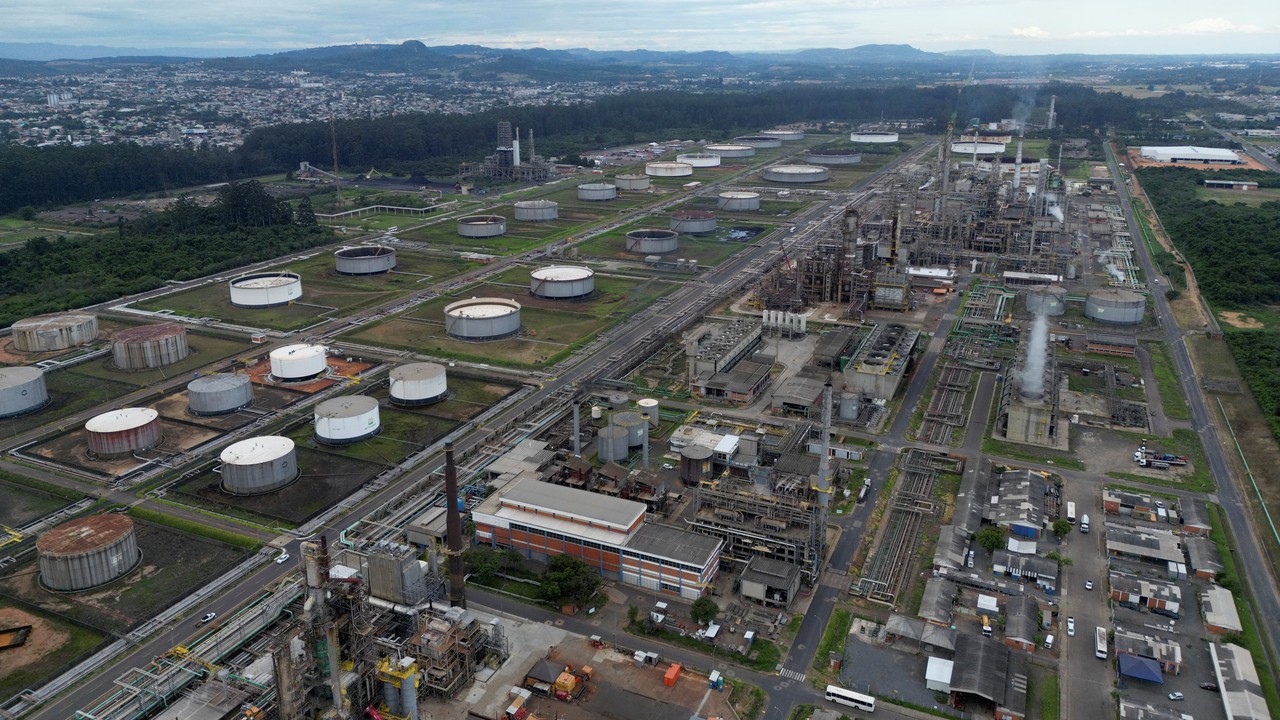



Surge above US$ 118 occurs amid geopolitical tension and drop in United States inventories
The recent rise in Brent does not occur in isolation, but rather within a context of multiple simultaneous factors that pressure global supply.
The first critical element is the tension between the United States and Iran, which historically directly influences the oil market due to the strategic importance of the Persian Gulf. Any sign of escalation increases the perceived risk of supply disruption, especially in routes like the Strait of Hormuz, through which a significant portion of the world’s oil passes.


The second relevant factor is the reduction in oil inventories in the United States, which acts as an immediate indicator of tightening supply and demand. When inventories fall unexpectedly, the market interprets this as a sign of high consumption or insufficient supply, pushing prices up.
The combination of these factors creates an environment of high volatility, where the price reacts not only to concrete data but also to the perception of future risk, amplifying movements.
6% short-term movement shows extreme sensitivity of the energy market
A rise of over 6% in a short interval is considered significant in the commodities market, especially for oil, which already has high liquidity and large trading volume.
This type of movement indicates that the market is quickly repricing risk, incorporating more adverse global supply scenarios.
In practical terms, this means that traders, refineries, governments, and companies begin to operate with higher cost expectations, which influences purchasing, storage, and production decisions.
This behavior can also trigger chain effects, such as increased demand for futures contracts and protection against volatility, which sustains prices at high levels.
Direct impact on diesel and gasoline in Brazil occurs through international parity
In Brazil, the impact of oil above US$ 118 is not immediate in terms of automatic readjustment, but occurs through the concept of international parity.
Petrobras uses international oil prices, exchange rates, and logistical costs as a reference to define the prices of derivatives such as diesel and gasoline.
When Brent rises, the cost of importing fuels also increases, putting pressure on the domestic market.
This means that, even without immediate readjustment, the scenario creates a gap between internal and external prices, which could lead to future adjustments if the rise is sustained.
Diesel, in particular, tends to be the most sensitive, due to its importance for road transport and agricultural operations.
Effect on freight, inflation, and logistical cost extends impact beyond the energy sector
The increase in oil prices has a multiplier effect on the economy. Diesel is the main fuel for cargo transport in Brazil, responsible for moving a large part of agricultural and industrial production. When the cost of diesel rises, the impact spreads to freight, increasing the transport cost of food, inputs, and industrialized products.

This effect reaches the final consumer in the form of inflation, especially for sensitive items such as food and essential goods.
Furthermore, sectors like aviation are directly impacted by the increase in aviation kerosene, which follows the same pricing logic based on the international market.
Geopolitical risk in the Middle East continues to be one of the main triggers for oil prices
Historically, the Middle East is one of the most sensitive regions for the oil market. The concentration of major producers and the presence of strategic routes mean that any instability has a global impact.
In the current scenario, the tension involving the United States and Iran increases the perception of risk regarding the security of export and production routes.
Even without an effective interruption, the mere increased probability of conflict is enough to raise prices. This phenomenon is known as the “geopolitical risk premium,” incorporated into the barrel price.
US inventories serve as an immediate indicator of supply and demand balance
Inventory data released in the United States is closely monitored by the global market. When there is an unexpected drop, it suggests that demand is exceeding supply or that there are production restrictions.
This indicator has a direct impact on prices, as it signals the need for market balance adjustment.
In the current scenario, the reduction in inventories reinforces the perception of tightness, contributing to the rise in Brent.
Possible maintenance of high prices depends on geopolitical factors and global supply balance
The continuation of oil at high levels depends on several factors. If geopolitical tension persists or if there are real production interruptions, prices may remain or even rise further.
On the other hand, an increase in production by major producers or a slowdown in global demand could ease the pressure.
The market, therefore, remains in a state of constant observation, reacting quickly to any new data.
What this rise reveals about global oil dependence even amidst the energy transition
Despite advances in renewable energy, oil remains a central element in the global economy.
The market’s rapid reaction to geopolitical events demonstrates that dependence is still significant. Sectors such as transport, industry, and logistics remain strongly linked to oil, which amplifies the impact of any price variation.
This shows that the energy transition, although underway, has not yet reduced global vulnerability to oil market shocks.
Given this scenario, the question that drives governments, companies, and consumers remains: to what extent will the world be able to reduce its dependence on oil before new price crises continue to pressure the global economy?