Portuguese
  Spanish



The global **oil** market faces a new moment of tension after warnings about a possible shock of up to 1 billion barrels related to the Strait of Hormuz. The analysis, reported by InfoMoney, indicates that the interruption or significant limitation in the region’s flow can cause not only price increases, but also a **significant drop in global demand**.
Right at the beginning of the assessment, experts make it clear that the current scenario goes beyond a simple supply crisis. While the reduction in oil flow pressures prices, the rising cost of energy tends to slow down economies and reduce consumption, creating a double effect that worries investors and governments.
Furthermore, the Strait of Hormuz remains one of the most critical points in the global energy system. Approximately one-fifth of all oil consumed worldwide passes through this strategic route, making any instability in the region an immediate risk factor for the balance between supply and demand.
-
Qantas and Airbus Invest in Company Aiming to Convert Unsorted Household Trash into Jet Fuel

-
Brazil’s ANP Opens 86 New Oil Blocks in the Equatorial Margin, Expanding the Amazon River Mouth Frontier

-
OPEC+ Boosts Oil Supply by 188,000 Barrels per Day in July 2026, Leading to Price Drop from $112 to $89 per Barrel in Under Two Months

-
TotalEnergies Signs 20-Year Deal to Purchase 2 Million Tons of LNG from Alaska, Boosting Project Viability



How the oil shock in Hormuz can bring down global energy demand
The logic behind the possible drop in oil demand involves clear economic dynamics. When the price per barrel rises rapidly, companies and consumers reduce consumption to balance costs.
This movement happens gradually but consistently, and usually follows some patterns:
- Companies reduce production to cut operational expenses
- Consumers decrease travel due to the high cost of fuels
- Energy-intensive sectors slow down, such as transport and industry
- Economies enter a slower pace, affecting overall consumption
At the same time, the impact does not occur uniformly. Countries more dependent on oil imports feel the effects more intensely, while large producers can absorb part of the shock.
Another important point involves the market’s response time. Even if the oil flow returns to normal, demand does not recover immediately, as the economic effects persist for longer.
Why the Strait of Hormuz remains the most sensitive point in the oil market
The Strait of Hormuz functions as a true artery of global oil trade. Located between the Persian Gulf and the Gulf of Oman, it connects major energy producers to the rest of the world.
Several factors explain its strategic importance:
- High concentration of oil exports in the region
- Presence of major producers, such as Saudi Arabia, Iran, and the United Arab Emirates
- Global dependence on this route for continuous supply
- Low capacity for viable alternative routes in the short term
Furthermore, any military tension or blockade in the region can generate immediate impacts. Even threats or speculations are enough to move the market and raise oil prices.
When analyzing the current scenario, experts highlight that the risk is not only in a total interruption, but also in partial reductions in flow, which would already be enough to cause a significant imbalance.

Expensive oil can slow global economic growth and increase recession risk
The rise in oil prices doesn’t just impact the energy sector. In practice, it influences the entire global economy.
When energy costs rise, various sectors experience direct pressure:
- Transportation becomes more expensive, increasing logistical costs
- Food prices increase, due to higher production costs
- Industries reduce margins, affecting investments
- Inflation rises, pressuring central banks
Furthermore, rising inflation can lead governments to raise interest rates, which further slows down the economy. This cycle creates an environment conducive to economic deceleration or even recession.
At the same time, a drop in oil demand may emerge as a consequence of this scenario. In other words, the price increase itself contributes to reducing consumption, creating a forced balance in the market.
Restricted supply and weakened demand create a complex scenario for oil
The current oil scenario presents an unusual characteristic: pressured supply and threatened demand simultaneously.
This type of situation generates additional challenges for the market, as it makes predictions difficult and increases volatility.
Among the main factors involved, highlights include:
- Reduction in oil flow due to logistical bottlenecks
- Limited capacity for rapid production increase
- Persistent geopolitical uncertainties
- Changes in consumption behavior due to high prices
In addition, the financial market reacts quickly to this type of scenario. Investors adjust positions, which further increases price volatility.
Another relevant point involves the behavior of energy companies. In recent years, many have reduced investments in expansion, which limits their response capacity in the face of supply shocks.

Strategic reserves and alternatives cannot quickly compensate for the impact
In the face of oil market crises, governments often resort to strategic reserves. However, this solution has important limitations.
Although releasing reserves helps alleviate short-term pressure, it does not solve the structural supply problem.
Among the main limitations, highlights include:
- Limited volume of available reserves
- Time needed to replenish reserves
- Temporary impact on prices
- Dependence on international coordination
Furthermore, alternatives such as increasing production in other countries or substituting with other energy sources require time and investment.
Therefore, experts emphasize that the oil market remains vulnerable to external shocks, especially in strategic regions like the Middle East.
Energy transition still doesn’t reduce global oil dependence
Despite the advancement of renewable energies, oil still plays a central role in the global economy.
The energy transition faces significant challenges:
- Still insufficient infrastructure on a global scale
- Dependence on fossil fuels in critical sectors
- High cost of implementing alternatives
- Time required for technological adaptation
At the same time, global energy demand continues to grow, driven by developing countries.
This means that, even with advancements in renewable sources, oil will continue to be an essential component of the energy matrix in the coming years.
Possible scenarios for oil given the risk of a shock in Hormuz
The oil market could follow different paths depending on the evolution of the situation in the Strait of Hormuz.
Among the main scenarios are:
- Gradual stabilization, if tensions decrease
- Prolonged price increase, if the flow remains limited
- Drop in global demand, due to economic impact
- Increased volatility in financial markets
Furthermore, any escalation in the conflict could further worsen the scenario, increasing risks for the global economy.
On the other hand, signs of normalization could bring temporary relief, although uncertainty remains.
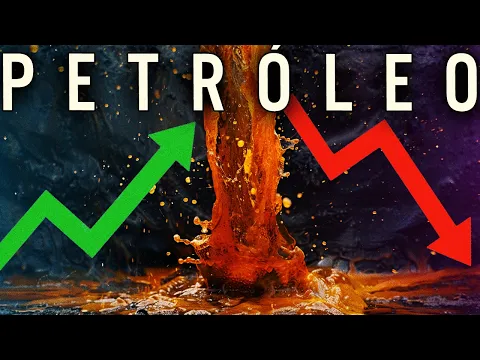

Why oil remains the main barometer of the world economy
Oil’s behavior serves as an important indicator of global economic health.
When prices rise rapidly, the market signals risks of inflation and slowdown. When they fall, they can indicate reduced demand and economic weakening.
This strategic role is explained by several factors:
- Presence in practically all production chains
- Direct influence on transport and production costs
- Immediate impact on inflation and monetary policy
- Direct relationship with global economic growth
Given this, the current scenario reinforces the importance of closely monitoring movements in the oil market.
The combination of geopolitical tensions, supply restrictions, and a possible drop in demand creates an environment of uncertainty that is expected to continue influencing economic decisions and investments in the coming months.