






 Portuguese
  Spanish
  3 min of reading
  0 comments


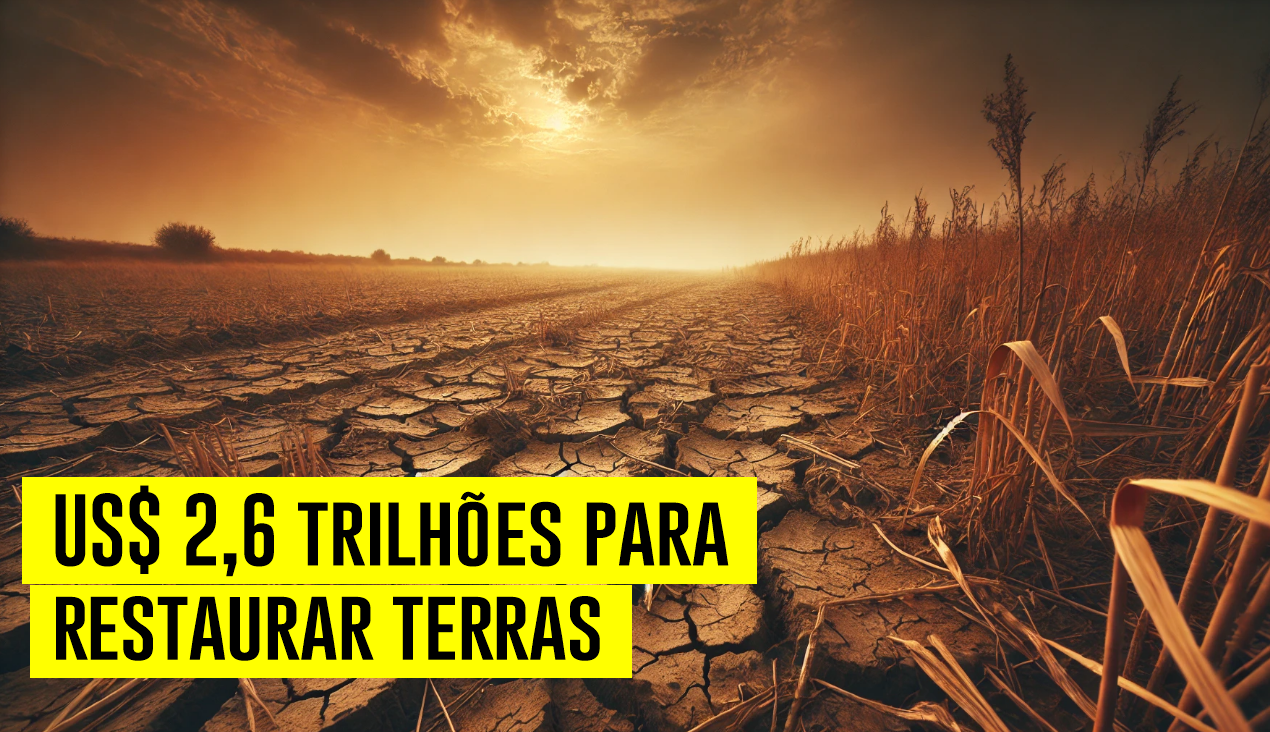
The UN Calls for a US$ 2.6 Trillion Investment to Restore Degraded Lands Worldwide, Aiming to Strengthen Global Food Supply
Restoring degraded lands and combating desertification worldwide will require at least US$ 2.6 trillion in investments by the end of this decade.
The estimate was presented by Ibrahim Thiaw, Executive Secretary of the United Nations Convention to Combat Desertification (UNCCD). This is the first time the total cost of this global effort has been quantified.
Growing Threat
Climate change intensifies the frequency and severity of droughts. At the same time, population growth puts pressure on food production.
-
Giant crane lifts up to 3,000 tons, requires special logistics to reach the site, and can transform 18-hour operations into just 3 hours, speeding up the hoisting of oil platforms, refineries, and plants in giant industrial projects.

-
A discarded microwave may contain 22-carat gold in internal components; study recovered a 450 mg nugget from electronic boards.

-
Who has the highest IQ: the oldest child, the middle child, or the youngest? A study with 240,000 people published in Science reveals a difference of up to 3.2 points and indicates which position in the family tends to have an advantage.
-
A YouTuber spent almost a year transforming the failed invention into an autonomous flying umbrella: the drone uses a camera and Raspberry Pi to follow the person and protect them from the rain on its own.


This combination increases the risk of social and economic crises unless concrete actions are implemented quickly.
Private Sector Must Participate
Of the approximately US$ 1 billion daily needed to combat land degradation, much of it must come from the private sector.
Currently, only 6% of the funding for land restoration comes from this source, even though the private sector is the main contributor to degradation, especially in food production.
“How is it possible for one hand to degrade the land while the other tries to restore it?” Thiaw asked. He also emphasized the need for governments to create policies that promote sustainable land use.
Pressure for Food
With the global population growing, it will be necessary to double food production using virtually the same area of arable land.
This scenario makes the engagement of the private sector in more sustainable practices indispensable.
To reach the goal of US$ 2.6 trillion, it will be necessary to overcome an annual deficit of US$ 278 billion. In 2022, only US$ 66 billion was invested in the restoration of degraded lands, well below what is needed.
A recent study supported by the UN revealed that approximately 15 million square kilometers of land are already degraded, an area larger than Antarctica. And this number is growing at a rate of 1 million square kilometers per year.
Debate on Legal Obligations
Tightening legal obligations among countries will be a significant challenge. Some governments are unwilling to adopt new instruments. Others, however, consider this measure essential for the success of initiatives.
Today, global commitments include the protection of 900 million hectares of land. However, experts point out the need to raise this target to 1.5 billion hectares and accelerate the pace of restoration.
The lack of a global agreement could affect other UN initiatives, such as reducing greenhouse gas emissions and protecting biodiversity.
Agriculture alone accounts for 23% of global greenhouse gas emissions, 80% of deforestation, and 70% of freshwater consumption.
Need for Investment
Thiaw emphasized that the resources needed for restoration should not be viewed as charity. “This is not an investment just for the poor in Africa. It is an investment that will maintain global balance,” he stated.
Restoring degraded lands is essential to ensure food security, mitigate the effects of climate change, and promote a sustainable future for all.


Be the first to react!