






 Portuguese
  Spanish
  3 min of reading
  1 comment


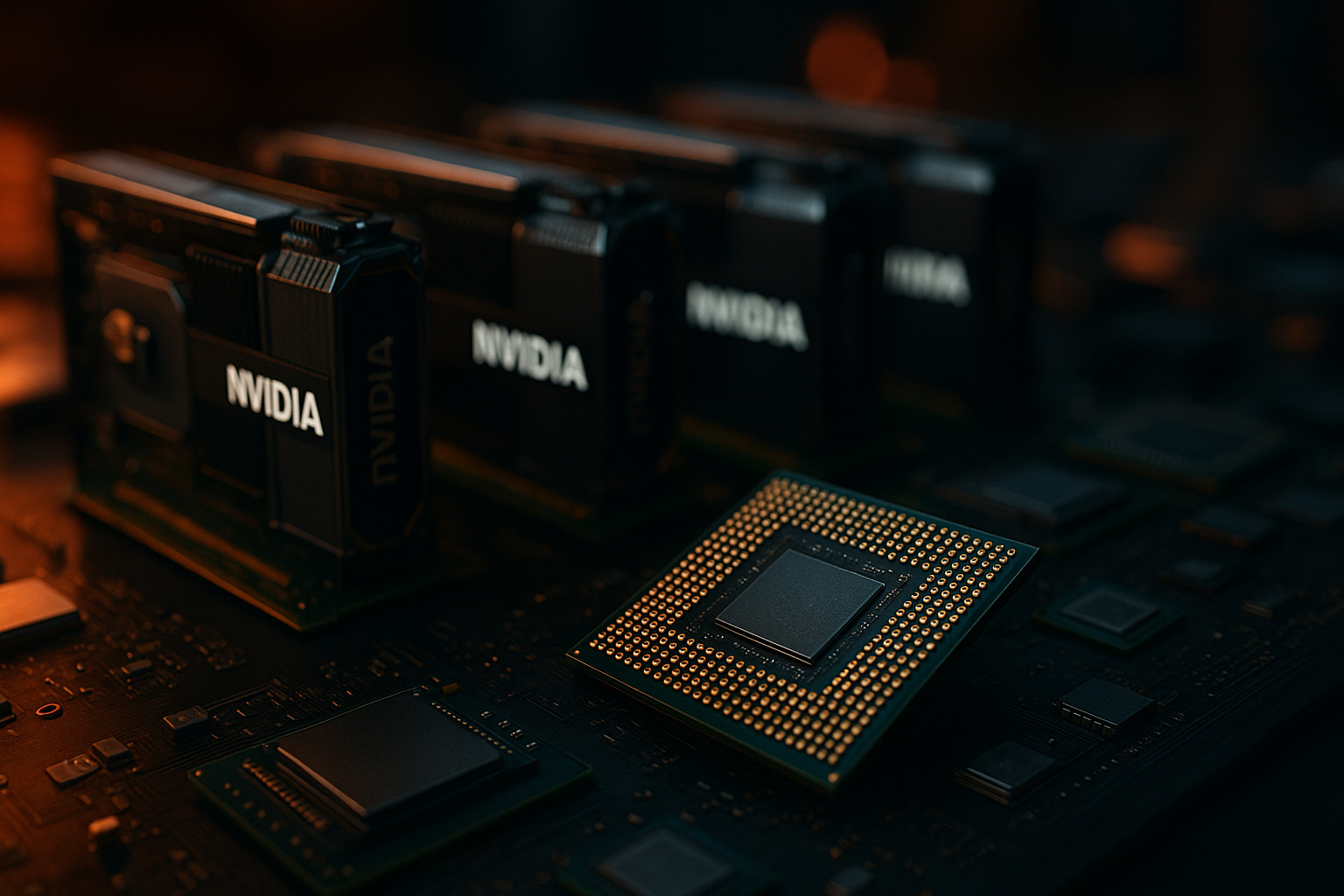

AI Race Heats Up: OpenAI Invests Billions in Nvidia, AMD, and Broadcom Chips Even Without Profit. Understand the Risk and Impact of This Decision.
OpenAI Accelerates the AI Race with Billion-Dollar Bet on Chips
OpenAI, the creator of ChatGPT, surprised the technology market by securing billion-dollar agreements to purchase millions of chips used in artificial intelligence (AI) systems.
Even with modest revenues and no profitability expected before 2029, the company decided to move forward with one of the largest bets in the recent history of science and digital innovation.
In the last 30 days, OpenAI signed contracts with Nvidia, AMD, and Broadcom to acquire ultra-high-power processors.
-
Colorectal cancer advances worldwide, but most cases can be prevented.

-
NASA takes another look at the M87* black hole and finds details in the cosmic jet in X-rays that seem to reveal a much more unsettling universe than previously imagined.

-
NASA’s space probe passes just 4,609 km from Mars, receives a boost of 1,600 km/h, and continues towards the asteroid 16 Psyche, a body valued at up to $10,000,000,000,000,000.

-
5,500-year-old DNA found in Stone Age bones reveals that the plague was already haunting prehistoric communities long before the medieval Black Death.




The transaction involves the equivalent of 26 gigawatts (GW) in computing capacity — an amount that would require energy comparable to the output of 20 nuclear reactors.
Tech Race and OpenAI’s Financial Challenge
The decision reflects OpenAI’s desire to remain at the forefront of the global AI race, but it also raises serious doubts among analysts and investors. According to financial consultant Gil Luria of D.A. Davidson, “they will need hundreds of billions of dollars to meet their obligations.”
Despite the ambition, the company expects to generate only US$ 13 billion in revenue this year — a value far below the commitments made.
Moreover, the group continues to lose tens of billions of dollars annually on the development of its cutting-edge technologies.
Even so, OpenAI appears willing to take the risk. For many, it is a bold and potentially transformative move that could redefine the course of global technology.
Risk Strategy and Silence on Funding
When approached by the AFP agency, OpenAI chose not to comment on the funding model adopted. In an interview with CNBC, the company’s president, Greg Brockman, only stated that there are “different mechanisms” being considered, but did not disclose details.
These statements increased the mystery surrounding how the company plans to honor the billion-dollar contracts with chip manufacturers.
Meanwhile, suppliers Nvidia, AMD, and Broadcom also declined to explain the payment terms or the timeline for delivering the processors.
Circular Funding: A Bet to Sustain AI
Among the most talked-about agreements is that of Nvidia, which committed to investing US$ 100 billion in OpenAI stock over the coming years. This move is seen by experts as a circular funding, where the supplier injects capital into the client to secure their own product sales.
AMD also followed an unusual strategy, offering bonds to OpenAI that could total tens of billions of dollars, without requiring direct compensation. For the market, this type of operation is rare and reveals the weight that the AI sector has gained in the global economy.
These agreements highlight the level of confidence that major technology companies place in OpenAI and, at the same time, the colossal risk involved in the future of artificial intelligence.
ChatGPT and Its Impact on Global Science and Technology
Since the launch of ChatGPT, OpenAI has become a symbol of innovation in computer science and practical applications of generative AI.
The tool has revolutionized areas such as education, journalism, design, and programming, creating a new digital era based on automation and machine learning.
On the other hand, this revolution comes at a high cost. The expense of training massive AI models is becoming increasingly unsustainable, requiring colossal amounts of energy and specialized chips.
Thus, OpenAI’s move is viewed both as a strategic necessity and a risky leap into the future.
The Uncertain Future of AI and Pressure for Results
As the world watches OpenAI’s steps, experts warn that the sector is experiencing an AI investment bubble, similar to the dot-com boom of the early 2000s. The pressure for rapid innovation and immediate commercial results could put even the largest companies in a vulnerable position.
Despite all the risks, OpenAI bets that its technological leadership and the strength of ChatGPT can justify the spike in spending.
If the strategy succeeds, the company could solidify its dominance in the field of artificial intelligence. But if it fails, it could become the largest financial collapse in recent technology history.








Hi my family member I want to say that this post is awesome nice written and come with approximately all significant infos I would like to peer extra posts like this