Portuguese
  Spanish


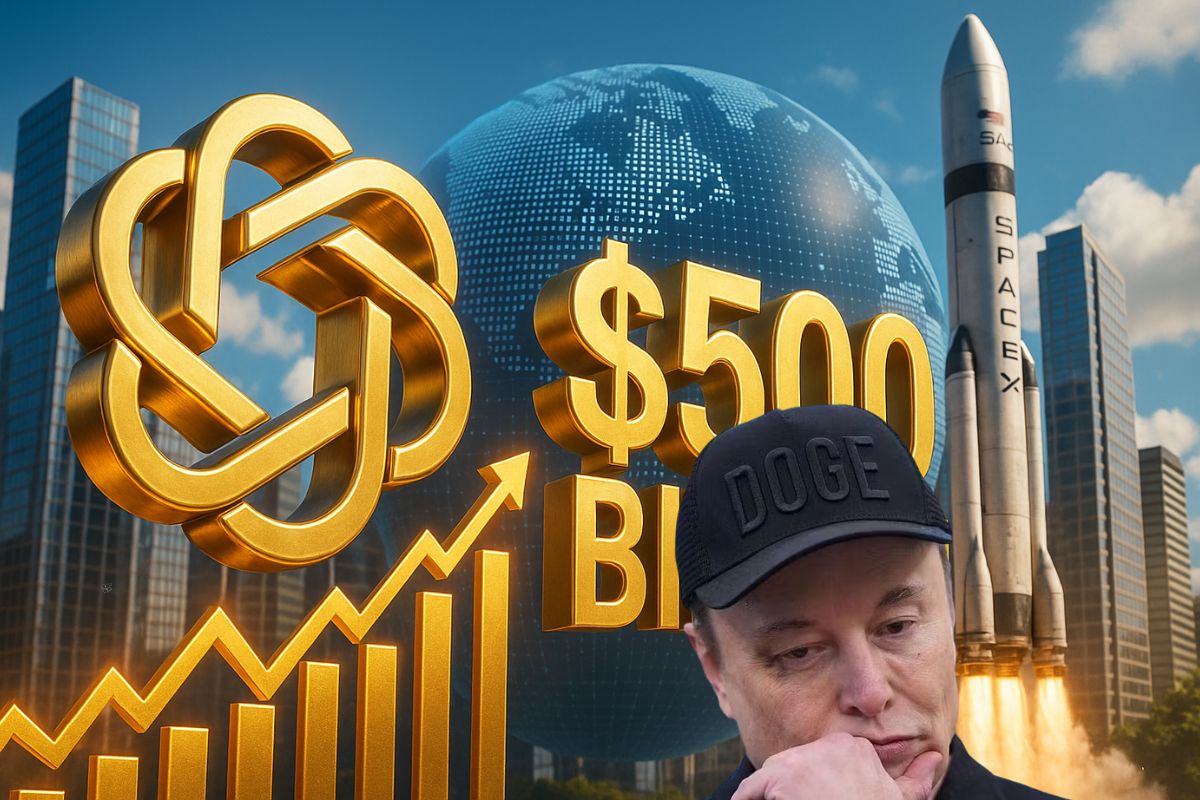

Valued At Half A Trillion Dollars, Sam Altman’s OpenAI Surpassed SpaceX And Established Itself As The Largest Privately Held Company In The World, In A Move That Reveals The Power Of Artificial Intelligence In The Global Market
Sam Altman’s OpenAI, creator of ChatGPT, reached a milestone of US$ 500 billion in market value, following a transaction that allowed the sale of shares by employees and former employees of the company. With this valuation, the company surpassed Elon Musk’s SpaceX, valued at US$ 400 billion, becoming the largest private startup on the planet.
The leap comes less than a year after the company was valued at US$ 300 billion, reflecting the global frenzy surrounding generative artificial intelligence and the appetite of major global investors, who see the technology as a driver of economic transformation.
How OpenAI Reached Half A Trillion Dollars
The new market valuation of Sam Altman’s OpenAI was calculated based on the sale of approximately US$ 6.6 billion in shares to groups such as Thrive Capital, SoftBank, Dragoneer, Abu Dhabi’s MGX, and T. Rowe Price.
-
Brazilian Job Market Surprises: Unemployment Falls to 5.6%, Hits Record Low for May, Brazilian Incomes Rise, and Underemployment Reaches Lowest Level Ever Recorded by IBGE

-
Chinese E-commerce Giant Predicts Robots Will Replace 700,000 Delivery Workers as Autonomous Vehicles Expand to 200 Cities, Offering Training for Workers to Maintain Their Machines

-
Trump warns Europe with 100% tariff threat on digital tax, potentially impacting wine and trade agreements
-
As Homeownership Becomes Unattainable in Brazil, Japanese Municipalities Offer Abandoned Houses for as Low as $3,000 to Revitalize Aging, Emptying Cities


This trading model is common in privately held startups, allowing liquidity to employees and attracting new investments.
Investor interest is directly linked to the perception that artificial intelligence is only at the beginning of its growth curve.
The global demand for data centers, chips, and AI services could generate trillions of dollars in the next decade, and OpenAI positions itself as a leader in this race.
The Direct Dispute With Elon Musk
The symbolic victory of Sam Altman’s OpenAI over SpaceX marks another chapter in the rivalry with Elon Musk, who was a co-founder of the startup and is now one of its harshest critics.
Musk sued OpenAI, accusing the company of abandoning its original non-profit purpose by accepting billions in investments from Microsoft.
While SpaceX dominates the aerospace sector with reusable rockets and communication satellites, OpenAI advances in the digital space, establishing itself as the new “frontier” of the tech market.
The dispute between Altman and Musk symbolizes two distinct paths of innovation that are shaping the future of the global economy.
Artificial Intelligence And The Future Of Innovation
The growth of Sam Altman’s OpenAI illustrates the central role of AI in the reorganization of major tech companies.
Recently, the startup launched GPT-5, its most advanced model, as well as open versions capable of replicating human reasoning processes, in response to Chinese competitors like DeepSeek.
The competition for talent has also intensified.
Companies like Meta, Google, and Anthropic are offering billion-dollar packages to attract top researchers, in a global race for the leadership of so-called “superintelligence.”
The race for AI is not just technological: it is also geopolitical and economic, with impacts that extend far beyond Silicon Valley.
Ranking Of The Most Valuable Startups
The explosion in value of OpenAI has repositioned the ranking of the largest startups in the world. Today, the list is led by:
OpenAI (USA): US$ 500 billion
SpaceX (USA): US$ 400 billion
ByteDance (China, owner of TikTok): US$ 220 billion
Anthropic (USA): US$ 183 billion
Ant Group (China): US$ 150 billion
Reliance Retail (India): US$ 100 billion
Databricks (USA): US$ 100 billion
Shein (China): US$ 66 billion
Stripe (USA): US$ 65 billion
Reliance Jio (India): US$ 58 billion
This ranking reveals the growing weight of companies linked to artificial intelligence and the digital sector, which now surpass giants in traditional areas such as retail and finance.
The meteoric rise of Sam Altman’s OpenAI shows how artificial intelligence has transitioned from promise to become the central axis of the global economy.
By surpassing Elon Musk’s SpaceX, the company not only claims the title of largest startup on the planet but also inaugurates a new era where algorithms and data can be worth more than rockets and satellites.
And you, do you believe that the leadership of Sam Altman’s OpenAI will be lasting, or that competitors like Google, Meta, and even SpaceX themselves could turn the tables in the coming years? Leave your opinion in the comments and join the debate about the future of technology and innovation.