Portuguese
  Spanish


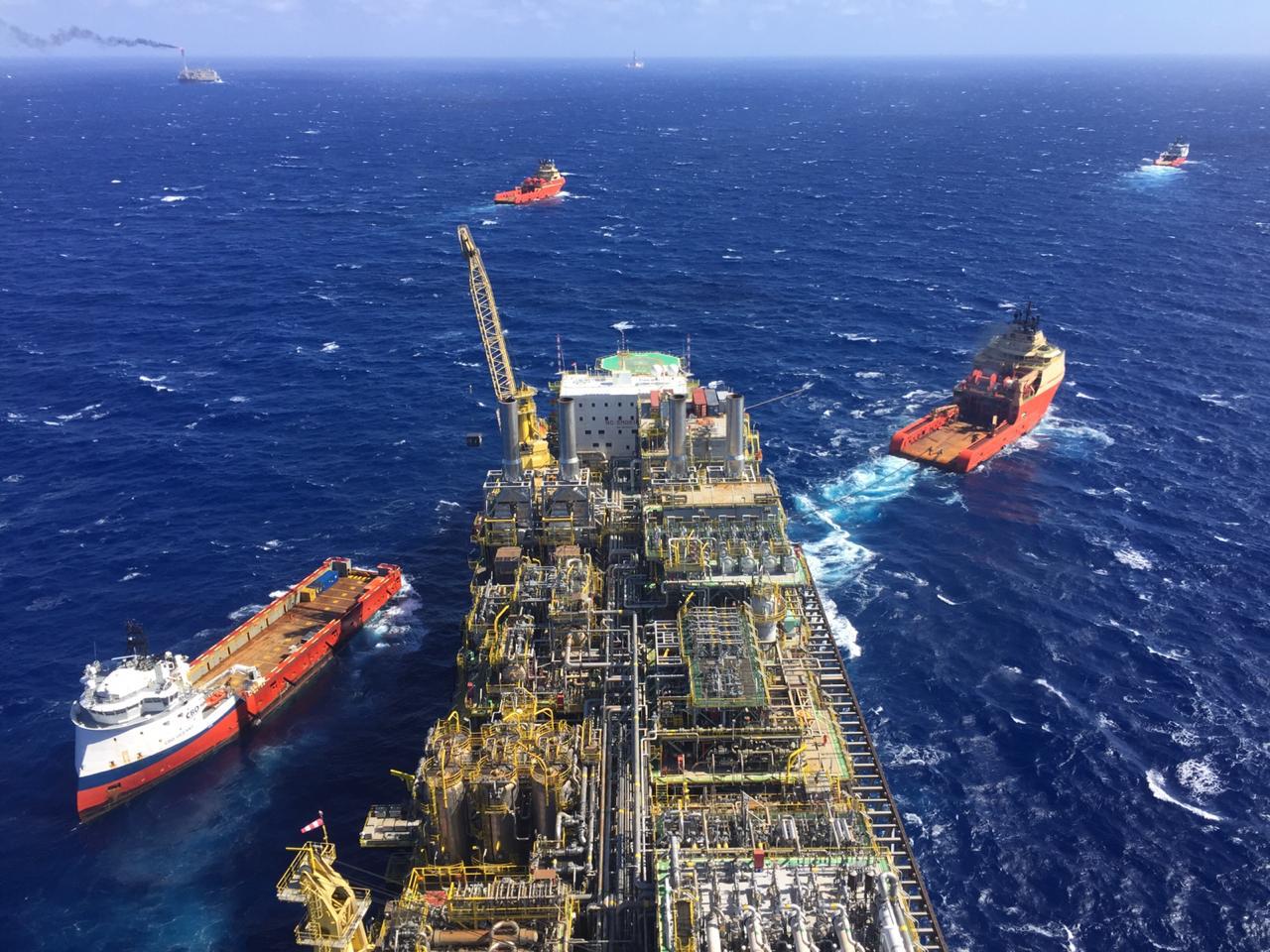

Santos Basin Will Open Demand Elaborated by ANP Based on Operators’ Commitments.
According to the National Agency of Petroleum – ANP, 65 of the 250 wells will be drilled in the Santos Basin by operators next year. The remaining basins scheduled for development in 2020 are Potiguar (53), Sergipe (46), Campos (41), Espírito Santo (29), Recôncavo (13), Parnaíba (3), and Alagoas (3).
Petrobras operates almost half of the fields currently in development stage in the country. The most prominent fields among the 84 currently are the Santos Basin (22), Recôncavo (17), Potiguar (11), Campos (8), and Espírito Santo (5).
-
Over 2,000 Tons of Discarded Fishing Nets Since 2020 Repurposed into Durable Caps, Fins, and Parts

-
Seals and Sea Lions Lose Habitat and Food as Climate Change Advances, Impacting Ice, Prey, and Coastal Communities

-
Brazilian Innovator Uses 3D-Printed Device to Cool Two Rooms with One Air Conditioner
-
China Uses 432 Robots to Move a 7,500-Ton Historic Building in Shanghai, Preserving Architecture While Creating Space for Underground Center


In Brazil in total, there are 303 producing fields and 323 exploratory blocks contracted to 47 national groups and 50 foreign ones. The commitments for exploratory well drilling in 2020 will be presented by oil companies to the ANP on October 30.
In the first half of this year, the number of new drillings (exploratory and development) decreased by 20% compared to the same period last year, totaling 79 wells against 103 in 2018. Compared to the previous six months, there was a 10% reduction.
52 wells were drilled on land and 27 at sea between January and June of this year. The Potiguar Basin accounted for 21.5% of the total (17 wells), followed by the Sergipe Basin (14 wells), Santos (13), Campos (12), Espírito Santo (10), Parnaíba (7), Recôncavo (four), Solimões (1), and Alagoas (1).
Only the Sergipe Basin had offshore wells with drilling started in 2019, in addition to Campos and Santos. The wells drilled in the Sergipe Basin are both from the BM-SEAL-4 block (3-BRSA-1367-SES and 3-BRSA-1368-SES) by Petrobras, using the Petrobras 10,000 rig, operated by Transocean.
This year, oil companies Equinor, Shell, Enauta, and Total began drilling along the Brazilian coast, with Equinor drilling three wells in Campos and two in Santos, Shell two in Campos and one in Santos, Enauta two in Santos, and Total one in Santos.
Petrobras began drilling onshore wells, with 16 in the Potiguar Basin, 12 in Sergipe, nine in Espírito Santo, two in Recôncavo, and one in Alagoas. In addition to the state-owned company, Eneva has seven wells in Parnaíba, BMG (1 in Espírito Santo), Imetame and Maha Energy (1 in Recôncavo each), Phoenix (1 in Potiguar), and Rosneft (1 in Solimões).
According to the ANP, operators’ commitments associated with E&P contracts foresee the drilling of just over 30 exploratory wells and about 150 development wells in 2019.
Between July and December, 28 blocks will have their first exploratory period coming to an end, particularly Shell (nine in Barreirinhas) and Eneva (seven in Parnaíba), while Imetame’s REC-T-163 will expire its second exploratory phase. In the same period, the evaluation plans for the discovery of BT-PN-1 and BT-PN-4 by Eneva in the Paranaíba Basin are set to conclude.
Petrobras Develops Platform Painting Robot