Portuguese
  Spanish


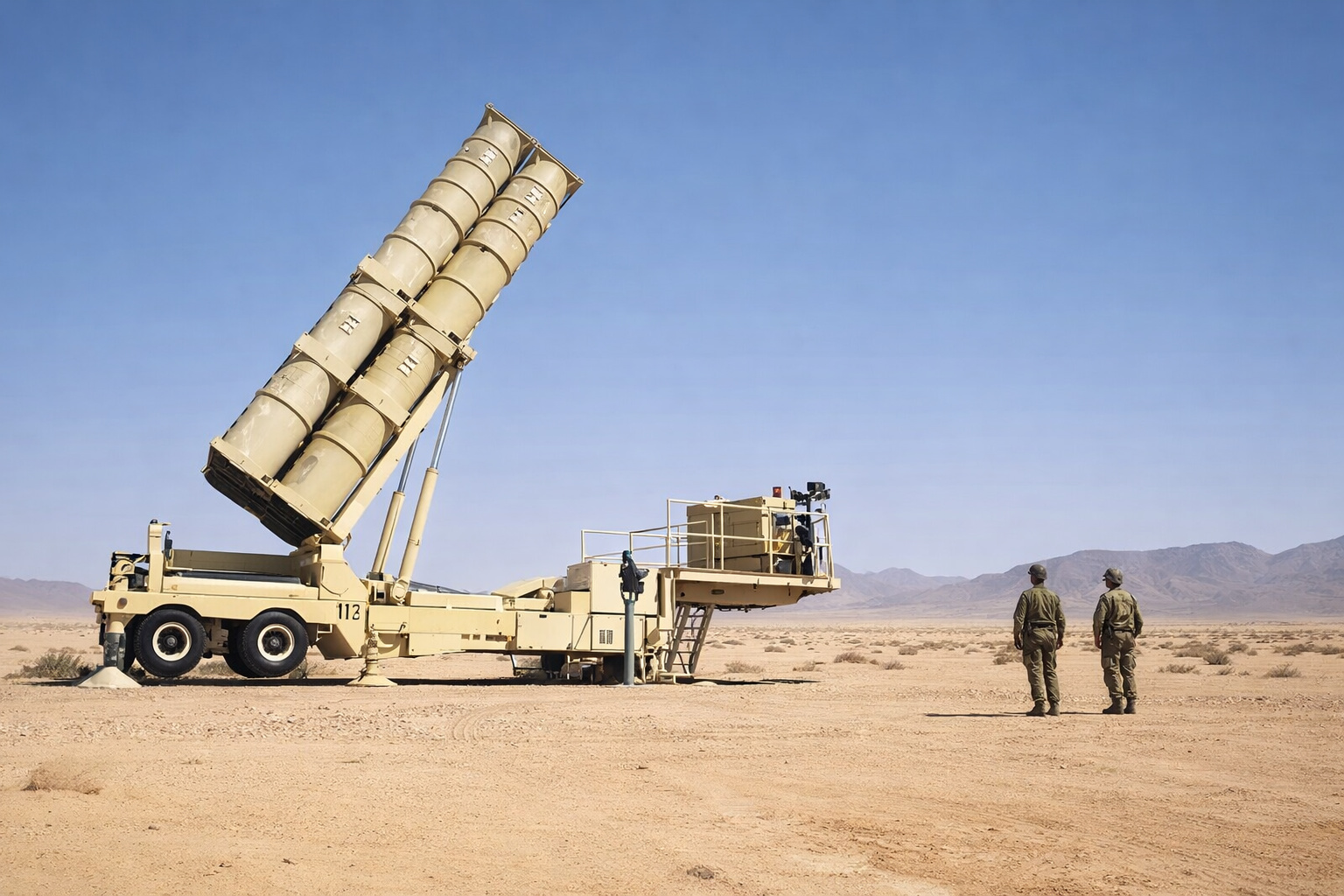


Operating Outside the Earth’s Atmosphere, the Arrow 3 Was Designed to Intercept Ballistic Missiles Still in Space, Before Their Warheads Reenter and Threaten Populated Areas.
In a scenario where ballistic missiles can cross thousands of kilometers in minutes, traditional defense based solely on atmospheric interception has become inadequate. Israel’s technological response to long-range threats has gained an unprecedented layer: destroying the missile while still in space, before it reenters the atmosphere.
The Arrow 3 system was developed by Israel Aerospace Industries (IAI), in cooperation with the United States Missile Defense Agency (MDA). It officially entered operation in 2017, becoming one of the first operational systems capable of dedicated exo-atmospheric interception.
The logic is simple in theory and extremely complex in practice: neutralizing the ballistic vector during the mid-flight phase, outside the Earth’s atmosphere.
-
U.S. Military Intervention Risk in Brazil Raises Alarm, Highlights National Sovereignty Amid Tensions Over Washington’s Terrorist Designation of PCC and Comando Vermelho

-
Brazilian Air Force’s Sole KC-30 Aircraft Completes Strategic Mission to Spain for 105mm Anti-Tank Ammunition for Leopard 1A5 Tanks

-
Brazilian Air Force Seeks to Acquire More Gripen Fighter Jets
-
U.S. Air Force Launches Air-to-Air Missile Project with Range of Up to 1,850 km for Indo-Pacific Operations




Technical Architecture and Exo-atmospheric Interception
The Arrow 3 is part of an Israeli multi-layered missile defense system, which includes the Iron Dome (short range) and David’s Sling (medium range). The Arrow 3 operates in the upper layer, aimed at long-range ballistic threats.
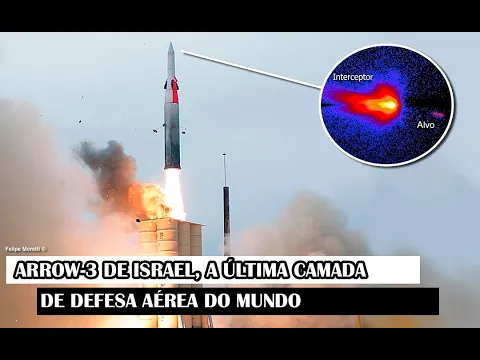

Unlike conventional interceptors that use explosive warheads, the Arrow 3 employs the concept of “hit-to-kill.” This means destruction occurs by direct impact, using pure kinetic energy.
By reaching hypersonic speeds outside the atmosphere, the interceptor collides with the target with enough energy to destroy it without the need for an explosive payload.
Tests released by the MDA indicated that the system is capable of intercepting targets at altitudes above 100 kilometers, potentially achieving even higher interceptions, in regimes close to space.
This capability places the Arrow 3 within the category of exo-atmospheric systems, conceptually similar to the United States Ground-Based Interceptor (GBI).
Layered System Operation
The process begins with detection by early warning radars, such as the Super Green Pine, developed by IAI and Elta Systems.
After identifying the threat, the command center calculates trajectory, interception point, and the optimal launch moment. The Arrow 3 interceptor is then fired vertically.
During the ascent phase, the missile uses inertial navigation systems and real-time data updates. As it approaches the target, the interceptor vehicle separates from the booster rocket and performs autonomous maneuvers for direct collision.
This phase occurs outside the atmosphere, where there is no significant aerodynamic resistance, requiring extremely refined orbital precision and attitude control.
Strategic Impact in the Middle East
The development of the Arrow 3 is closely linked to the regional strategic environment, especially the ballistic capabilities of countries such as Iran.
Medium and long-range ballistic missiles pose a significant threat due to their high speed and parabolic trajectory, which complicates late interception.
By destroying the missile while still in space, the Arrow 3 expands the response window and reduces the risk of dangerous debris over Israeli territory.
Furthermore, exo-atmospheric interception allows for multiple attempts. If the first interception fails, lower layers of the system can still engage.
This layered architecture increases the probability of success and reduces strategic vulnerability.
Export and International Integration
In 2023, Germany announced an agreement to acquire the Arrow 3 as part of the European Sky Shield Initiative, reinforcing the integration of the system into European air defense.
This choice reflects international recognition of the system’s exo-atmospheric capability and its relevance amid the modernization of global ballistic arsenals.

The integration of Arrow 3 into multinational networks expands the geopolitical reach of Israeli technology and strengthens strategic cooperation with Western allies.
Technical Limits and Future Challenges
Intercepting missiles in space involves complex challenges. The mid-flight phase can include countermeasures such as decoys and multiple reentry vehicles. Defense systems must discriminate between real warheads and false objects in an exo-atmospheric environment.
Although tests have demonstrated effectiveness against simulated targets, real efficiency depends on specific operational scenarios.
The technological race between offensive and defensive remains dynamic. Systems like the Arrow 3 pressure missile developers to invest in multiple independent warheads, evasive maneuvers, and hypersonic vectors.
Space Defense as a New Strategic Domain
Exo-atmospheric interception represents a conceptual shift. The boundary between air defense and space defense is becoming increasingly blurred.
The Arrow 3 symbolizes this transition. It operates at the edge of the atmosphere, utilizing space engineering principles to protect national territory.
By destroying threats before reentry, the system reinforces not only regional security but also the global trend toward the militarization of near space.

Operating outside the atmosphere and utilizing pure kinetic impact, the Arrow 3 transforms space into an active field of strategic defense.
In a scenario where missiles cross continents in minutes, the ability to intercept in space redefines risk calculation and expands the complexity of contemporary military balance.