Portuguese
  Spanish


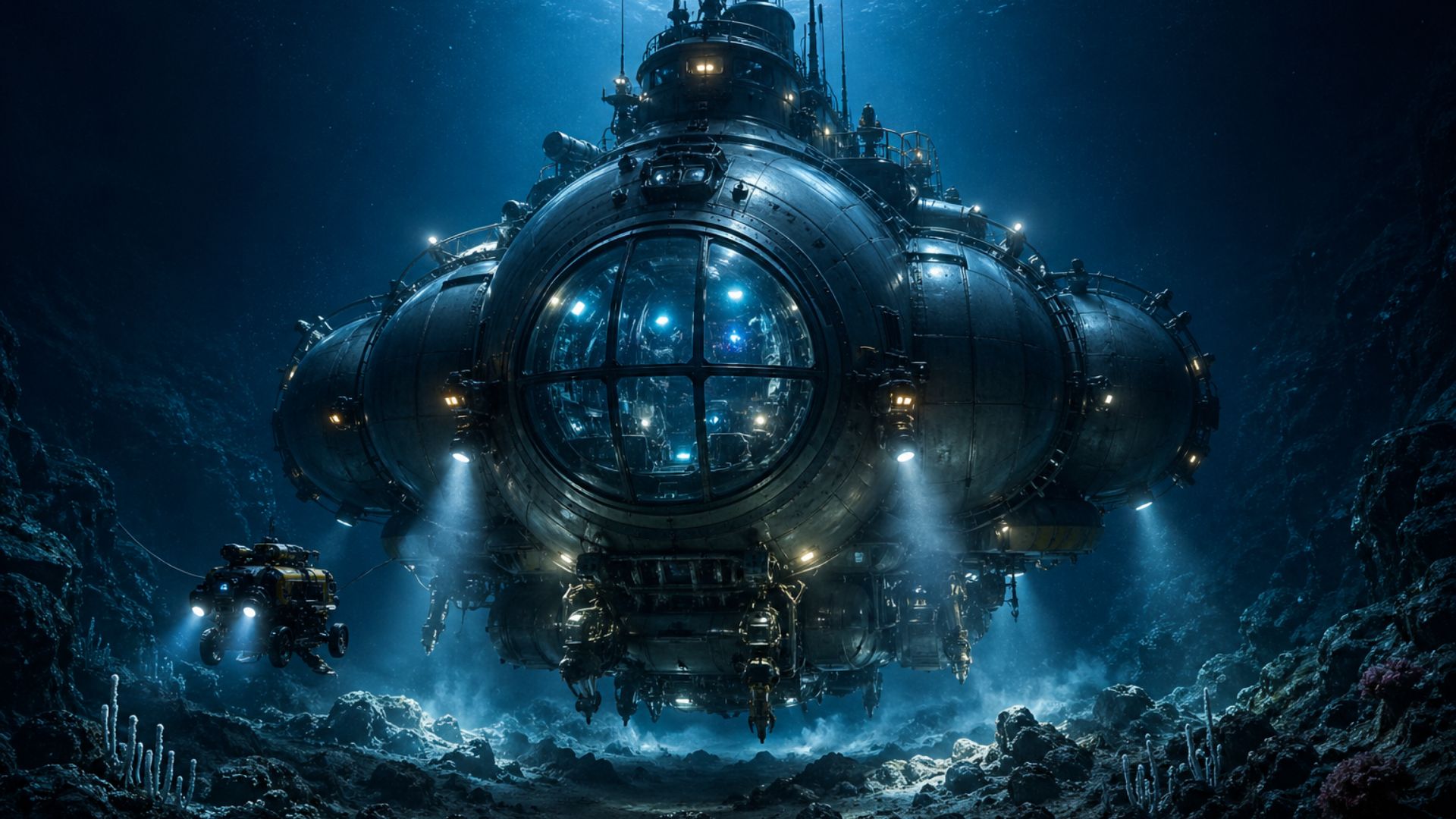

Extreme submarine engineering redefines military limits on the ocean floor, with vessels capable of operating where pressure renders conventional technologies unfeasible and expands strategic reach in practically inaccessible environments, reinforcing the silent role of these machines in modern geopolitical disputes.
Russia maintains at the core of its submarine strategy a rare lineage of nuclear vessels with titanium hulls, designed to operate at unusual depths and on hard-to-detect missions on the seabed.
The most extreme case is the AS-31 Losharik, a special-purpose nuclear submersible associated with the Main Directorate of Deep-Sea Research, known by the Russian acronym GUGI, a structure linked to the Russian Ministry of Defense.
Unlike conventional attack submarines, the Losharik is described by experts as a vessel formed by connected internal titanium spheres, a solution that helps distribute pressure at great depths.
-
YouTuber Discovers Surreal Collection in 400-Year-Old Italian Fortress Near Florence: 419 Anvils, Giant Walruses, Ancient Church, and WWII Tunnels

-
Creative Uses for Toilet Paper Rolls That Will Change Your Perspective
-
Crab Trapped in Plastic Bottle for 62 Days Near Okinawa Highlights Little-Known Impact of Marine Pollution on Small Animals
-
Esperanza’s Bamboo Barrier in Oaxaca Redirects River and Reduces Erosion by 85% in Five Years



This architecture explains the model’s attributed ability to reach up to 6,000 meters, a mark that allows access to most of the ocean floor and expands the scope of military, scientific, and intelligence operations.
Why titanium was chosen for nuclear submarines
During the Cold War, Soviet engineers saw titanium as an alternative to the steel used in traditional submarines, mainly due to its strength, lower relative weight, and favorable behavior in a marine environment.
The material also offers a low magnetic signature, a relevant characteristic for vessels that need to reduce their exposure to sensors and tracking systems used in anti-submarine operations.
The cost, however, has always been an obstacle.
The manufacturing of titanium hulls requires complex welding processes, rigorous quality control, and highly specialized industrial facilities.
Even so, Moscow maintained this path in specific projects, while the United States prioritized high-strength steel alloys, considered more viable for large-scale construction.
K-278 Komsomolets depth record
Among combat submarines, the K-278 Komsomolets holds a historical position for having reached approximately 1,027 meters in depth in tests conducted in the Norwegian Sea in 1985.
The Soviet submarine, known in the West as the Mike class, had an internal titanium hull and was developed as an experimental platform to evaluate deep-diving and submarine combat technologies.
The vessel sank on April 7, 1989, after a fire on board, an incident that killed 42 crew members and left the hull on the bottom of the Norwegian Sea, with nuclear material still under monitoring.
Despite the disaster, the Komsomolets solidified the Soviet reputation for submarine projects capable of operating at depths far greater than those achieved by conventional combat models.
Secret missions of the Losharik submarine
The AS-31 Losharik is not presented as a traditional attack submarine, but as a platform for special operations in deep waters, with possible use in the inspection, recovery, and installation of underwater equipment.
Western authorities and analysts associate this type of vessel with missions near fiber optic cables, acoustic sensors, and strategic structures installed on the ocean floor.
These activities are difficult to confirm publicly because they involve classified programs and areas of direct military interest, but NATO’s concern about underwater infrastructure has grown in recent years.
In 2019, the Losharik suffered a fire during an operation in the Barents Sea, an accident that killed 14 Russian servicemen and led the vessel to a long period of repairs in Severodvinsk.
Russian fleet with titanium submarines
In addition to the Losharik, Russia inherited Sierra I and Sierra II class submarines from the Soviet Union, known for their use of titanium hulls and operational depths superior to those of many steel submarines.
These vessels were designed for attack, surveillance, and patrol missions, with conventional nuclear submarine armaments, including torpedoes and missiles compatible with their military functions.
Another central name is the Belgorod, a Project 09852 nuclear submarine delivered to the Russian Navy in July 2022 and described as a platform for large underwater vehicles, including the Poseidon.
With about 184 meters in length, the Belgorod is not known for having an integral titanium hull like the Sierra or Losharik models, but it integrates the same Russian ecosystem of special submarine operations.
Why operating at 6,000 meters is strategic
The depth of 6,000 meters has strategic relevance because it covers most of the known ocean floor, although abyssal trenches exceed this limit in specific regions of the planet.
This range allows operation in areas where pressure prevents the presence of conventional submarines and severely limits the use of military inspection or intervention equipment.
In practice, this capability expands the scope of action for monitoring, object retrieval, sensor installation, and approaching critical infrastructure, always under strict operational secrecy.
For this reason, the strategic value of these submarines lies not only in their maximum depth but in the combination of structural resistance, nuclear autonomy, and low detection.
Cost and complexity of titanium submarine technology
Russia’s decision to preserve titanium technology reflects a specific industrial heritage.
Shipyards like Sevmash, in Severodvinsk, have concentrated knowledge accumulated since the Soviet period.
In the United States, the choice of special steels reduced costs, simplified production, and met the operational depths required by American naval doctrine.
Russia, on the other hand, maintained niche projects where depth and discretion compensate for industrial complexity, especially in missions related to the seabed.
The result is a small, expensive, and highly specialized fleet, but capable of operating in environments where few navies can act with their own means.