Portuguese
  Spanish


The Origin of Water on Earth Is One of the Great Questions of Science, But New Evidence Suggests That the Answer May Be Simpler Than Previously Thought
British researchers are challenging an old theory about the origin of water on Earth. A new study indicates that water may have been part of the very material that gave rise to the planet, without depending on comets or asteroids.
New Hypothesis About the Origin of Water
For a long time, scientists believed that water arrived on Earth after its formation, through impacts from hydrogen-rich space rocks.
The explanation was based on the apparent scarcity of moisture in the so-called building blocks of the planet.
-
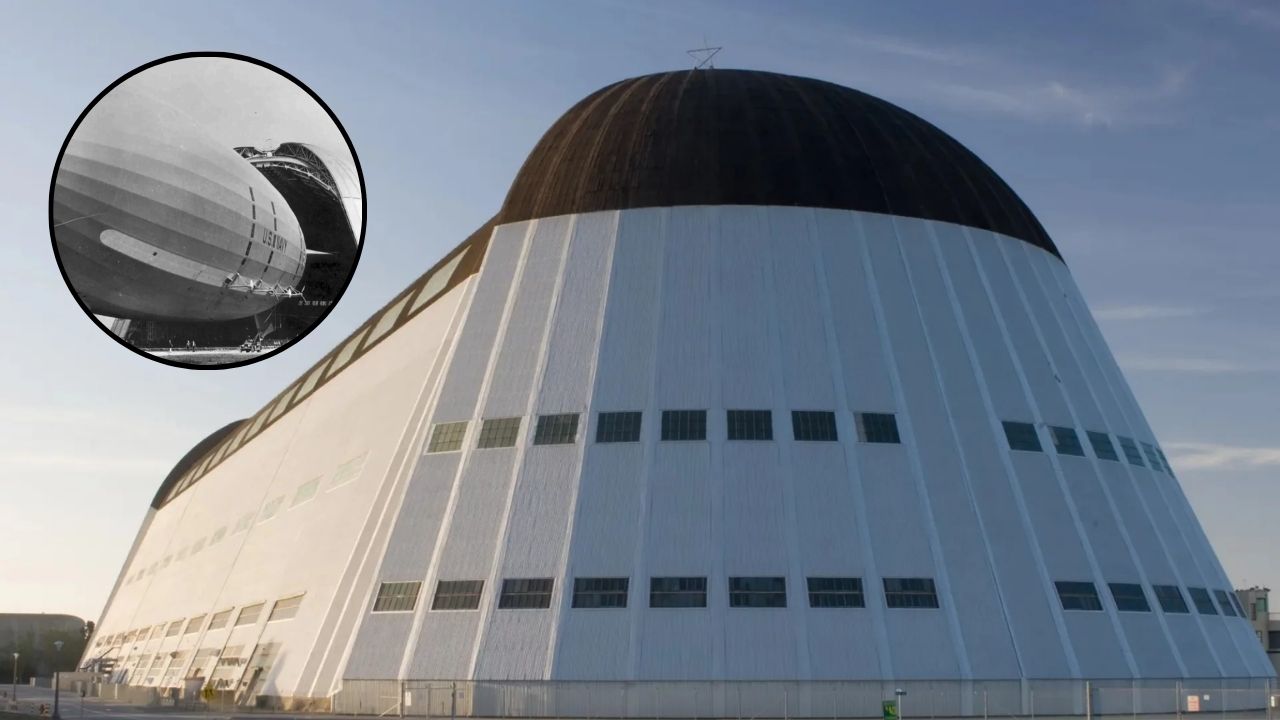
Google Revives Historic Hangar for Cutting-Edge Tech in Silicon Valley: Once Built for a “Flying Aircraft Carrier,” Now a Hub for Drones and Robotics

-
Son of Brazilian Farmers Develops AI Robots in Arizona, Wins $175,000, and Tests Machines for Farming Tasks Amid U.S. Labor Shortage
-
Canadian Student Wins $50,000 at World’s Largest Youth Science Fair with AI-Powered Sea Turtle Robot Hunting Microplastics and 3D Holographic Camera Exposing Ocean Threats
-
South Korea to Sink 20 Massive Concrete Coffers Off Busan Coast to Build 1.4 km Breakwater at Jinhae New Port, Part of $9.4 Billion Expansion to Rank Among World’s Top 3 Ports




However, a group of researchers from the University of Oxford and the UK’s National Synchrotron Science Centre proposed another possibility.
They analyzed enstatite chondrites (ECs), rare meteorites that have a composition similar to the original rocks that formed the Earth. These meteorites can provide clues about what the planet was like in its early days.
Analysis Technique Revealed Hydrogen
To investigate the meteorites, the scientists used a technique called XANES — X-Ray Absorption Near Edge Spectroscopy.
The method allows detection of the chemical composition of the samples. As a result, sufficient hydrogen was identified to suggest that Earth could have formed its oceans without external help.
According to James Bryson, a Earth scientist at the University of Oxford, the results show that the original material of Earth was richer in hydrogen than previously thought. This indicates that the formation of water was a natural and internal process, not a cosmic accident.
Ingredients for Water Were Already Present
The team states that all the essential elements to form water — such as hydrogen and oxygen — were already in the rocks of primitive Earth about 4.55 billion years ago. The study suggests that hydrogen may have been trapped in minerals, especially in pyrrhotite, an iron sulfide.
This retention of hydrogen would have prevented its loss to space, preserving the element until there were favorable conditions for water formation. The discovery of hydrogen sulfide in unexpected locations in the samples also reinforces the thesis that water arose from Earth’s own composition.
Confirmation of Previous Studies
The new analysis supports previous research. In 2020, another study had already found hydrogen within enstatite chondrites, but there were doubts as to whether it was truly native to those rocks. Now, researchers believe that the confirmation is more solid.
For Thomas Barrett, also from the University of Oxford, the presence of hydrogen under these conditions is significant evidence. Since the chances of terrestrial contamination are considered low, this strengthens the theory that water is a natural result of Earth’s formation.
The study was published in the scientific journal Icarus. The discovery could change the way we understand the origin of the planet and the evolution of life. For scientists, answering how Earth acquired its current appearance continues to be one of the greatest questions in planetary science.