






 Portuguese
  Spanish
  3 min of reading
  0 comments


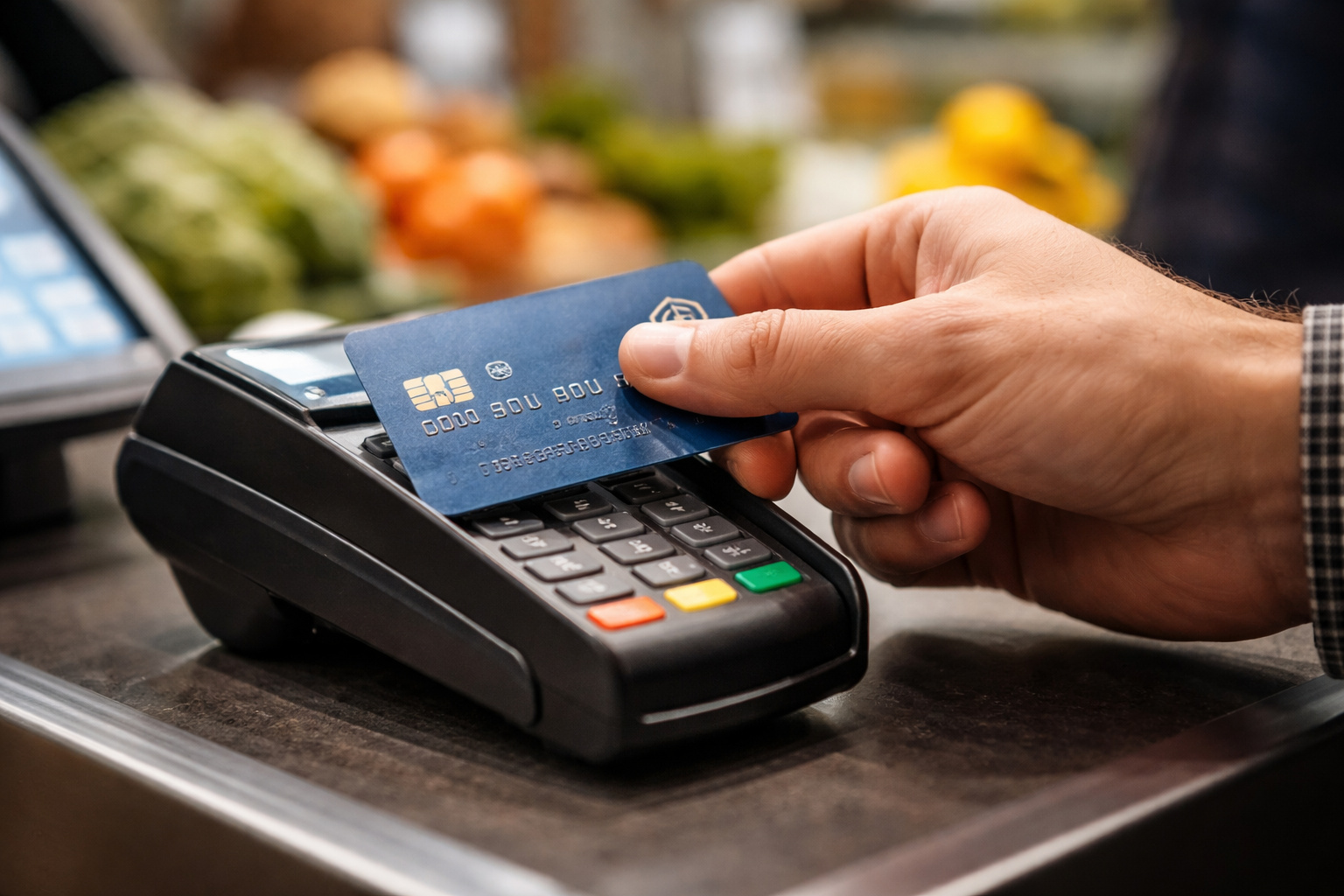
NFC Technology Facilitates Fast Payments in Retail but Requires Constant Attention from Consumers and Merchants to Avoid Silent Fraud
The contactless payment has thus established itself as one of the most used methods in Brazilian commerce in recent years. Since 2020, when the technology gained traction in the country, consumers have been able to pay for purchases just by tapping their card or smartphone against the card reader. However, although the convenience is evident, the advance of this model has also raised recurring doubts about security, fraud, and misuse, especially in cases of loss or theft.
According to data released by the Brazilian Federation of Banks (Febraban), the volume of contactless transactions has grown rapidly since the pandemic. Thus, supermarkets, pharmacies, transportation, and restaurants have adopted the system as standard. Still, despite the layers of protection, risks continue to exist, which requires information and daily vigilance.
How Contactless Payment Works and Why It Became Popular
Contactless payment uses NFC (Near Field Communication) technology, which allows data exchange between the card or smartphone and the card reader just a few centimeters apart. This way, the purchase is completed quickly, without inserting the card into the terminal.
-
Helicopter Drops 180 Tons of Sand and Gravel on Swedish River to Revive Ecosystem Damaged by Decades of Exploitation

-
Brazilian Company Launches Retro Smartphone with 48 MP Camera, T9 Keyboard, and Privacy Features for Social Media-Free Use

-
Self-Taught Chinese Farmer Builds 5-Ton Submarine from Scrap, Launches It in Anhui River
-
Invisible Induction Technology Enables Wireless Power for Blenders, Coffee Makers, and Air Fryers, Reducing Countertop Cables



Moreover, for smaller amounts, entering a PIN is not necessary. Therefore, the combination of speed, convenience, and less physical contact has driven usage since 2020, following guidelines from the Central Bank of Brazil. However, this very ease, when combined with inattention, can favor risk situations.
Frauds in Contactless Payment Worry Authorities
Despite security mechanisms, frauds can occur when there are failures in the transaction environment. First, one of the most notorious scams involves tampering with card readers, usually through the installation of malicious software by fake technicians.
Additionally, another reported practice involves the use of portable card readers in crowded places. In these cases, criminals bring the terminal close to cards stored in bags or pockets. Since there is a limit for PIN-free purchases, charges can be made without the immediate awareness of the cardholder.
Since 2021, the Central Bank and Febraban have been reinforcing alerts about this type of situation, highlighting the importance of constant monitoring of transactions.
Essential Care for Consumers to Protect Their Cards
In this scenario, some simple actions help significantly reduce risks. Thus, actively monitoring the card, together with the tools offered by financial institutions, becomes essential.
Among the main recommended precautions are:
• Frequent monitoring of account statements and purchase history
• Activating real-time alerts for each transaction made
• Adjusting the limit for PIN-free purchases or disabling the function, if preferred
• Keeping the card in secure places, avoiding unintentional proximity
• Avoiding use of card readers that raise suspicion
These guidelines have been reinforced in educational campaigns since 2022, following the directives of Febraban.
Merchants’ Responsibility in Transaction Security
In addition to consumers, merchants also play a central role in the security of contactless payments. After all, they control the terminals and the sales environment.
Good practices include keeping updates only with official support, controlling physical access to card readers, and training employees to identify scam attempts. When these measures are adopted, customer confidence increases and operational risks decrease.
Information as the Main Ally Against Fraud
Finally, information remains one of the most effective tools against fraud. The more consumers understand how contactless payment works, its limits, and notifications, the quicker they can identify abnormal behaviors.
Since 2020, the Central Bank of Brazil has stressed that financial education, along with immediate card blocking in case of loss and conscious use of digital means, is essential. Thus, when consumers and merchants act with attention, technology retains its main advantage: convenience with increased security, without unpleasant surprises at the end of the month.





Be the first to react!