






 Portuguese
  Spanish
  4 min of reading
  0 comments


The Minister of Defense, José Múcio, said that the Scorpène-class submarines that France intends to sell to Argentina could be built in Brazil, at the Itaguaí complex. The operation would involve financing and industrial cooperation and would place the country at the center of the reconstruction of the Argentine fleet.
The submarines of the Scorpène class that France wants to sell to Argentina could be built in Brazil. This statement comes from the Minister of Defense, José Múcio Monteiro, who returned last week from a visit to Buenos Aires with the mission of advancing negotiations for the sale, financing, and construction of the vessels.
If the agreement progresses, Brazil would cease to be just a buyer of French technology to become a regional platform for submarine production. On the other side, Argentina is trying to rebuild a submarine force that has been inactive since the disappearance of the ARA San Juan in 2017, a tragedy that shook the Navy of the neighboring country.
Scorpène Submarines Built in Brazil: How It Would Be
The operation has a triangular logic. The Naval Group, a French state-owned company, owns part of the Itaguaí Naval Complex in Rio de Janeiro and has been Brazil’s partner in the submarine program since 2008. The proposal arising from the Franco-Brazilian articulation would be to build the vessels in Itaguaí, utilizing the already established infrastructure, in a co-financing model where the deal would only close if production were carried out on Brazilian soil.
-
Helicopter Drops 180 Tons of Sand and Gravel on Swedish River to Revive Ecosystem Damaged by Decades of Exploitation

-
Brazilian Company Launches Retro Smartphone with 48 MP Camera, T9 Keyboard, and Privacy Features for Social Media-Free Use

-
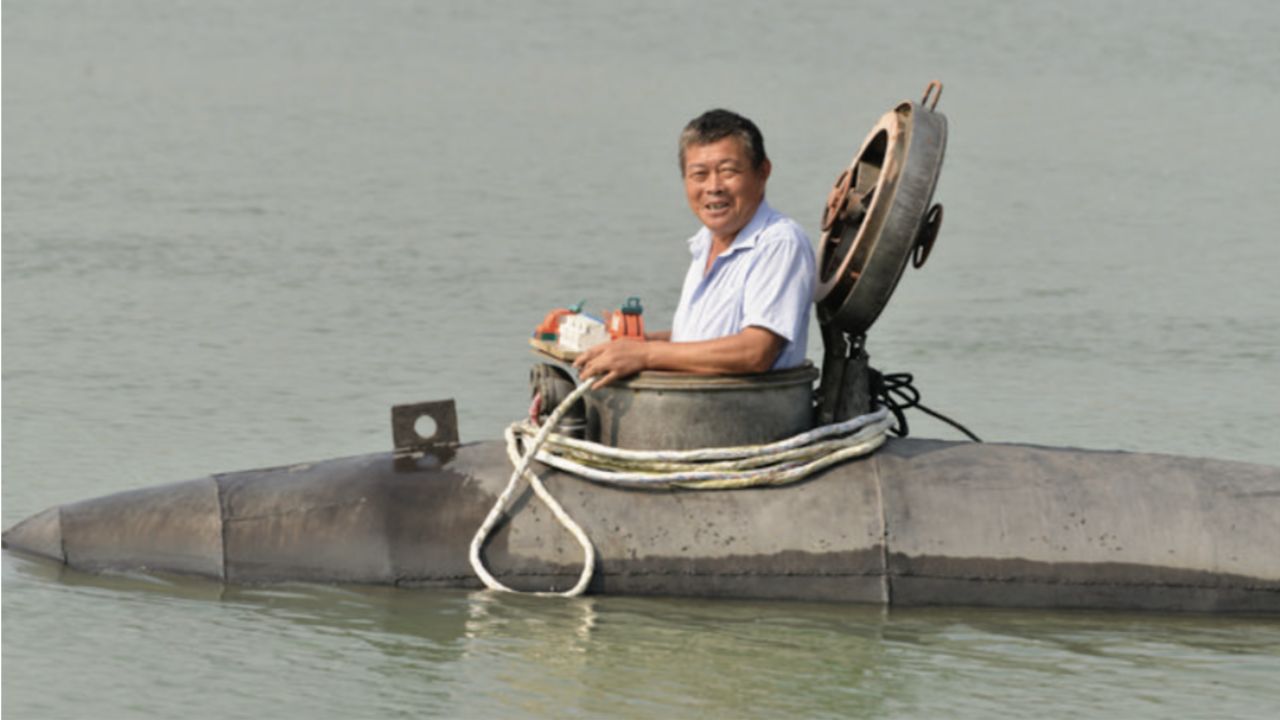
Self-Taught Chinese Farmer Builds 5-Ton Submarine from Scrap, Launches It in Anhui River
-
Invisible Induction Technology Enables Wireless Power for Blenders, Coffee Makers, and Air Fryers, Reducing Countertop Cables



According to Múcio, Argentina would buy at least three Scorpène class submarines. The minister assesses that the neighboring country has been seeking equipment in Europe and the United States that it could acquire from Brazil, and that this is precisely the logic of the so-called Armed Forces diplomacy, aimed at bringing South American military closer and opening the market for the national defense industry.
What is ProSub and Why Brazil Can Build

Brazil’s capability did not appear out of nowhere. Signed with France in 2008, the Submarine Development Program (ProSub) has already resulted in the construction of four conventional submarines of the Riachuelo class, derived from the Scorpène and assembled in Itaguaí: Riachuelo, Humaitá, Tonelero, and Almirante Karam, the latter launched at sea at the end of last year. The agreement also included technology transfer and the basis for the future nuclear-powered submarine, expected by the middle of the next decade.
It is this structure that puts Brazil in a position to build for third parties. The Scorpène class, a project of the Naval Group, is used by navies of countries such as Chile, Malaysia, India, and Brazil itself, and was the basis of the Riachuelo class. Leveraging the already established chain in Itaguaí would allow the production of submarines for Argentina without starting from scratch, a significant leap for the Brazilian military naval industry.
Argentina without submarines since the ARA San Juan
According to information from the naval blog, on the Argentine side, the urgency is real. Buenos Aires has been without operational submarines since 2017, when the ARA San Juan disappeared in the South Atlantic with 44 crew members on board, an episode that deeply marked the Navy and exposed the deterioration of its submarine force. Restoring this capability has become a priority, and the Brazilian solution would bring logistical and political advantages, such as geographical proximity, which reduces training and support costs.
But there are concrete obstacles. Argentina faces severe budgetary constraints and would need to structure long-term financing to make the purchase viable. There is also the issue of timelines: analyses by the specialized press indicate that Buenos Aires wants to receive the submarines between 2032 and 2036, a window that may conflict with commitments already made by the Naval Group in France. Therefore, Múcio’s visit also served to discuss credit and cooperation mechanisms.
Beyond the submarines: the KC-390 and the South Atlantic
The Brazilian offer is not limited to submarines. Brazil is also trying to sell the military cargo aircraft KC-390 Millennium, from Embraer, to Argentina. This multi-mission aircraft is capable of tactical transport, aeromedical evacuation, cargo and troop deployment, and in-flight refueling. According to Múcio, the conversations about the aircraft started tense but ended with the possibility of Buenos Aires considering the purchase.
Note: due to containing British components, the aircraft encounters export barriers to Argentina, a legacy of the Falklands dispute, and any adaptation would require new tests and certifications.
In the geopolitical plan, the rebuilding of the Argentine submarine force would carry weight in the South Atlantic, a strategic region for both countries for the protection of maritime routes, the presence of submarine cables, fishing areas, offshore exploration, and Antarctic interests. For the defense industrial base, closing deals in submarines and aircraft would generate jobs and scale gains. Nevertheless, it is an ongoing negotiation, not a signed contract, with France as a key player alongside Brazil and Argentina.
The idea of Brazil building Scorpène submarines for Argentina, with technology from France, could inaugurate an unprecedented axis of cooperation in South America, but it still faces budget and timeline challenges.
Tell us in the comments if you think the country should indeed become a regional hub for submarine production or if there are more urgent priorities for national defense.





Be the first to react!