Portuguese
  Spanish


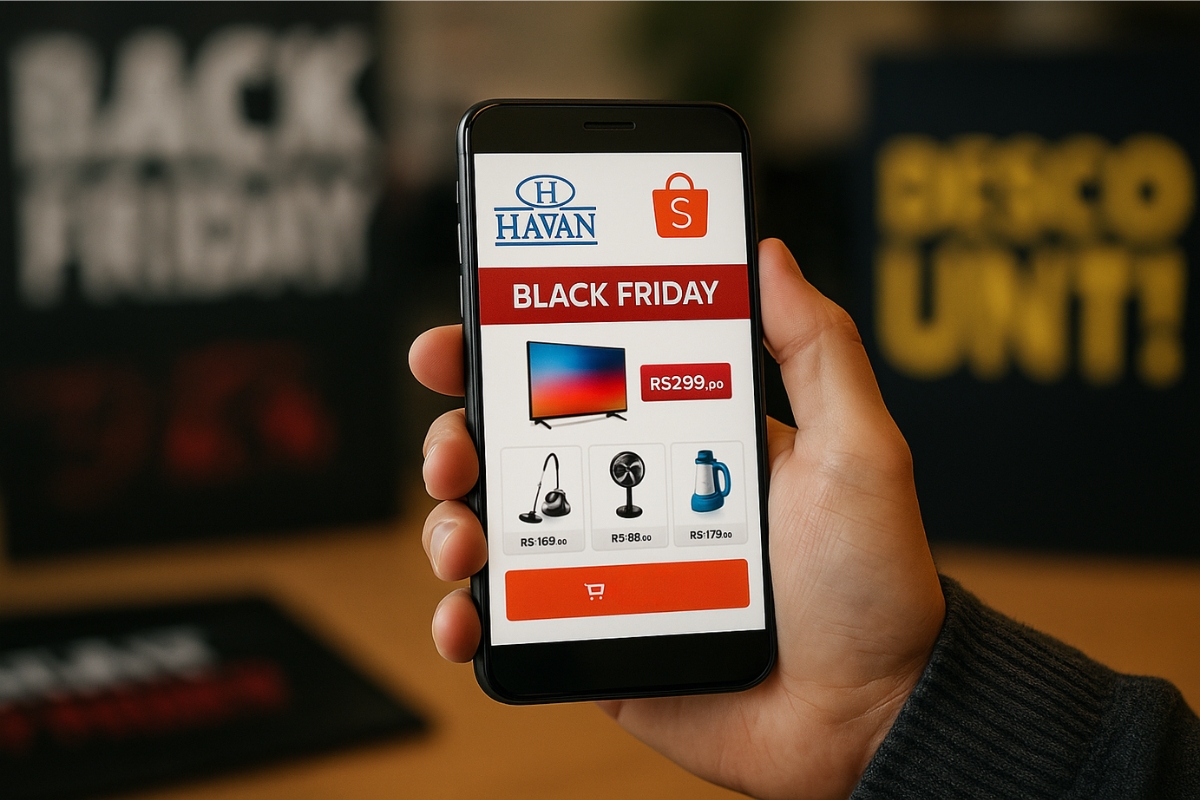

Scammers Take Advantage of Black Friday to Create Pages That Look Legitimate, Use Well-Known Brands as Bait, and Manage to Receive Payments Before Disappearing from the Internet
Black Friday has arrived bringing aggressive promotions, but it has also opened the door for a type of scam that spreads with impressive speed: fake websites that imitate giant retail networks in Brazil. Havan and Shopee are among the most cloned brands in recent weeks, and the number of consumers deceived by pages almost identical to the official ones is growing alarmingly.
The combination of irresistible offers, the typical rush of the date, and a lack of detailed verification by consumers creates the perfect scenario for scammers. With increasingly sophisticated techniques, including artificial intelligence, criminals build pages that visually replicate the official stores’ environment, but hide traps designed to capture payments via PIX without delivering any product.
How Fake Websites Appear and Why They Deceive So Many People
The structure of these fraudulent sites follows a well-known pattern among authorities and cybersecurity companies. First, criminals register domains similar to the official ones, changing just one detail in the address; a “.top”, “.shop”, or a swapped letter is enough to confuse those browsing quickly for offers.
-
German Sailor Found Mummified on His Boat in the Philippines, Leaving Scientists Puzzled by an Unbelievable Detail

-
Brazilian Couple Trades Motorhome for “Houseboat” Adventure on Historic Welsh Canal with Unique Challenges
-
Neon Blue Glow in Brazilian Waters Captivates Locals and Goes Viral, Unveiling Rare “Sea Fire” Phenomenon
-
Forgotten Map Leads Diver to Shipwreck with Gold, Rare Jewels, and Secrets Hidden for Nearly 350 Years


Then, the scammers import templates, logos, and real images of the brands. The final result looks so much like the original site that, for an average user, the difference is imperceptible. To complete the scam, paid ads on social media, fake deepfake videos, and messages sent via WhatsApp reinforce the legitimacy of the fraudulent page.

In the recent case of the fake Havan and Shopee stores, investigators report that the criminals offered discounts of up to 70% and presented countdown timers to create a sense of urgency. The user, believing they are facing a rare Black Friday opportunity, made the payment via PIX. Shortly after the transfer, the site disappeared, customer service vanished, and the consumer was blocked.
Furthermore, fake pages often feature non-functional social media links, empty sections, Portuguese language errors, and a lack of return policies or terms of use, details that only become evident once the scam has already occurred.
More Sophisticated Scam, More Vulnerable Victims
The use of artificial intelligence has made this type of fraud even more dangerous. Some fake pages utilize generative AI tools to create images, false testimonials, and even videos supposedly recorded by well-known influencers. This strategy increases the credibility of the ruse, especially among users who are not in the habit of verifying the URL or confirming the source of the promotion.
The explosion of scams is also accompanied by another determining factor: the rise of instant payment in the country. Since fraudsters receive via PIX, they can transfer money to orange accounts in just a few minutes, complicating tracking and recovery of funds. As a result, every hour of delay in recognizing the scam drastically decreases the chance of reimbursement.
Experts warn that, despite the modern appearance and more elaborate execution, some signs continue to reveal the fraud. The absence of options like credit card or boleto and the exclusive requirement for payment via PIX are the most common. Another frequent element is the disproportionate difference between the advertised price and the actual market value.
Consumers Exposed on All Platforms
The origin of the victims is varied: sponsored ads on Instagram, videos on TikTok, links sent through private messages, WhatsApp messages, and even Google searches that return malicious domains due to the optimization used by criminals.
During the Black Friday week, the fake Havan and Shopee pages were accessed by thousands of consumers, often because the scammers invested money in ads to appear before legitimate links, a fact that has already concerned consumer protection authorities.
In light of this scenario, companies like Havan and Shopee have reinforced official warnings and issued statements advising the public to use only verified channels. Civil police and specialized cybercrime units also recommend that any fraud be reported immediately and that all documents and receipts be kept.
Why the Scam Works So Well in Brazil
Brazil combines three factors that make this scam highly effective:
the strength of e-commerce, the popularity of PIX as a payment method, and the culture of major seasonal promotions. The Brazilian consumer is used to rushing for offers and making quick decisions. This speed allows room for verification errors, facilitating criminals’ work.
Another point is the excessive trust in well-known brands. Upon seeing the name Havan or Shopee, many consumers believe there is no risk, and precisely for that reason, scammers exploit these companies. The misuse of visual identity helps create an apparently safe shopping environment.
As long as Black Friday continues to be one of the busiest periods of national commerce, the trend is that these scams will intensify and become even more sophisticated.