Portuguese
  Spanish


New Study Shows That Pet Parrots Can Make Video Calls, Learn From Other Birds, and Form Real Friendships Using Tablets.
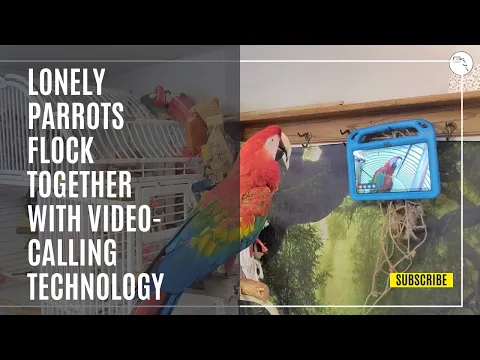
Pet parrots have discovered a new means of socialization. Thanks to an innovative study conducted by scientists from Northeastern University, University of Glasgow, and MIT, these birds learned to make video calls to each other — and seemed to really enjoy the experience.
An Experiment With Lonely Parrots
In the wild, parrots live in large flocks. But when kept as pets, they often face isolation.
This can lead to boredom, sadness, and even self-destructive behaviors, such as feather plucking.
-
Engineers Develop Fridge-Sized Machine to Produce 95-Octane Synthetic Fuel from Air and Water, Aiming to Sustain Combustion Engines Without Oil

-
Two-Armed Robot Uses AI to Reassemble Destroyed Pompeii Frescoes, Solving an “Impossible” Puzzle
-
New Law in Brazil Requires Breaks for Type 1 Diabetes Management at Work, School, and Public Exams

-
Scientists Confirm “Greening” of Antarctica: Ice on the World’s Coldest Continent Turns Green as Mosses Multiply Over Tenfold in Four Decades


It was with this concern that the researchers decided to test a technological solution: allowing the parrots to connect virtually with one another.
The idea was simple but promising — to help these social animals reduce loneliness.
The volunteers for the experiment came from Parrot Kindergarten, an online training program aimed at parrot owners.
A total of 18 birds participated at the beginning of the study.
How the Bird Training Worked
In the first two weeks, the parrots were trained to ring a bell and then touch an image of another parrot on the screen of a tablet.
This would initiate a video call. During this phase, the owners supervised all calls and ended them when the animals lost interest, with a maximum duration of five minutes per call.
During this initial period, the parrots made 212 video calls.
Three birds dropped out of the activity, leaving 15 participants for the second phase of the experiment.

Parrots Free to Connect
With the trained parrots, the next phase of the study allowed calls to be made. The birds could choose which parrot to call and when.
During the following two months, the 15 parrots made 147 video calls.
The owners recorded all the details and filmed over a thousand hours of video, which were analyzed by the researchers.
The results surprised the scientists.
The parrots not only enjoyed the calls but also seemed to understand that they were interacting with another real bird — and not just watching a recording.
Curious Interactions and Learning
According to the researchers, the parrots learned new skills during the calls. Among these were actions like flying, foraging, and making different sounds.
Researcher Ilyena Hirskyj-Douglas from the University of Glasgow stated she was surprised by the variety of behaviors observed.
Some sang, others played upside down, and some even showed toys to their friends on the other side of the screen.
Two older macaws, for example, formed a strong bond and exchanged excited calls during the calls, using phrases like “Hi! Come here! Hello!”, according to the study records.
Real Bonds Between Parrots
The scientists also noted that the parrots displayed clear social preferences. Birds that initiated many calls also received many in return.
This reciprocity dynamics resembles social ties among humans.
Furthermore, the parrots formed lasting friendships. The frequency with which they called the same individuals indicated a real emotional connection between them.
The Connection Goes Beyond the Screen
The interactions were not limited to the parrots. In some cases, the animals also developed affection for the humans on the other side of the screen, the caregivers of their parrot friends.
This unexpected interaction reinforced the notion that the experience had various positive impacts.
However, the researchers emphasize that these calls do not replace the flock interactions that would occur in nature.
But for captive parrots, they can represent a significant improvement in quality of life.
A Safe Option for Vulnerable Birds
The study also provided a possible solution to a common health problem among pet parrots.
Avian ganglioneuritis is a fatal and highly contagious disease. Therefore, in-person meetings between parrots from different owners can pose risks.
Video calls emerge as a safe alternative to promote socialization without putting the birds’ health at risk.
Necessary Care With Technology
Despite the positive results, scientists warn that one should not simply turn on a phone and make a call with any parrot.
The study involved experienced owners, prepared to interrupt the calls at the first sign of discomfort, fear, or aggression.
Unsupervised interactions can lead to stress or even violent behaviors in the animals. Therefore, the study recommended that only trained caregivers attempt this type of activity with their parrots.
Researcher Rébecca Kleinberger from Northeastern University emphasized that caregivers received specific instructions to emotionally support their parrots and avoid negative experiences during the calls.
A More Social Future for Parrots
At the end of the study, it became clear that parrots have the potential to use video calls in creative, varied, and affectionate ways. “They will do it in very individual and beautiful ways,” said Hirskyj-Douglas to the New York Times.
The experiment showed that even far from nature, it is possible to give parrots a richer and more social life — with the help of technology and human care.