Portuguese
  Spanish


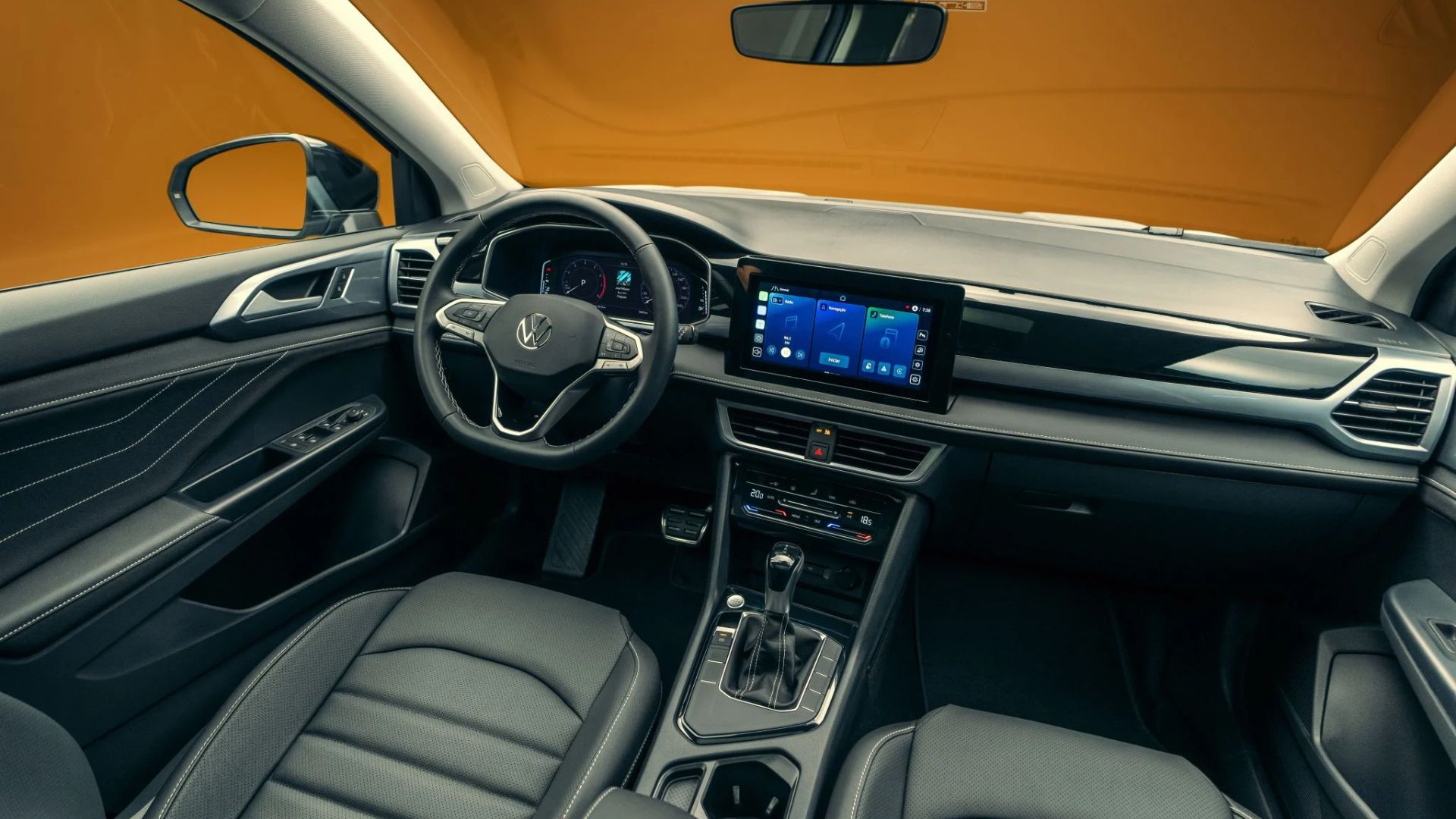

German automaker’s mid-size SUV now costs less than top-of-the-line versions of the manufacturer’s own compact utility vehicles after a promotional campaign with a R$ 10,000 bonus for trade-ins of used cars, while betting on a refreshed look, more embedded technology, and advanced safety equipment to increase competitiveness in the Brazilian market
Volkswagen has launched one of the most aggressive commercial campaigns in recent months in the Brazilian automotive market, placing the Taos 2026 in an unexpected position within the manufacturer’s own lineup. With a R$ 10,000 bonus for trade-ins of used vehicles, the mid-size SUV now costs R$ 189,990 in the Comfortline version, a price that makes it cheaper than top-of-the-line versions of the Nivus and T-Cross.
The information was released by Volkswagen itself as part of a promotional action valid until the end of May, a strategy that reinforces the fierce competition for Brazilian consumers in the SUV segment. Furthermore, the initiative is noteworthy because it significantly reduces the price difference between the German brand’s compact and mid-size models.
In practice, the Taos Comfortline had its price reduced from R$ 199,990 to R$ 189,990 with the bonus applied to the used car trade-in. This new commercial positioning places the SUV below the R$ 195,990 charged for the Nivus GTS and also lower than the R$ 193,990 requested for the T-Cross Highline.
-
Brazilian Factory Restores Truck Engines and Parts, Reducing Raw Material Use by Up to 85% After 80 Years in Business

-
British Marines Set Record by Changing Ford Escort Engine in 42 Seconds, Unbroken for 40 Years

-
BYD Owners in Brazil Raise Concerns Over Warranty After 87,000 km, Two Repairs in Three Days, and Over $500 in Costs

-
Classic Volkswagen Beetles of Brazilian Presidents to Swap Museums in Historic Partnership



Volkswagen bets on strategic repositioning to increase the competitiveness of the Taos 2026

Volkswagen’s move is no accident. The mid-size SUV segment is experiencing intense competition in Brazil, especially given the pressure from rivals such as the Hyundai Creta, Chevrolet Tracker, Jeep Compass, and Toyota Corolla Cross.
In this sense, the manufacturer decided to transform the Taos into a more attractive alternative for consumers who want to upgrade without having to invest more than R$ 200,000. Meanwhile, the restyled model aims to win over customers who previously only considered top-of-the-line compact SUVs.
Visually, the Taos 2026 received important changes to align with Volkswagen’s new global identity. At the front, the headlights were redesigned and now feature an LED strip integrated into the front grille, creating a more modern and sophisticated lighting signature.
At the rear, the taillights are now interconnected by an illuminated strip that reinforces the vehicle’s sense of width. Additionally, the alloy wheels feature new designs, enhancing the feeling of renewal for the mid-size SUV.
More sophisticated interior and technology package reinforce the SUV’s premium proposition
Inside, Volkswagen also worked to elevate the perception of refinement of the Taos 2026. The SUV now uses materials with darker tones in the interior finish, a strategy that brings the model closer to vehicles positioned in higher categories.
The technology package remains one of the utility vehicle’s main highlights. The model offers a 10.1-inch VW Play multimedia center, compatible with advanced connectivity and smartphone integration, in addition to a fully configurable 10.25-inch digital panel.
Another important point is the safety package. The Taos 2026 comes with six airbags as standard and an ADAS package with semi-autonomous driving assistance. Available features include adaptive cruise control, autonomous emergency braking, and driver assistance systems for various traffic conditions.
Furthermore, Volkswagen’s mid-size SUV aims to cater to an audience that values embedded technology and comfort without sacrificing performance and energy efficiency.


1.4 TSI engine maintains balanced performance and competitive fuel consumption in the segment
Under the hood, the Volkswagen Taos 2026 retained the familiar 1.4 TSI turbo flex engine with 150 hp and 25.5 kgfm of torque. The powertrain works in conjunction with a six-speed automatic transmission.
The engine continues to be one of the SUV’s main differentials in the national market, especially for its combination of consistent performance and balanced fuel consumption for a vehicle in its category.
According to Inmetro data, urban consumption varies between 7.7 km/l with ethanol and 11.1 km/l with gasoline. In the highway cycle, the averages are between 9.3 km/l and 13.3 km/l, respectively.
Volkswagen also offers six color options for the 2026 Taos. However, metallic and pearlescent paints require an additional R$ 2,200. Pure White remains the only no-cost color.
With the aggressive promotion, the Taos now occupies a strategic position within the Volkswagen lineup and could change the behavior of consumers who were looking for complete compact SUVs, but now see the mid-size model as a more equipped, sophisticated, and surprisingly cheaper option.
And you, would you pay less for a 2026 Volkswagen Taos or would you still choose a top-of-the-line compact SUV like the Nivus and T-Cross?
With information from: AutoPapo