





 Portuguese
  English
  Spanish
  4 min of reading
  0 comments


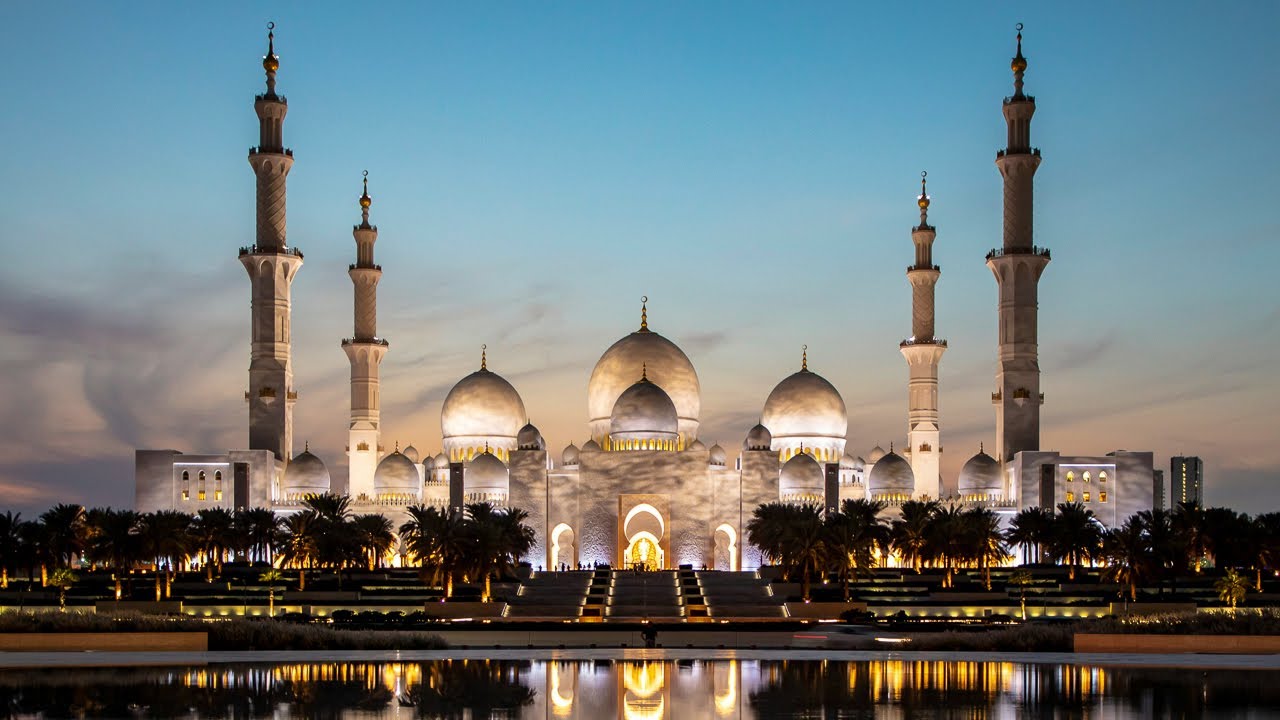
The Sheikh Zayed Mosque Coated More Than 165 Thousand Sqm With Imported White Marble And Processed Over 100 Thousand Tons Of Natural Stone In A Monumental Construction Work.
According to institutional documentation from the mosque’s own administration, reports from European companies specialized in natural stone, and technical records from suppliers involved in the project, the Sheikh Zayed Mosque cannot be understood merely as a monumental religious building. From an engineering and construction standpoint, it represents a rarely applied large-scale industrial stone cladding operation for a single building, combining international logistics, precision construction, and material volumes typically associated with heavy infrastructure works.
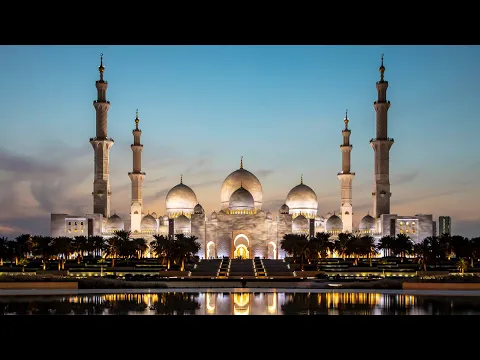
Located in Abu Dhabi, the mosque was conceived from the beginning to be entirely clad in white marble, both in exterior and interior areas, including facades, domes, patios, colonnades, and large horizontal surfaces exposed to the desert climate.
More Than 165 Thousand Square Meters Of Continuous Marble
The most solid and officially disclosed construction data is the total area covered with marble, which exceeds 165,000 sqm. This surface includes the large central patio, external walls, domes, and visible structural elements, all covered with high-purity white marble slabs.
-
The Brazilian state will receive its own submarine cable and a billion-dollar supercomputer, and the state will no longer rely exclusively on Ceará, which currently handles 90% of all internet traffic circulating in Brazil.

-
Engineers had to pour concrete mixed with tons of ice throughout entire nights in the Dubai desert to erect the Burj Khalifa; any carelessness could clog the pipes half a mile high.
-
A homemade technique is going viral among construction workers throughout Brazil and promises to renew thick floors without needing to spend on tiles. All you need is AC3 mortar, burnt cement, and a bit of wood glue to transform the appearance of the house.
-
Seven mistakes in house construction show how design choices can lead to tiring stairs, duplicate kitchens, and extra work after moving in.




For scale, this area is equivalent to dozens of soccer fields completely paved with natural stone. This is not about spot or decorative cladding, but a continuous mineral skin, applied as the dominant architectural solution throughout the building.
Processing Over 100 Thousand Tons Of Natural Stone
In addition to the clad area, technical documents from companies involved in the supply and processing indicate that the project required the processing of marble volumes exceeding 100,000 tons. This figure refers not only to the final installed slabs but includes:
- extraction from international quarries,
- initial cutting of raw blocks,
- processing, polishing, and dimensional adjustment,
- inevitable losses from sawing and shaping,
- and the manufacturing of special pieces for columns, frames, mosaics, and reliefs.

In practice, the mosque operated as an industrial consumer of natural stone for several years, something unusual outside of large infrastructure projects.
Imported Marble From Several Countries And Global Logistics
The marble used did not have local origins. Most of the external cladding was done with SIVEC marble, extracted mainly in North Macedonia, known for its high whiteness and low heat absorption. Additionally, other types of marble and natural stones were imported from Italy, Greece, India, and China for specific applications indoors.
This diversity of origins demanded a complex international logistics chain, involving:
- extraction from European and Asian quarries,
- maritime transport in large volumes,
- intermediate storage,
- and synchronized distribution at the construction site.
Any delay or variation in shade could compromise large surfaces already executed, which raised the quality control rigor to industrial levels.
Setting In Extreme Climate And Rigorous Dimensional Control
Applying marble on a large scale in Abu Dhabi means dealing with high temperatures, intense thermal variations, and constant solar radiation.
Unlike temperate environments, the setting needed to consider thermal expansions, internal stresses of the stone, and the behavior of the mortar over time.
The slabs were sized, fixed, and spaced with minimal tolerances, using setting systems capable of absorbing small movements without cracking or displacement. In horizontal areas, such as the patio, the additional challenge was to ensure flatness, drainage, and resistance to intense traffic from thousands of visitors daily.
Columns, Domes, And Curved Surfaces In Solid Marble
A frequently underestimated technical aspect is the use of marble not only on flat surfaces but also in complex three-dimensional elements, such as clad columns, ornamental bases, and large domes. These geometries demanded special cuts, custom pieces, and high-precision fittings.
Each column, for example, is not a single block but a set of carefully adjusted pieces to maintain visual and structural continuity. On a global scale, this exponentially multiplied the number of individual marble elements produced and installed.
When Cladding Becomes The Visual Structure Of The Work
At the Sheikh Zayed Mosque, marble does not function as a secondary finish. It is the dominant element of the architectural identity. This means that alignment flaws, chromatic variations, or surface defects could not be masked by other materials.
From a construction standpoint, this transformed the cladding into a critical system, treated with the same level of planning as foundations, concrete structures, or roofing systems.
Luxury Converted Into Mass Engineering
Although marble is traditionally associated with luxury, at the scale of the Sheikh Zayed Mosque, it ceases to be just a noble material and becomes mass engineering material.

The volume employed, the continuous clad area, and the logistics involved place the project on par with large works that handle millions of tons of materials, even within a distinct architectural typology.
Few buildings in the world have concentrated as much technical, industrial, and logistical effort on a single construction material.
A Religious Building Treated As A Mega Construction Project
In the end, the Sheikh Zayed Mosque stands out not only for its religious symbolism or aesthetics but for having been executed as a mega construction project in natural stone. More than 165 thousand sqm clad and volumes processed over 100 thousand tons make this work an extreme case of marble application on a monumental scale.
It is a clear example of how traditional materials, when taken to colossal volumes, cease to be ornamentation and start to integrate the realm of heavy engineering, even if silently, polished and white under the desert sun.








Be the first to react!