






 Portuguese
  Spanish


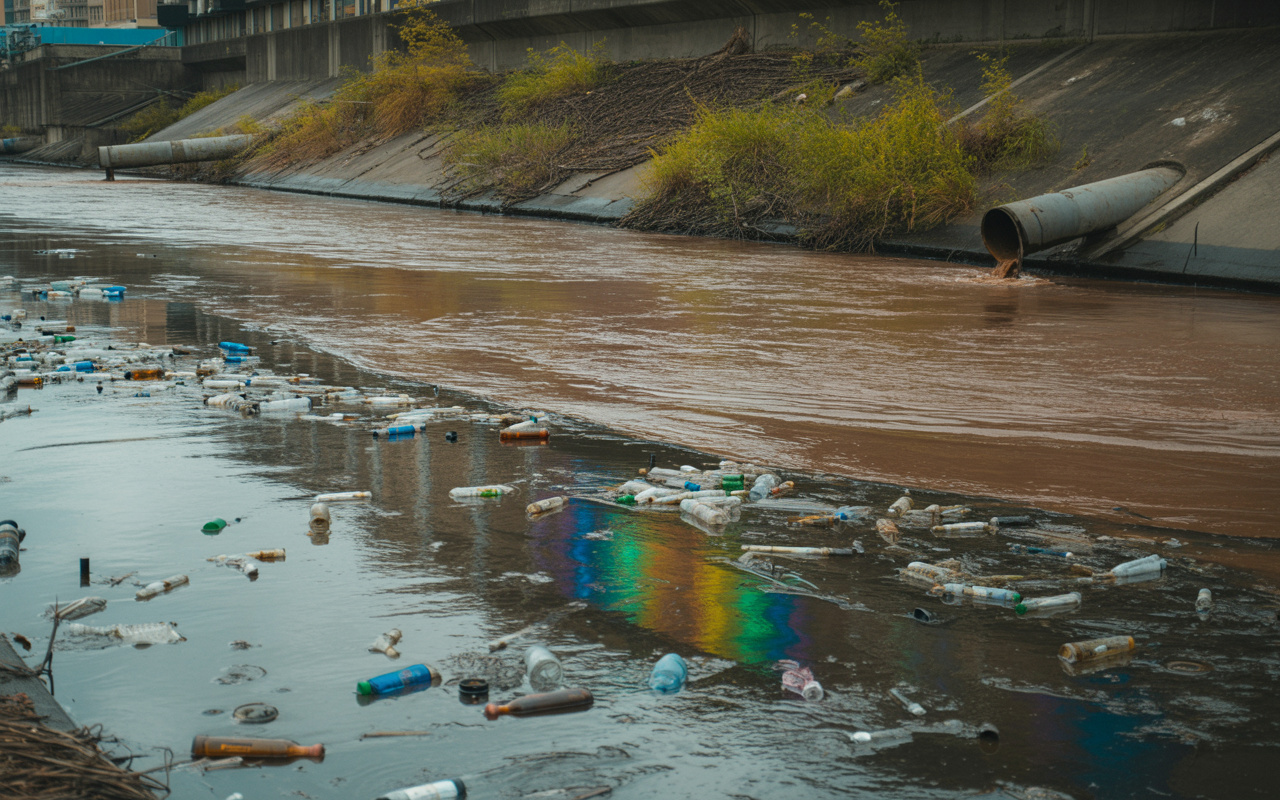


Urban Polluted River Fish Evolved Resistance to Lethal Industrial Toxins and Now Help Scientists Understand How Life Quickly Adapts to Cities.
For decades, urban rivers and estuaries have been treated as biologically doomed environments. Industrial discharges, heavy metals, hydrocarbons, and chemical waste have transformed many of these waterways into places deemed incompatible with life. Yet, some fish species not only survived, they evolved. In just a few years, entire populations began to tolerate pollution levels that would be fatal for any fish from natural areas.
In highly industrialized urban environments, continuous exposure to toxins creates brutal selective pressure. Sensitive individuals die before reproducing; the rare ones carrying protective mutations survive and leave descendants. This process, accelerated by the short life cycle of some fish, leads to measurable genetic changes in just a few generations. The city, in this context, acts as an involuntary evolutionary laboratory.
The Fish That Became a Scientific Model
The most studied case involves the killifish, a small coastal fish common in estuaries along the U.S. East Coast.
-
Three teenagers transform cut cardboard into Japanese origami-style packaging that promises to retire styrofoam and bubble wrap, win a $12,500 prize, and target giants like Amazon, FedEx, and Home Depot after a robot motor arrived broken.

-
The large jar blender has a rival: Oster Ultra Power bets on 1,000 W, six stainless steel blades, and two portable cups with leak-proof lids.

-
Tesla injected an additional $250 million into the German factory, doubled the battery cell target, and opened its own production line for startups.

-
No more TV stuck on the wall: Samsung The Freestyle+, the new projector with over 400 lumens projects on walls, floors, and ceilings, bringing cinema to any corner of the house.



Populations living near former industrial hubs have developed resistance to highly toxic compounds, such as PCBs and dioxins. In the laboratory, individuals from these areas survive concentrations that quickly kill fish from clean regions.
One of the most intriguing findings is that this resistance did not come with, at least in the short term, significant reproductive losses.
This challenges the classical idea that extreme adaptations always come with a “biological cost.” In stable urban environments — albeit polluted, selection favored fish capable of turning off metabolic pathways sensitive to toxins, reducing cellular damage.
Genes Reprogrammed by the City
Genetic studies show alterations in genes linked to detoxification, cell growth control, and chemical stress response. Simply put, these fish have learned to ignore biochemical signals that, in normal environments, would lead to death.
For scientists, this offers a rare opportunity to observe evolution directly acting on molecular mechanisms also associated with human diseases.
These urban fish have become living models for research on cancer, toxicology, and environmental medicine. Understanding how they neutralize carcinogenic substances helps identify biological pathways that may inspire new therapeutic approaches or public health policies. At the same time, they reveal the dangerous limits of adaptation: surviving does not mean that the environment is healthy.
A Hidden Warning in Adaptation
The evolution of these fish is not a story of environmental success. On the contrary. It shows that life can adjust to extreme conditions, but only because it had no alternative.
The presence of resistant populations does not indicate river recovery, but rather a deeply altered ecosystem where only highly specialized organisms can persist.
As cities invest in pollution cleanup and environmental restoration, a new scientific question arises: what happens when the selective pressure decreases? Highly adapted populations to pollution may lose their advantage, creating complex evolutionary scenarios.
Urban fish remind us that the city not only destroys habitats, it genetically shapes the life that insists on remaining.





Se não me engano aqui em são perto da Ricardo Jafet passa um rio vi relatos que lá tinha pessoas pescando tilápia tmb
Tem até reportagem kkkkk
Na fazenda botafogo uma zona industrial do Rio de janeiro , com um rio altamente poluído parecendo um esgoto vi moradores pescando se nao me engano tilapias
E a vida companheiro?