Portuguese
  Spanish


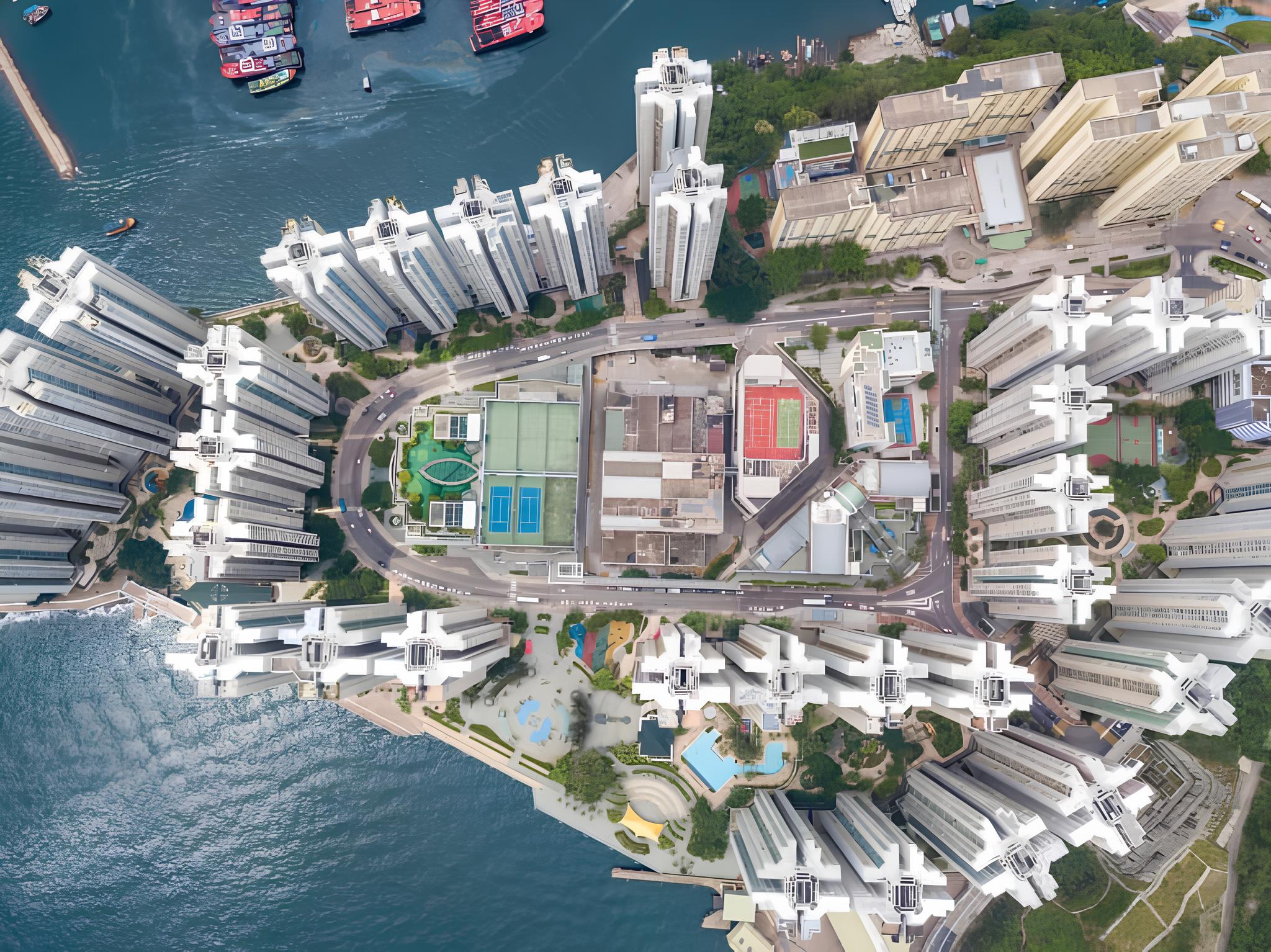


With only 1.3 km² and about 80 thousand inhabitants, Ap Lei Chau island in Hong Kong is one of the most densely populated territories in the world and houses skyscrapers, ports, and factories.
The geography of certain Asian metropolises redefines what we understand by “compressed urban.” Ap Lei Chau, a small island in the southwestern region of Hong Kong, exemplifies this phenomenon. Although it has less than 1.32 km² of area or about a square of 1.15 km on each side and a population that hovers around 79,727 people, it boasts a density that exceeds 61,000 inhabitants per square kilometer, making it one of the most densely populated zones in the world.
Part of the Southern District of Hong Kong, Ap Lei Chau grew from a fishing village to a vertical and multifunctional urban enclave, where housing, industry, ports, and infrastructure compress into a restricted space, reflecting both the territorial limits of the city and the enormous demographic and economic pressure that characterizes much of modern Asia.
Minimal Geography, Maximum Population: The Formula of Urban Compression


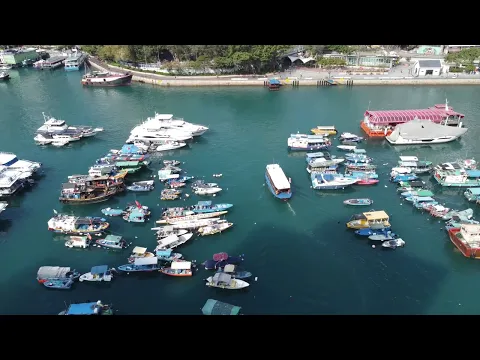
The physical location of Ap Lei Chau is crucial to its history and density. Located next to Aberdeen Harbour and the Aberdeen Canal, the island is connected to the main island of Hong Kong by bridges that facilitate the daily flow of people and goods.
-
From Shoeshine Boy to Billionaire: How a Brazilian Entrepreneur Built a Soy Empire Generating Over $1 Billion Annually

-
For nearly 35 years, a famous luxury hotel in the United States concealed a secret bunker with a 25-ton door, over a thousand bunks, a dining hall for 400, and space designed to save the entire Congress from nuclear war.

-
China Invested 17 Billion Yuan to Build a Desert City with Museums and Theaters for 1 Million, but Only 28,000 Moved to Kangbashi Initially

-
Mother and Daughter Convert Small Garage into Full Apartment to Save Money and Stay United



The majority of the population is concentrated in the northern and central areas of the island, where tall residential complexes, such as Sham Wan Towers, rise with towers over 50 stories that house thousands of residents in compact apartments.
Even with so many residents, the terrain does not allow for significant horizontal expansion: the island has peaks like Yuk Kwai Shan, which reaches about 196 meters in altitude, but flat areas are scarce. This means that the only way to accommodate so many people was to build vertically and quickly.
Skyscrapers, Factories, and Ports: Economy in Almost Every Square Meter
What makes Ap Lei Chau unique is not just its density, but the mix of land uses in such a limited space. Over the decades, the island transitioned from a traditional settlement to a multifunctional urban space that combines:
- High-Density Housing: compact residential blocks with hundreds of units each.
- Industrial and Port Areas: especially to the south and along the coast, where small factories and shipyards coexist with cargo terminals and maritime activities.
- Local Services and Commerce: markets, shops, restaurants, and administrative facilities that sustain the lives of thousands daily.
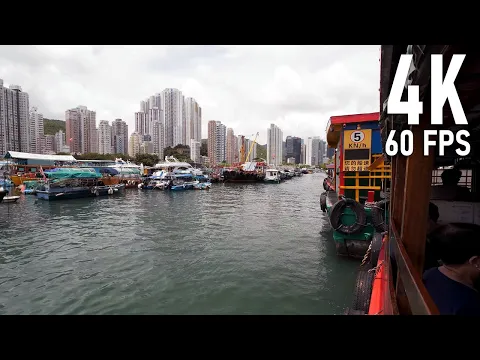
This combination is peculiar because in many cities, industrialization and urbanization occur in different zones, but in Ap Lei Chau, everything happens almost side by side.
Moreover, the island represents a functional extension of Hong Kong, one of the most dynamic and economically integrated regions of Asia, where port and manufacturing activities coexist with global financial services.
Why Is The Density So Extreme?
Ap Lei Chau is a microcosm of how Asian cities deal with two opposing vectors:
the physical limitation of territory and the enormous demand for housing and economic activity.
Some factors explain this condition:
Restricted Land
Hong Kong is a region with rugged terrain and little flat area. Land reclamation has been used in many areas, but spaces like Ap Lei Chau ended up being intensely occupied to meet housing needs.
Demographic Pressure
Migration from other parts of China and the region to the urban centers of the Pearl River Delta has dramatically increased demand for housing and services.
Economic Integration with Hong Kong
The proximity to the main island and the ease of commuting have made the island a strategic location for workers who want to live close to employment centers.
As a result, small apartments and tall buildings have become the norm, transforming Ap Lei Chau into a vertical urban hub in the sea.
Everyday Life in a Compressed Territory
Living in an area where more than 60,000 people coexist per square kilometer profoundly shapes the urban experience. Public infrastructure — such as transportation, electricity, water, and sanitation — must function with a constant rhythm to meet demands that, in larger areas, would disperse.
For this reason, transport integration is essential. The South Island Line of the Hong Kong Metro has been extended to cover parts of the island, providing an alternative to the bus and facilitating movement to other parts of the metropolis.
The streets, in turn, are designed to accommodate both pedestrians and light vehicles, and the proximity to Aberdeen Port facilitates the transport of goods as well as the movement of workers who rely on quick access to the sea.
The Phenomenon of Urban Verticalization: More Than a Record
Ap Lei Chau is not just statistics, although its density ranks among the highest in the world for islands with significant populations. It is also a living example of urban adaptation, where the physical boundaries of the territory have been transcended through vertical construction, economic integration, and a social organization that must cope with daily challenges of coexistence in compressed spaces.
In a world where millions of people migrate to cities every year, places like Ap Lei Chau represent an extreme case of how urban areas can evolve and reinvent themselves under severe geographical limitations, while still preserving community life and economic functionality.
The small island of Ap Lei Chau poignantly illustrates how human pressure on physical space can generate unusual and intense urban solutions. With less than 1.3 km² and tens of thousands of residents, it proves that — even surrounded by the sea — cities can become true microcosms of density, economic flow, and contemporary urban life.