






 Portuguese
  Spanish


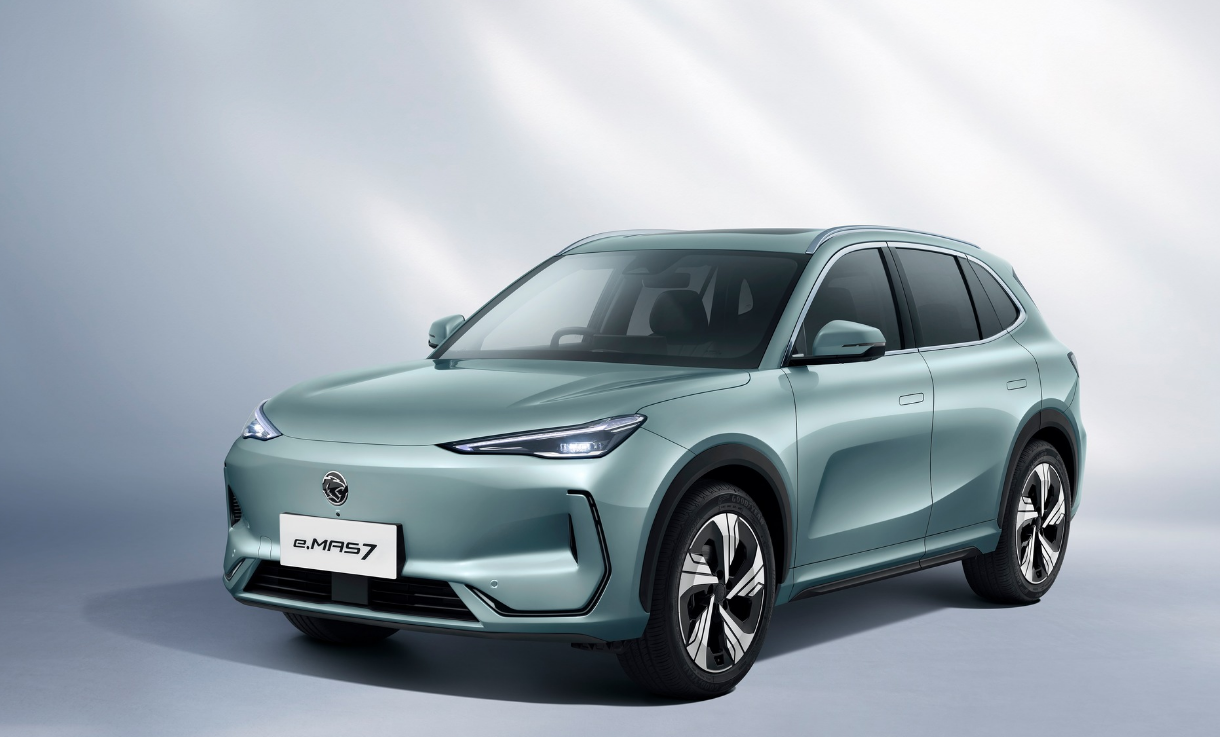


A Small Asian Country Surprises by Launching an Electric Car with a 215-Horsepower Engine and 408 Kilometers of Range, Challenging Giants Like China and India.
Amidst the growing race for leadership in the electric vehicle market, a small Asian country surprised giants like China and India by launching an innovative electric car. Equipped with a 215-horsepower engine, the model not only delivers impressive performance but also a range of 408 kilometers.
The Proton e.MAS 7 arrives as the first fully electric model from the Malaysian manufacturer Proton. The launch marks a bold step for the company, known for its discreet history in the Asian market.
Betting on a low-cost policy and cutting-edge technology, the e.MAS 7 promises to attract attention in strategic markets.
-
1983 Chevrolet Runs Over 100,000 km Without Gasoline, Powered by Wood Chips, Reaches 125 km/h in Airport Test

-
Workshop Converts Giant Tractor Tire Tricycle into a Three-Wheel Drive Hybrid with 36,000-Watt Electric Motor Capable of Climbing Hills

-
Sales of Brazil’s Cheapest Electric Car Halted Before First Deliveries: E-Motors Suspends Emova Easy Due to Import Tax Increase and Rising Freight Costs

-
Nissan Discontinues Qashqai SUV Amid Cost-Cutting, Chinese Competition, and Product Line Review




Electric Car – Historical Attempts by Proton
Proton has previously attempted to expand its operations in markets like the United Kingdom and South America but faced challenges and had to retract.
Now, with the e.MAS 7, the brand relies on a collaboration with Geely, a Chinese giant that also controls Volvo.
This alliance could be the key to consolidating Proton’s presence in the competitive electric vehicle segment.
An SUV Based on Geely Technology
The Proton e.MAS 7 is essentially an adaptation of the Geely Galaxy E5, utilizing the GEA platform, recognized for its efficiency and flexibility.
With a length of 4,612 meters, the mid-size SUV is designed to compete directly with established models like the electric Opel Frontera and MG ZS EV in the global market.

Power and Range
Equipped with a 215-horsepower engine, the Proton e.MAS 7 offers two battery options: 49.5 kWh and 60.2 kWh. The range varies between 344 km and 408 km per charge, depending on the chosen configuration. This versatility is a strong point for consumers looking for a balance between cost and performance.
Another highlight is the fast charging capability. With a power of up to 200 kW, the advanced version allows charging from 30% to 80% in just 20 minutes, making it a practical option for urban and long-distance users.

Global Challenge
Proton enters the global electric market at a time of great competitiveness. Established brands like Tesla, MG, and Opel dominate the segment, but the e.MAS 7 has the potential to attract consumers seeking cost-effectiveness combined with the reliability of Geely technology.
With this launch, Proton aims not only to reposition its brand globally but also to demonstrate that it is ready to actively participate in the transition to sustainable vehicles.
The e.MAS 7 is a bold bet that could redefine the company’s future in the automotive sector.




Excelente oportunidade de tecnologia e inovação! Gostaria de poder trazer este carro para o Brasil.
Quantos quilos pesa esse motor
Qual o preço,,