






 Portuguese
  Spanish


With an Investment of R$ 236 Million, Pernambuco Begins Works in 30 Cities to Expand Access to Early Childhood Education. The Construction of New Centers Represents Progress in Infrastructure and Social Inclusion for Children
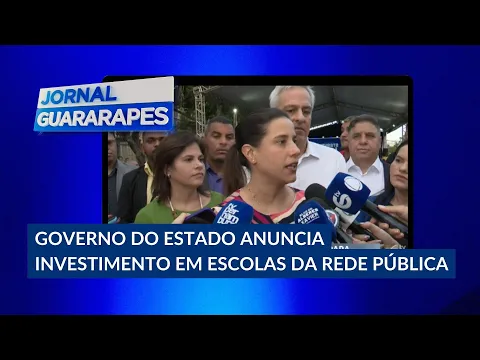
On September 10, 2025, the Government of Pernambuco announced an investment of R$ 236 million for the construction of 35 new Early Childhood Education Centers (CEIs), directly benefiting 30 municipalities. This initiative is part of the Together for Education program, which aims to increase access to education for children aged zero to five years, strengthening the public early education network.
This new construction block represents a milestone in the state education policy, with a planned execution within 12 months. The action is coordinated by the State Department of Education (SEE) and supervised by the State Housing and Works Company (Cehab), reinforcing the government’s commitment to educational infrastructure.
Benefited Municipalities and Scope of Investment in Pernambuco
The project includes municipalities from various regions of the state, promoting equity in access to early childhood education. The benefited cities are:
-
Couple Transforms Suffolk’s Last 1891 Windmill into Luxurious Four-Story Home with Zinc Observation Room in England

-
Father and Son Build 97 cm Thick Circular Stone House in Brazil, Inspired by Scottish Architecture, Creating a New Agrotourism Hub
-
Sweden Removes 200-Ton Concrete Gallery to Restore Pjältån River’s Natural Flow in Europe’s Largest Aquatic Restoration Project

-
Key Infrastructure Projects for Brazil’s Next President: Expanding Railways to Cut Transport Costs, Reduce Truck Traffic, Create Jobs, and Boost Industries Nationwide


- Abreu e Lima (2 units)
- Afogados da Ingazeira
- Água Preta
- Altinho
- Betânia
- Cabo de Santo Agostinho (3 units)
- Canhotinho
- Carnaíba
- Correntes
- Cumaru
- Escada
- Ingazeira
- Ipojuca
- Itacuruba
- Itapetim
- Jaboatão dos Guararapes
- João Alfredo
- Lajedo
- Panelas
- Petrolândia
- Petrolina (2 units)
- Recife
- Ribeirão
- Santa Maria do Cambucá
- São Caetano
- São José do Belmonte
- São Lourenço da Mata (2 units)
- Tamandaré
- Vitória de Santo Antão
- Xexéu
With this announcement, Pernambuco reaches the milestone of 192 daycare centers with ongoing bids, totaling over R$ 1.1 billion in investment in early childhood education.
Structure of Early Childhood Education Centers and Construction Standards
The new Early Childhood Education Centers will be built based on two architectural models, developed by the Pernambuco Strategic Projects Department (Sepe), adapted to the available area in each municipality:
- Model with 10 Rooms: requires a 60 x 40 meters lot and has a constructed area of 1,396.45 m².
- Model with 5 Rooms: requires a 30 x 40 meters lot and has a constructed area of 790.55 m².
Both models include:
- Multipurpose room
- Sunroom
- Playground with rubber flooring
- Green areas
- Restrooms adapted for children
- Kitchen and pantries
- Support spaces for staff
- Use of renewable energy
- Water reuse systems
These features ensure safe, inclusive, and sustainable environments, aligned with the best educational infrastructure practices.
Investment Objectives and Impact on Early Childhood Education
The main objective of the construction of the CEIs is to increase the availability of spots for children aged zero to five years, promoting comprehensive development from the earliest years of life. The government’s goal is to achieve 250 awarded units, creating about 60,000 new spots throughout the state.
The Governor Raquel Lyra emphasized the importance of the project, stating that investing in education from early childhood is a central commitment of our administration.
Centers will be built, ensuring they are fully equipped and guaranteeing their complete functioning during the first year, providing children with the ideal conditions to grow with quality and dignity. This type of investment directly contributes to reducing social inequalities, improving educational indicators, and strengthening the foundation of public education.

Data and Studies on Early Childhood Education in Brazil
According to the National Institute for Educational Studies and Research Anísio Teixeira (INEP), access to early childhood education in Brazil still faces challenges. In 2023, only 36% of children up to three years old were enrolled in public or private daycare centers. In the four to five years age group, the enrollment rate was 93%, close to universalization.
Studies by the Maria Cecilia Souto Vidigal Foundation indicate that investments in early childhood yield high social returns, positively impacting health, cognition, behavior, and future academic performance. Every real invested in this phase can generate up to R$ 7 in social and economic benefits.
Therefore, the construction of new centers in Pernambuco represents not only a progress in infrastructure but also a strategic step for human and social development.
Works Focused on Sustainability and Innovation in Pernambuco
Another distinguishing feature of the new CEIs is the focus on sustainability. The projects incorporate:
- Solar panels for energy generation
- Systems for water collection and reuse
- Construction materials with low environmental impact
- Green spaces for contact with nature
These solutions make the centers more efficient and aligned with global sustainable development goals, while promoting environmental awareness from early childhood.
Pernambuco and the Construction of an Educational Legacy
The execution of the works will be carried out by Cehab, which already has experience in large-scale projects in the state. Rigorous supervision and adherence to deadlines are priorities to ensure that the centers are ready and operational within the stipulated period.
In addition to the physical construction, the program Together for Education includes funding for the operation of the units for one year, including hiring professionals, acquiring furniture, and educational equipment.
This integrated approach ensures that the centers are not just buildings, but lively spaces of learning and support.
Investment in Early Childhood Education Centers as a Strategic Public Policy
Investment in early childhood education is a long-term strategy that directly impacts the quality of elementary and secondary education. Children who attend daycare and preschools are more likely to succeed academically, have lower dropout rates, and perform better on national assessments.
Pernambuco, by prioritizing the construction of early childhood education centers, strengthens its position as a reference in educational public policies. The initiative also contributes to job creation in construction and education, boosting the local economy.
Paths for the Future of Education in Pernambuco
The construction of 35 Early Childhood Education Centers in Pernambuco, with an investment of R$ 236 million, is a concrete action that reaffirms the state’s commitment to quality education from the earliest years of life. With 30 municipalities included, the project promotes inclusion, equity, and sustainable development.
More than just construction, it is an investment in the future of Pernambuco’s children, in the formation of better-prepared citizens, and in building a fairer society. The initiative strengthens the public network, values educational professionals, and transforms the reality of thousands of families.


