Portuguese
  Spanish


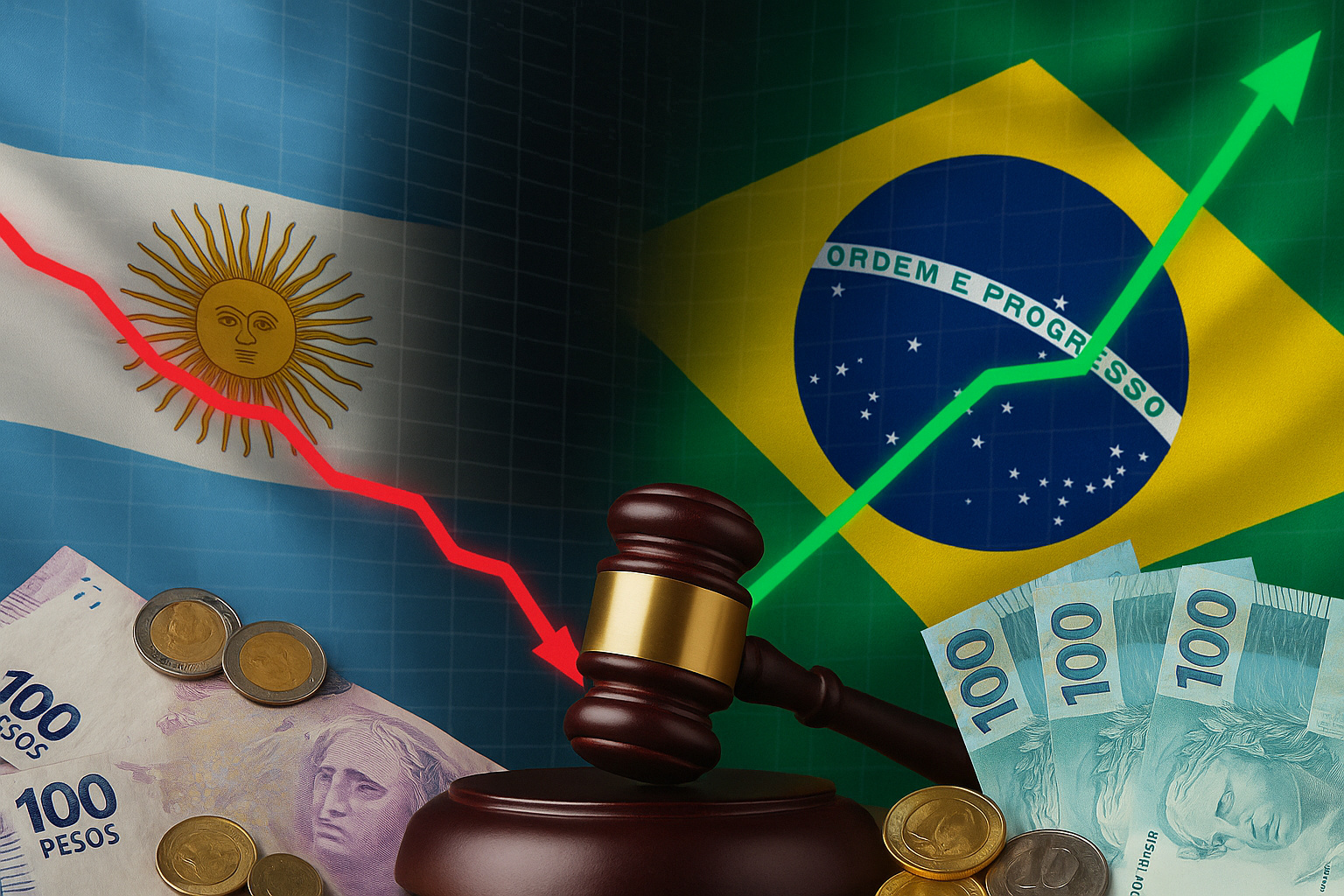


Argentina’s Currency Accumulated a 27.4% Drop Against the Dollar, Worst Global Performance, While the Brazilian Real Rose Over 14% and Ranks Among the Year’s Positive Highlights.
The Argentine peso has been accumulating historic losses in 2025. According to market research, by September 8, the currency had already depreciated 27.4% against the dollar, recording the worst performance among major global currencies.
The drop reflects the economic and political instability faced by the neighboring country. High inflation, difficulties in regaining investor confidence, and instability in external negotiations have put pressure on the exchange rate, making the peso a symbol of Argentina’s financial fragility.
Brazilian Real Surprises in the International Scenario
While the Argentine peso collapses, the Brazilian real stands out among the currencies that appreciated the most against the dollar in 2025. During the same period, the national currency recorded a 14.08% increase, ranking fourth globally.
-
Abandoned Building in Brazil to Become Biotechnology Unit with $10 Million Investment, Bridging Science, Industry, and Public Health

-
Company Offering “Stones to Diamonds” Scheme Sells Ruined Italian Homes to Brazilians for 1 Euro, Disappears with Promised Renovations, Leaving Buyers in Debt to Italian Tax Authorities Until 2028 Without Property

-
Plastic Packaging Drives Santa Catarina Industry to 230% Growth, Aiming for R$ 500 Million by 2030 Amid Sector Crisis, with New Gearless Line Expanding in Southern Brazil to Compete in South America

-
Flamengo Star Invests in Brazilian Coastal Luxury Real Estate as Itapema Surpasses Balneário Camboriú in High-End Market Growth




This performance draws attention because it places the real alongside historically more stable currencies, such as the Russian ruble, the Swedish krona, and the Swiss franc.
Causes of the Real’s Appreciation
Experts point to several factors to explain the strength of the Brazilian currency this year. The main one is the inflow of foreign capital attracted by high interest rates, which remain competitive compared to the rest of the world.
In addition, there is a perception of relative stability in external accounts and an improvement in the trade balance, driven by exports of commodities such as soybeans, oil, and iron ore. These elements have contributed to strengthening the real, in contrast to emerging currencies that have lost ground.
Other Highlighted Currencies
The Russian ruble led the appreciation rankings, with a gain of nearly 34% in 2025. The Swedish krona and the Swiss franc also appeared among the currencies that strengthened the most against the dollar, reflecting both internal conditions and fluctuations of the U.S. currency in global markets.
On the opposite side, besides the Argentine peso, the Turkish lira and Asian rupees also recorded significant declines, reinforcing a scenario of fragility in some emerging economies.
The Dollar in the Global Scenario
The performance of currencies in 2025 was also influenced by the trajectory of the dollar. The DXY index, which measures the strength of the U.S. currency against a basket of strong currencies like the euro, yen, and British pound, showed losses throughout the year. This movement created space for the appreciation of currencies from countries with stronger fundamentals or those benefiting from foreign capital inflows, as is the case with Brazil.
The appreciation of the real has direct effects on the everyday economy. For Brazilian consumers, a stronger real means reduced inflationary pressures on imported products, such as electronics and fuels. For investors, the appreciated currency increases the attractiveness of Brazilian assets, such as stocks and fixed-income securities, which offer high returns and now carry lower currency risk.
For exporters, however, the scenario is somewhat different. A stronger real reduces the competitiveness of Brazilian products abroad, requiring adaptation strategies from companies focused on the international market.
Argentina in Search of Solutions
In Argentina, the tone is urgent. The sharp depreciation of the peso exacerbates the purchasing power of the population and further pressures inflation, which was already at elevated levels. The government is trying to adopt measures to stabilize the economy but faces investor distrust and difficulties in maintaining robust international reserves.

The comparison with the Brazilian real highlights the contrast between the two countries. While Brazil benefits from capital inflows and relative market confidence, Argentina struggles against internal imbalances that place its currency on a continuous downward trajectory.
Argentine Peso vs Brazilian Real
The year 2025 marks a clear contrast in South America: on one side, the Argentine peso plummets by more than 27% against the dollar, establishing itself as the worst performing currency globally; on the other side, the Brazilian real accumulates a valuation of over 14%, ranking among the four strongest currencies in the world.

This scenario reinforces not only the fragility of the Argentine economy but also Brazil’s relevance on the international radar. For investors, consumers, and analysts, the performance of currencies this year underscores how political decisions, economic fundamentals, and capital flows can profoundly transform a nation’s fate in the global market.