Portuguese
  Spanish


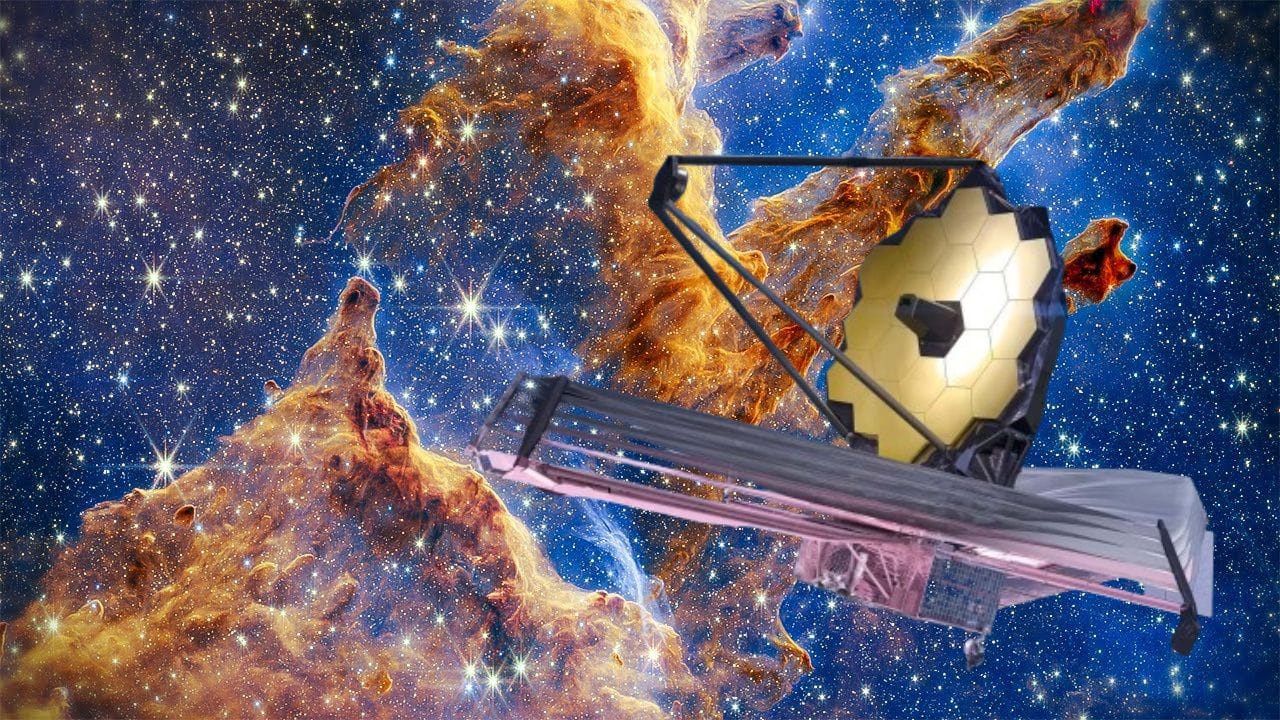


The James Webb Space Telescope Offers an Unprecedented View of the Universe, Potentially Leading to Revolutionary Discoveries. With Its Ability to Observe in Infrared and Its Advanced Technology, Webb Is Prepared to Significantly Expand Our Understanding of the Cosmos.
The James Webb Space Telescope, successor to the famous Hubble, is set to revolutionize our understanding of the cosmos. With a five-year mission, Webb seeks unprecedented insights into the formation of the first galaxies and the possibility of life on other planets.
Differences Between Webb and Hubble
While Hubble captured light in the visible spectrum, Webb Operates in Infrared, Allowing Observation of Galaxies Formed About 13 Billion Years Ago. The Webb’s mirror, at 21 feet in diameter, is significantly larger than Hubble’s, allowing it to capture more light from distant worlds.
Infrared allows Webb to see through obstacles like dust clouds, Opening Vast Areas of the Sky for Astronomical Exploration. This is crucial for studying star formation and planetary systems, as well as for testing theories about the evolution of galaxies.
-
He has never read a line of code, but he already knows how to work: the French company UMA presented in Paris the Northstar, its first AI-powered humanoid robot designed for factories and warehouses, capable of copying tasks just by observing an employee in action.

-
A young Kenyan engineer collects plastic waste from the streets and transforms it into robots that translate physics lessons into sign language in real-time, a machine made with old bottles that teaches what was missing to deaf children left out of science.

-
What is the dark substance found in the sand of Ipanema Beach? Civil Police conduct an examination, collect samples of the material, and initiate an investigation to identify the composition, clarify the origin, and verify if there was an environmental crime.
-
The beer that was hidden for 3,000 years has returned to the world: scientists find yeast preserved in Ancient Egyptian vessels and recreate a pharaoh’s drink to discover the lost taste of an ancient civilization.




The Journey of the James Webb Telescope
Launched from the European Space Agency’s spaceport in French Guiana, Webb will travel to the Lagrange Point L2, where the gravitational forces of the Sun and Earth balance the necessary centrifugal force for spacecraft movement. This point is ideal for Saving Fuel and maintaining constant communication with Earth.
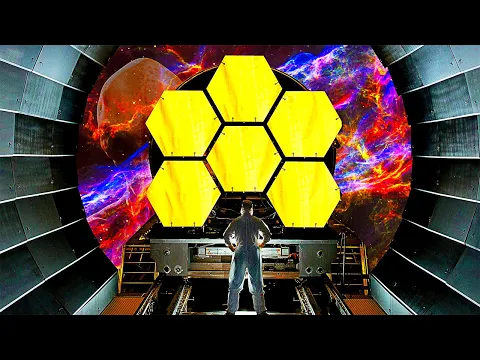

The Webb deployment process is extremely complex, involving 178 Deployment Mechanisms. The telescope’s sunshield, the size of a tennis court, is vital for keeping the equipment cold and operational in the infrared spectrum.
Scientific Mission
Webb Performs Two Main Activities: Taking Pictures and Capturing Spectra. Equipped with 11 Distinct Spectroscopy Modes, the telescope can observe the chemical composition of distant worlds, opening the possibility of detecting signs of Extraterrestrial Life.
Webb’s mission is filled with technical challenges and high expectations. Designed to operate at ultracold temperatures, many of its components were built to shrink to the perfect size and dimensions in space. The success of the mission critically depends on its launch and deployment sequence.
Data Transmission to Earth
James Webb is located at the Lagrange Point L2, approximately 1.5 million kilometers from Earth. At this distance, communication is a significant challenge; the telescope is equipped with a high-gain antenna that transmits data directly to Earth. This antenna is crucial for sending the large amounts of data generated by the telescope.
Data is sent from Webb’s antenna to NASA’s Deep Space Network (DSN), a global network of communication antennas that supports interplanetary missions. The three DSN stations, located in the United States, Spain, and Australia, ensure that the telescope can communicate with Earth at any time, regardless of its rotation. After reception, the raw data is processed at specialized data centers. Here, the images are calibrated, corrected for potential distortions, and converted into usable formats for scientists and researchers.