






 Portuguese
  Spanish


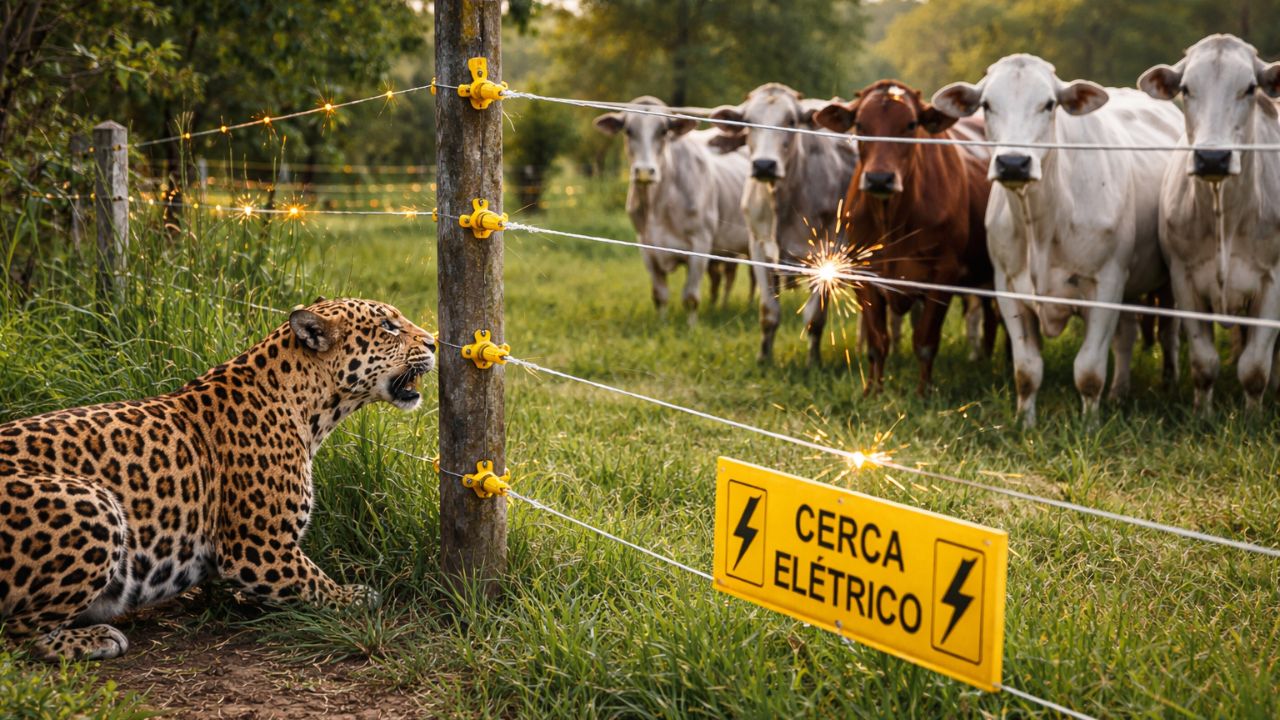


Study Shows That Using Electric Fences Reduces Attacks on Cattle and Protects Jaguars in the Pantanal, Promoting Coexistence Between Rural Production and Conservation.
In the southern Pantanal of Mato Grosso, an electric fence activated at night has decreased conflicts between rural producers and the jaguar, reducing attacks on cattle and the consequent retaliation against the large feline.
The technique, detailed by researcher Paul Raad from the Impact Institute, began to be implemented on properties in the region in 2025, after practical tests showed promising results in combating the mortality of these animals.
Experts state that the initiative does not cause injuries but teaches jaguars to avoid protected areas, balancing the protection of livestock with the preservation of the species and the Pantanal ecosystem.
-
In Andradina, in the interior of SP, a tannery transformed tilapia skin that slaughterhouses used to throw away into exotic leather for bags, shoes, and even wedding dresses, producing about 2,000 pieces per month and exporting to seven countries, proving that fish waste has become high-value fashion.

-
The industrial waste that even recyclers didn’t want has gained value in the interior of Bahia: two entrepreneurs invested R$ 2.8 million to transform 350 tons per year of foam, rubber, and plastic into boards that can replace wood and MDF.

-
What is a red flashlight used for, after all? See why it is so commonly used at night.

-
He has never read a line of code, but he already knows how to work: the French company UMA presented in Paris the Northstar, its first AI-powered humanoid robot designed for factories and warehouses, capable of copying tasks just by observing an employee in action.



From this experience, producers and environmentalists began to discuss new ways to promote coexistence between human activities and wildlife.
How Does the Electric Fence Work in Practice?
The strategy consists of installing an electric fence in small, specific areas called “night dormitories,” where cattle are gathered at the end of the day.
At night, the period of highest activity for the jaguar, the fence is activated; during the day, the cattle remain loose on the property.
The shock does not hurt. It is a quick stimulation with nearly zero amperage that teaches the animal not to return, explains Paul Raad.
Footage shows that after receiving the shock, jaguars often do not return to that area – behavior that is noted even by other individuals, suggesting collective learning.
Results That Change the Mindset of Cattle Ranchers
The economic impacts of adopting the electric fence are also noteworthy. Producers who previously lost thousands of dollars a year due to jaguar attacks reported drastic reductions in losses after installing the barriers.
In one of the studied cases, the reduction in attacks reached about 83%, practically eliminating significant losses with the cattle.
The installation cost, according to the technicians, is relatively low compared to the annual losses caused by the attacks.
Upon noticing an improvement in financial results, many producers began to see the measure not just as protection for cattle, but as a viable alternative for sustainable management.
Why Doesn’t the Electric Fence Harm Wildlife?
It is important to highlight that the fence activated at night is designed to be a deterrent stimulus and not a danger to wildlife.
The system operates with high voltage but extremely low amperage, ensuring that the shock is momentary and does not cause injuries to jaguars or other animals.
This feature allows the technique to effectively transmit a “signal” to jaguars without compromising their health, helping to preserve the life of large felines while protecting rural production.

In addition to the installation of electric fences, the project includes environmental education actions with riverside communities.
Guidance on disposing of fishing waste, handling dogs, and raising pigs are examples of measures that can reduce the presence of food attractants that lead jaguars into human areas.
The Jaguar as a Key Piece of the Pantanal Ecosystem
The jaguar occupies the top of the food chain and plays a crucial role in controlling populations of other species, such as capybaras, deer, and caimans.
Its absence can disrupt ecosystems, affecting biodiversity and the natural functioning of the Pantanal biome.
By promoting measures that protect both wildlife and rural production, experts believe that it is possible to build a more sustainable and less conflictual model of coexistence between humans and large predators in the region.
Limits and Perspectives of the Technique in the Pantanal
Although the adoption of the electric fence shows encouraging results, researchers emphasize that it does not replace broad public conservation policies or structural actions for livestock management in large areas.
The technique works more effectively in smaller, well-defined spaces – a component of a larger set of strategies.
In summary, the electric fence represents a promising tool for reducing attacks from the jaguar, decreasing human retaliation, and strengthening sustainable rural production practices in the Pantanal — a concrete step towards harmonious coexistence between agriculture and environmental conservation.







QUEM VAI ALIMENTAR AS ONÇAS❓🤔🤔🤔
E as aves 🦅? Esses fazendeiros Bolsonaristas são uma escória mesmo. Eles matam as onças por prazer, eu tenho essa raça na minha família
Verdade,esses extremistas estão acabando com a natureza linda que o criador dos céus e da terra criou !
Deixe de ser ****, cara!
**** ou não, ninguém cria **** pra alimentar onças.
Tente você fazer isso!!! Você não é o consciente, o esclarecido, o defensor da ecologia, o fodão??? Comece a criar suas vaquinhas pra alimentar as pintadas.
Se houvesse esquerdistas criadores de **** (o que não há, pois são inimigos do trabalho) eles também não serviriam banquetes de bovinos para onças.