Portuguese
  Spanish


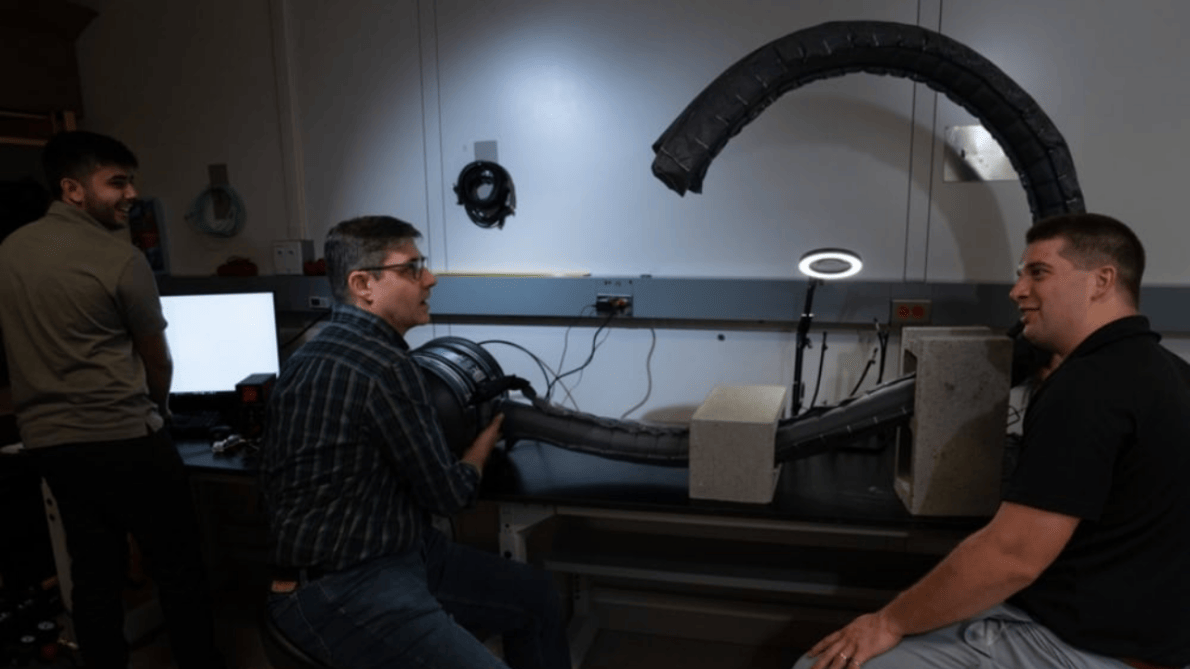


SPROUT Robot, Developed by MIT and University of Notre Dame Researchers, Stands Out for Its Mobility and Potential in Rescue Missions.
A new hope for rescue missions has emerged from the laboratories of MIT and the University of Notre Dame: it is SPROUT (Soft Pathfinding Robotic Observation Unit), a flexible robot designed to navigate tight spaces and maneuver around obstacles amid debris.
The technology, resulting from the work of researchers from both institutions, promises to transform the work of rescuers in collapse scenarios, where agility and precision can make the difference between life and death.
Composed of an inflatable tube made of airtight fabric, the SPROUT unrolls from a fixed base and can expand or contract using air pressure, allowing it to navigate obstacles and travel winding paths.
-
In Andradina, in the interior of SP, a tannery transformed tilapia skin that slaughterhouses used to throw away into exotic leather for bags, shoes, and even wedding dresses, producing about 2,000 pieces per month and exporting to seven countries, proving that fish waste has become high-value fashion.

-
The industrial waste that even recyclers didn’t want has gained value in the interior of Bahia: two entrepreneurs invested R$ 2.8 million to transform 350 tons per year of foam, rubber, and plastic into boards that can replace wood and MDF.

-
What is a red flashlight used for, after all? See why it is so commonly used at night.

-
He has never read a line of code, but he already knows how to work: the French company UMA presented in Paris the Northstar, its first AI-powered humanoid robot designed for factories and warehouses, capable of copying tasks just by observing an employee in action.



The robot is also equipped with integrated sensors and a camera, enabling environment mapping and real-time image collection, and is operated remotely with a controller similar to those used for video games.
Practical Tests and Future Applications
The team of researchers conducted tests with the flexible robot at a training center for rescuers in Massachusetts, United States.
The experiments focused on assessing the portability, the durability of the equipment, and the degree of control of the SPROUT in scenarios simulating real rescue operations.
“Urban search and rescue teams and first responders play critical roles in their communities, but they typically have little to no budget for research and development. This program has allowed us to elevate the technological readiness level of flexible robots to a point where first responders can engage with a practical demonstration of the system”, stated Nathaniel Hanson, the team leader responsible for the project.
The SPROUT is not limited to rescue missions. Researchers also envision its use in the maintenance of military systems, especially in hard-to-reach locations where rigid structures would not be feasible.
Challenges and Technological Differentiator of the SPROUT Robot
The main innovation of the flexible SPROUT robot is, paradoxically, its greatest challenge: flexibility.
For the robot to be functional, researchers had to master the behavior of the inflatable material, balance the applied air pressure, and design an efficient control system that ensured the mobility and stability of the tube when extended.

Additionally, it was necessary to minimize the friction of the material against the ground and obstacles, which required creative solutions in the system’s engineering. The success in the initial tests already encourages new plans to expand simulation scenarios and further improve the robot’s performance.
Hope in Crisis Scenarios
With the development of SPROUT, researchers provide rescue teams with a lightweight, portable, and adaptable alternative to locate victims trapped in debris, something crucial in emergency situations.
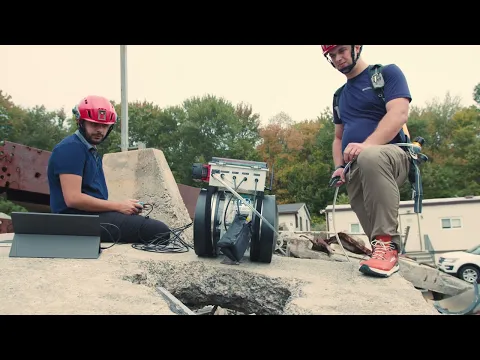

The innovation reinforces the role of robotics as an ally to professionals working in extreme contexts, paving the way for new technologies aimed at safety and the saving of lives.