






 Portuguese
  Spanish
  3 min of reading
  3 comments


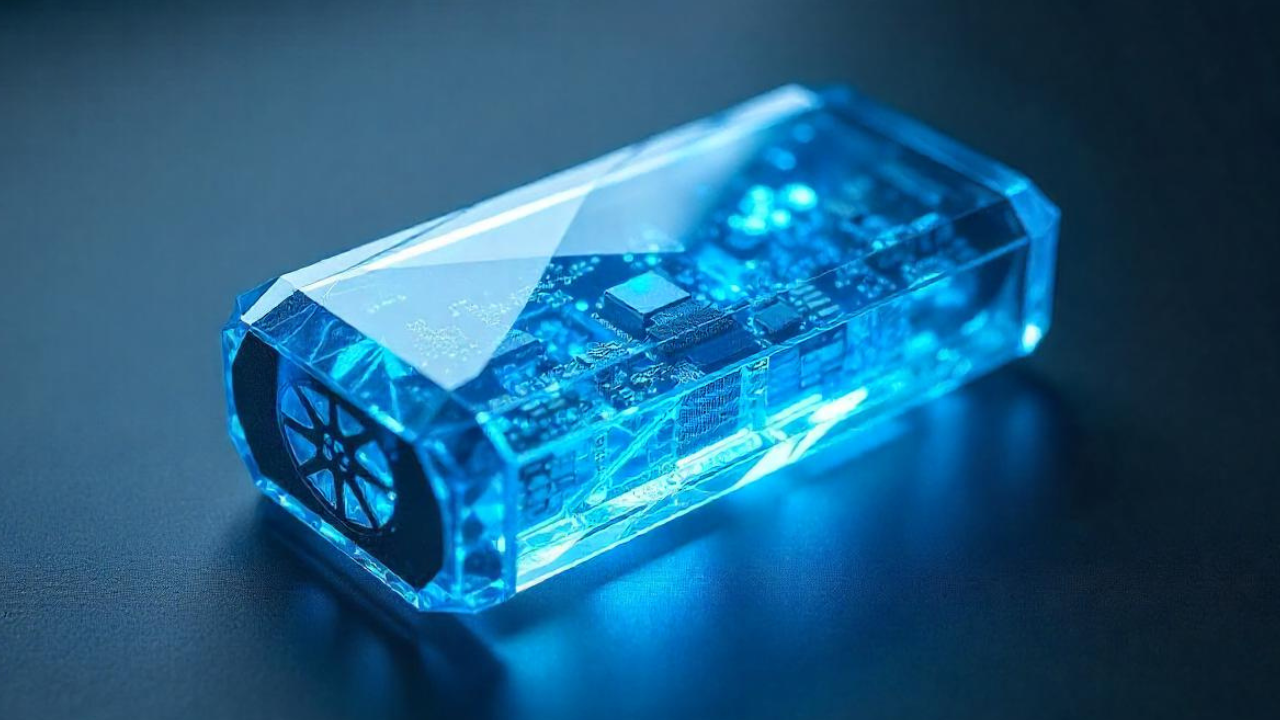


British Team Creates First Diamond Battery With Carbon-14, Promising Long-Lasting Energy For Applications In Various Areas.
A team of British scientists has made a breakthrough in the field of energy by creating the world’s first nuclear battery made of diamond using carbon-14. This atomic battery has the potential to provide energy for thousands of years, making it a promising option for applications in areas such as space technology, medical devices, and other sectors where conventional energy sources are not viable.
How The New Technology Works
The innovation is based on the use of carbon-14, a radioactive isotope well known for its use in radiocarbon dating.
The decay of this carbon-14 generates a small but constant amount of energy, which is captured by synthetic diamond, creating a form of “eternal battery.”
-
Engineering students create a low-cost 3D-printed wheelchair for dogs and help the paralyzed dog Bili, who was born without legs, walk again for R$ 448.

-
Man creates ingenious hack with pipes buried 2.4 meters deep and transforms snow into a tropical fruit greenhouse; system created by a retired mailman uses ground heat, produces oranges and lemons in Nebraska’s winter and has already turned into more than 700 kits sold.
-
An African fish is terraforming lakes by altering sediments, increasing turbidity, and changing the food chain: the silent advance of the tilapia Oreochromis niloticus

-
In the USA, thousands of people are being paid to wash dishes and clean the house with body cameras, every movement turning into data to train robots to imitate humans, in a new “digital gig” that could redefine the future of domestic work.



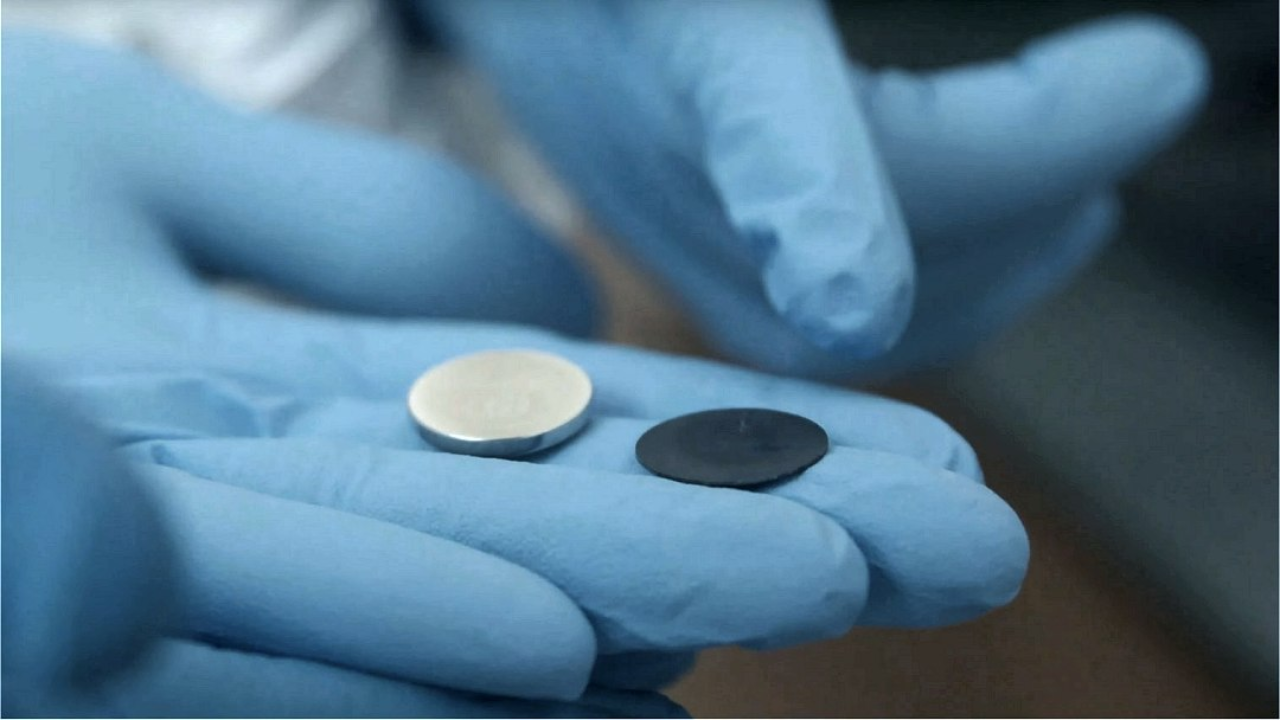
This emerging technology, also known as betavoltaic battery, is different from conventional batteries in that it is able to generate energy without the need for constant recharging or replacement.
The principle behind it is the beta decay process, which occurs when carbon-14 disintegrates, releasing an electron and an antineutrino.
This process generates a small electric current that can be used to power devices.
Unlike technologies such as solar panels, which convert light into electricity, betavoltaic batteries convert radioactive decay into electrical energy.
The team of scientists who developed the battery describes it as a long-lasting and efficient energy source, capable of operating for thousands of years without the need for maintenance.
Sarah Clark, from the UK’s Atomic Energy Authority (UKAEA), explains that “diamond batteries offer a safe and sustainable way to provide continuous levels of energy.”
The technology uses industrial diamond to safely encapsulate small amounts of carbon-14, ensuring that the energy generation process is stable and without risks.
Possible Applications of The Diamond and Carbon-14 Battery
Although the term “nuclear” may raise concerns for some people, diamond batteries have a range of possible applications ranging from medicine to space.
For example, biocompatible versions of this battery could be used in medical devices, such as pacemakers and ocular implants, where the extended battery life eliminates the need for frequent replacements and minimizes risk for patients.
In addition, these batteries can be extremely useful in extreme environments, such as space, where replacing conventional batteries would be impractical.
The energy generated by diamond and carbon-14 batteries could power communication and monitoring systems in spacecraft and satellites for decades, reducing costs and increasing the longevity of space missions.
Another example of application is the use in radio frequency identification (RFID) tags, used to identify and track objects.
With a long-lasting battery, these tags could function for many years without the need for maintenance.
The innovation brought by diamond and carbon-14 technology represents a revolution in the field of energy generation.
Like a hybrid between a battery and a generator, this device can provide a continuous source of energy for incredibly long periods.
This ability to operate for thousands of years is a milestone in the development of new energy technologies.
Researchers are excited about the possibilities of this technology, with Professor Tom Scott from the University of Bristol stating that “our microenergy technology can support a wide range of important applications, from space technologies and security devices to medical implants.”
As research advances and this technology is refined, diamond and carbon-14 batteries may, in the future, become a key solution for energy challenges in various fields.






Se for verdade, é imperativo a continuidade das pesquisas para conseguir quantidades maiores de energia para uso em breve nas naves espaciais com essa tecnologia e em outros processos. Não existe o futuro, é necessário para agora o mais breve possível a sua utilização!
Se pelo menos puder usar os atuais resíduos das usinas nucleares já seria um grande benefício ao meio ambiente. Porém, se não usar, acabará sendo mais resíduo a ser estocado… Assim, uma informação importante é se por acaso ao fim da carga se ainda restará resíduo radioativo…
Não é bem assim