Portuguese
  Spanish


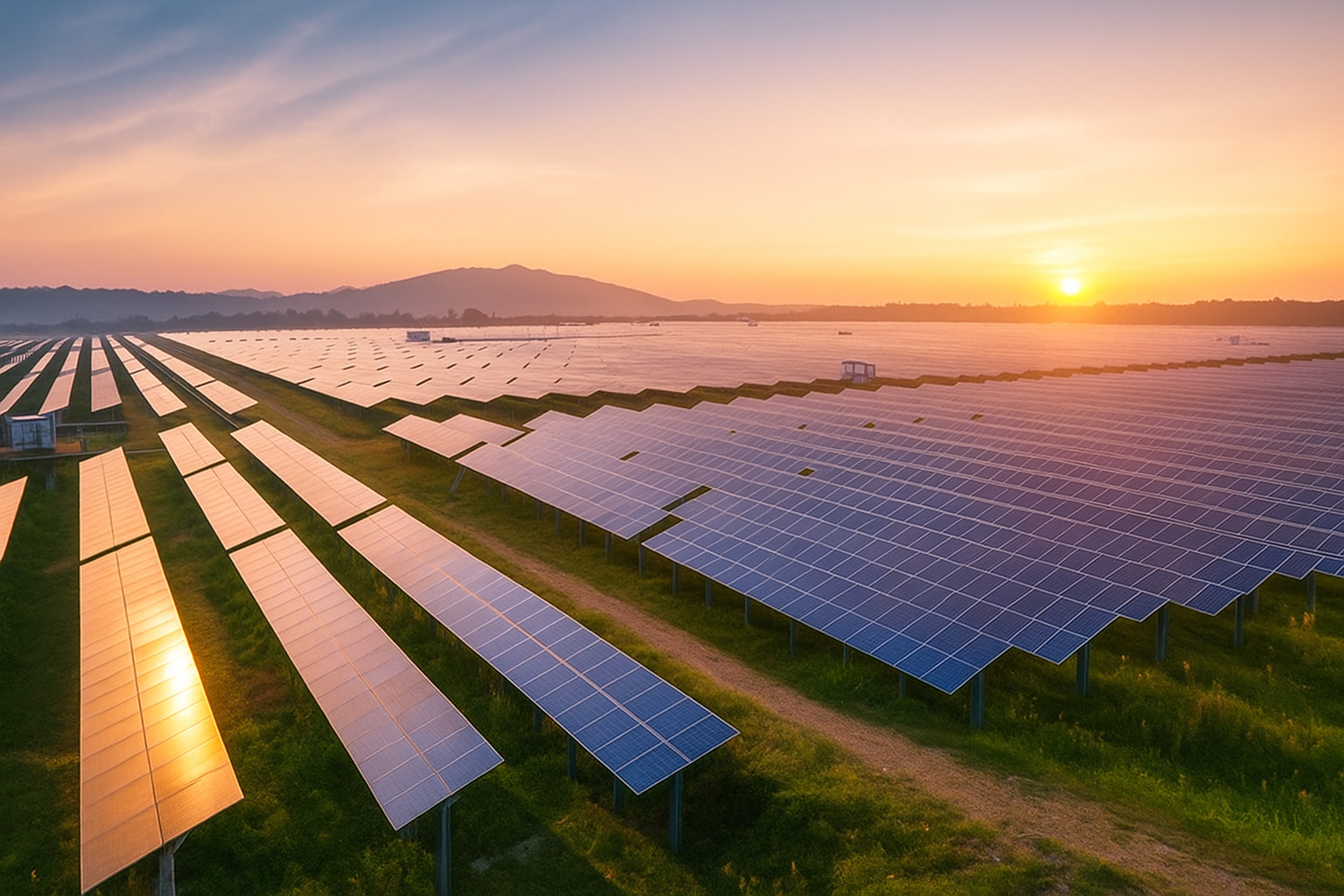

Discover How Home Solar Energy Is Growing in Brazil, Reducing Costs and Strengthening Sustainability, Attracting More and More People Interested in Generating Their Own Electricity.
In recent years, interest in home solar energy has grown significantly in Brazil. Between July 2024 and July 2025, the term “home solar energy” reached 25,700 searches on Google, according to a survey by Aldo Solar, one of the country’s leading photovoltaic system distributors.
Moreover, this increase reflects not only concerns about lowering electricity bills. But also a broader change in society’s perception of sustainability and the use of renewable energy sources.
Historically, Brazil has always maintained an electric matrix heavily based on hydroelectric power. Since the 1950s, hydropower has generated most of the country’s electricity, harnessing the abundance of rivers and waterfalls.
-
Solar Energy Booms in Brazil: Over $60 Billion Invested, 68.8 GW Capacity, 2 Million Jobs Created, Now Second in National Power Grid

-
Giant Batteries Take Center Stage in Chile Auction as Company Offers 960 GWh of Solar Energy for Nighttime Use, Aiming to Stabilize Solar Power Supply
-
World’s Largest Engie Solar Plant in Brazil Highlights Billion-Dollar Energy Waste Issue: Company Considers Batteries and Bitcoin Mining to Avoid Wasting Production

-
Over 60 Tractors Take to the Streets in Lopera as Solar Parks Compete with Olive Groves, Affecting 13,000 to 100,000 Trees According to Conflicting Reports



However, with accelerated urban growth and, consequently, climate changes and drought periods that reduced reservoir levels, diversification of the energy matrix became necessary. Thus, solar energy began to gain ground, especially in the last two decades, with technological advancements and reductions in photovoltaic panel costs.
Additionally, the growing concern for the environment and the need to reduce pollutant gas emissions have stimulated investments in clean energy sources.
Consequently, governments, companies, and consumers began to seek technologies that combined energy efficiency and lower environmental impact. Therefore, this trend contributed to the fact that interest in home solar energy has become not just a matter of economy. But also a conscious decision for sustainability.
Advantages of Residential Solar Energy
Home solar energy offers several advantages that go beyond immediate reductions in electricity bills.
In fact, being a renewable and abundant source, the sun provides predictability and security in electricity production, without relying on extreme weather factors, such as heavy rains or irregular winds.
Moreover, photovoltaic technology allows homes, apartments, and even businesses to generate part of their own energy, using rooftops, facades, or areas near the property.
Thus, this versatility increases the accessibility and utilization of solar light, even in densely built urban regions.
One of the factors driving the growth of home solar energy is, therefore, the long-term cost reduction.
Studies indicate that photovoltaic systems can reduce electricity bills by up to 90%, with a payback estimated between three and five years, depending on consumption and system size.
Additionally, properties with solar panels tend to appreciate by 4% to 6%, increasing the return on investment.
Equally important, another relevant benefit is the possibility of generating energy credits. When production exceeds consumption, the system sends the surplus to the electrical grid, creating credits that consumers can use during peak demand periods, such as winter months or during heavy use of electronic devices.
Besides the direct financial benefits, solar energy provides greater autonomy to families and businesses.
Therefore, by generating their own electricity, it is possible to reduce dependence on utilities, avoiding the impacts of sudden increases in electricity tariffs.
Consequently, this independence allows consumers to better plan their energy budget and use energy more consciously, promoting sustainable habits.
Environmental and Social Impacts
The installation of photovoltaic systems brings positive environmental impacts.
Indeed, generating electricity from solar panels is silent and pollution-free. Unlike other sources that depend on fossil fuels or produce significant emissions.
Moreover, solar energy contributes to the reduction of CO₂ emissions and other greenhouse gases, aligning with global goals to combat climate change.
According to the report “Energy Future: Climate Observatory’s Vision for a Just Transition”, Brazil could reduce its emissions by up to 80% by 2050 without relying on carbon capture technologies, counting on the growth of renewable sources such as solar and wind.
The growth of the home solar energy sector has also brought significant social and economic impacts.
In just the past 12 months, companies created approximately 500,000 new jobs, including positions in distributed micro and mini-generation and large solar plants.
Additionally, the high demand for residential solar energy has increased the demand for integrators, engineers, electricians, and specialized professionals, strengthening training in sales and the development of photovoltaic projects.
Thus, the sector has become an important engine for job and income generation, especially in regions seeking economic diversification and energy inclusion.
Another relevant aspect of home solar energy is the social role it plays.
In remote areas where the traditional electrical grid does not reach, the installation of solar systems allows families and communities to access electricity, improving quality of life and expanding educational and productive opportunities.
Thus, this electrical inclusion demonstrates that solar energy is not just a financial or environmental alternative but also a tool for social and territorial development.
Technological Advances and the Future of Residential Solar Energy
Technological evolution has increased the adoption of residential solar energy.
In recent years, photovoltaic panels have become more efficient, durable, and aesthetically compatible with different types of constructions.
Furthermore, smart monitoring systems allow consumers to track in real time energy production, consumption, and credits generated, making the use of solar energy more intuitive and connected to daily needs.
The growing interest in home solar energy also arises from greater environmental awareness and education about energy consumption.
Increasingly, families and businesses seek to reduce their environmental impact, avoiding waste and contributing to a more sustainable electric matrix.
Therefore, access to information and technology has made investing in solar energy more democratic, allowing different consumer profiles to benefit from energy autonomy.
Despite these advances, the sector still faces challenges, such as the need for clear public policies and financial incentives that facilitate access to solar energy for lower-income populations.
In this sense, sector regulation, system financing, and technical training remain essential points for consolidating the growth of residential solar energy in the country.
Nonetheless, the historical trajectory and constant increase in demand show that home solar energy is here to stay, representing a lasting transformation in how Brazil produces and consumes electricity.
In summary, the increase in searches for “home solar energy” reflects a scenario of significant change in the Brazilian energy matrix.
Thus, this movement not only reduces costs but also strengthens sustainability, social inclusion, and energy autonomy for Brazilian families.
Home solar energy thus proves to be more than just a savings option.