Portuguese
  Spanish


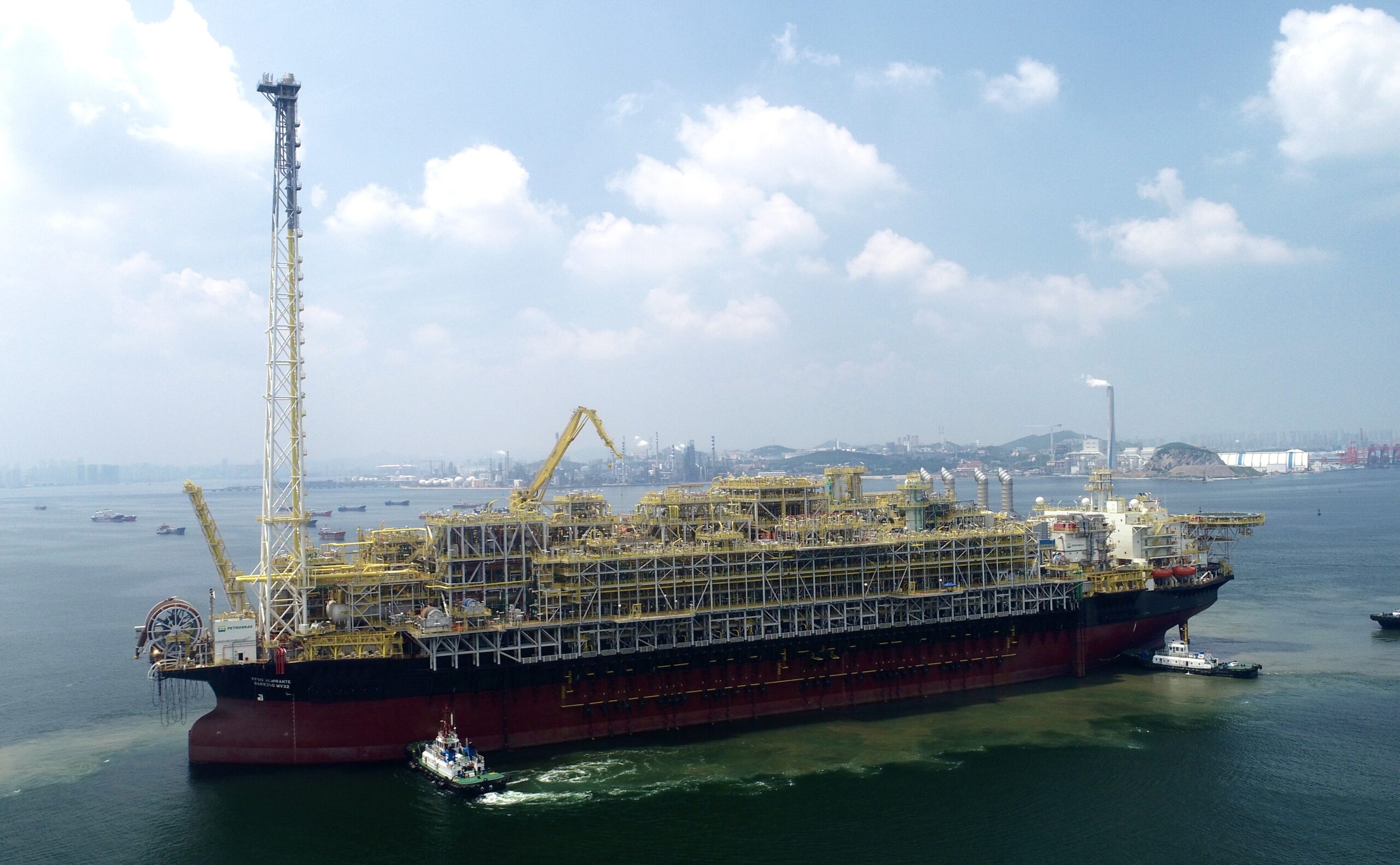

The FPSO Almirante Barroso Has Just Left China, According to Petrobras Information, and Will Undergo Several Testing Phases Before Arriving in Brazil for Oil and Natural Gas Production in the Búzios Field.
Petrobras announced that last Sunday (07/17), the FPSO Almirante Barroso platform departed from the Cosco shipyard in China to begin its journey to the national territory. The vessel will be responsible for the production of oil and natural gas in the Búzios Field, located in the Santos Basin, in the Southeast region of the country, and will contribute to an expansion in the exploration of resources in the area.
FPSO Almirante Barroso Left Shipyard in China to Begin Route to Brazil for Oil and Natural Gas Production in the Búzios Field, According to Petrobras
Petrobras’ project for oil and natural gas production in the Búzios Field, located in the Santos Basin, is progressing and the FPSO Almirante Barroso departed from China last Sunday to start its route to Brazil. The announcement was made by Petrobras this past Tuesday and included more information about the future of the platform’s journey until it reaches national territory.
Thus, the state company emphasized that before starting its journey to Brazil definitively, the FPSO Almirante Barroso will undergo several navigation tests for five days still in Chinese waters to verify the safety and quality of operations.
-
With a record production of nearly 3 million barrels per day, Petrobras resumes importing diesel in July, highlighting the bottleneck in Brazilian refining.

-
Qantas and Airbus Invest in Company Aiming to Convert Unsorted Household Trash into Jet Fuel

-
Brazil’s ANP Opens 86 New Oil Blocks in the Equatorial Margin, Expanding the Amazon River Mouth Frontier

-
OPEC+ Boosts Oil Supply by 188,000 Barrels per Day in July 2026, Leading to Price Drop from $112 to $89 per Barrel in Under Two Months


Subsequently, the vessel will make stops in Singapore and Mauritius, where it will refuel and change crew. Therefore, the FPSO is expected to arrive in national territory around October this year, when it will undergo the final commissioning stage and acceptance tests at the BrasFELS shipyard in Angra dos Reis, in the state of Rio de Janeiro.
The production of the FPSO Almirante Barroso in the Búzios Field is scheduled to begin around early 2023, focusing on the exploration of oil and natural gas in the region. According to Petrobras’ project data, the vessel will have the capacity to produce up to 150,000 barrels of oil daily and process 6 million m³ of gas, in addition to having the capacity to inject 220,000 barrels of water per day into the Santos Basin field.
Oil and Natural Gas Production Project in the Búzios Field Advances and FPSO Almirante Barroso Will Strongly Contribute to the Expansion of Exploration in the Area
The oil and natural gas production project in the Búzios Field will be greatly benefited by the arrival of the FPSO Almirante Barroso in Brazil, as Petrobras expects daily production of about 575,000 barrels of oil. Thus, the area will be responsible for 33% of Petrobras’ oil production by 2026, ensuring an acceleration in the company’s growth plans.
The responsible party for the project development and operation of the platform in the Búzios Field is the Japanese company Modec, and the president and CEO of the company in Singapore, Soichi Ide, emphasized: “The FPSO Almirante Barroso MV32 is one of the most important projects for Petrobras, Modec, and many of our partners and stakeholders. It will be the first FPSO in the Búzios field to be delivered and operated by a contractor. As one of the highest-producing vessels in our fleet, the MV32 represents a significant milestone in our commercial presence in Brazil.”
Now, Petrobras awaits the next testing phases of the FPSO Almirante Barroso in Chinese waters to continue its route to national territory, advancing in the project for fuel exploration in the Southeast of the country.