Portuguese
  Spanish


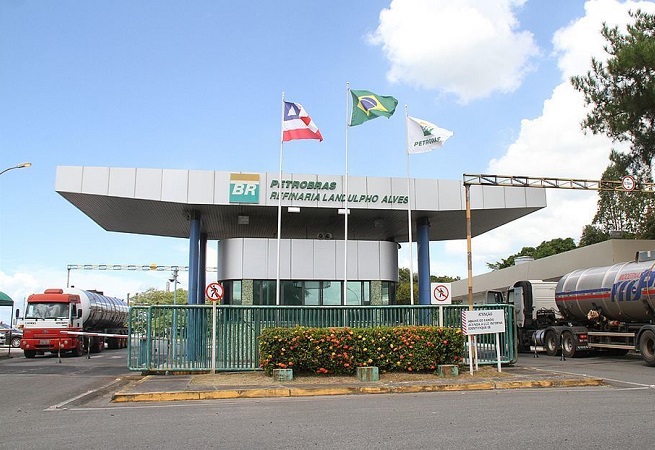

Bayesian Oil Workers Fear Layoffs and Shortages with the Sale of the Landulpho Alves Refinery – RLAM and Organize Protests for April 30th.
After Petrobras announced on Friday, April 26 new asset portfolio management guidelines, authorizing the sale of RLAM and seven other refineries, the Bayesian oil workers, in response to Petrobras’s disinvestment announcement regarding the Landulpho Alves Refinery (RLAM) in São Francisco do Conde, will hold a protest this Tuesday, April 30 in front of the headquarters, in the Baiano Recôncavo. The category fears the negative impacts of the refinery’s privatization, such as mass layoffs, increased fuel prices, and shortages.
The company is the first in the Petrobras System in Brazil and the second in the country in processing capacity, responsible for 99.32% of oil refining in Bahia and for 20% of the state’s Goods and Services Tax (ICMS) revenue. RLAM produces diesel, gasoline, aviation kerosene, asphalt, naphtha, petrochemical gases, paraffins, lubricants, LPG, and fuel oils.
-
U.S. City Faces Dilemma as Study Warns of Sinking Land and Rising Seas: Invest in Flood Defenses, Restore Wetlands, or Relocate?

-
4,000-Year-Old Stone Towers Discovered Across Sardinia, Puzzling Archaeologists About This Mysterious Civilization
-
8-Year-Old Finds 900-Year-Old Viking Bronze Buckle on Swedish Beach While Fossil Hunting
-
China Tests Giant 582-Ton Magnets to Contain Plasma Hotter Than the Sun’s Core, Aiming to Cut Superconductor Costs and Generate First Electricity from “Artificial Sun” by 2030

There is still no date for the sale of the eight refineries announced on Friday by Petrobras. In addition to RLAM, the refineries that will be disinvested by Petrobras are Abreu e Lima (RNEST), Shale Industrialization Unit (SIX), Gabriel Passos (REGAP), Presidente Getúlio Vargas (REPAR), Alberto Pasqualini (REFAP), Isaac Sabbá (REMAN), and Northeast Oil Lubricants and Derivatives (LUBNOR).
If a private company buys the refinery in the Recôncavo, there will be negative impacts on job generation in the state, possibly reducing the workforce, which currently includes 870 civil servants working at the refinery and an additional 1,200 contractors working on site.
In defense, Petrobras argues that the projects will “provide greater competitiveness and transparency to the refining segment in Brazil.”
However, Bayesian oil workers fear that the prices of fuels and cooking gas will rise, in addition to decreased tax revenue. The director of Sindipetro, Deyvid Bacelar, emphasizes that the company that sets up in the location will not have the same social function that Petrobras has as a state-owned enterprise.
“They will further pursue the policy of international parity pricing, and if the price rises, there will be no way to cushion that so that the population does not feel it. As a result, prices will be even higher, and companies will not want to lose money. Moreover, cities with more difficult access could become completely short of supplies, as Petrobras had a branch solely to deliver fuels to these places due to its social role,” he stated.
“The atmosphere in the refinery is very tense because the company said it could transfer us to other regions but also that the refinery would be transferred operating. This means that some people will have to be kept in the system to keep the plant operational,” said RLAM employee Atilla Barbosa, who noted that the fear of layoffs among colleagues is real and very present.
Petrobras Changes Bylaws to Sell Subsidiaries Without Shareholder Approval