






 Portuguese
  Spanish
  2 min of reading
  0 comments


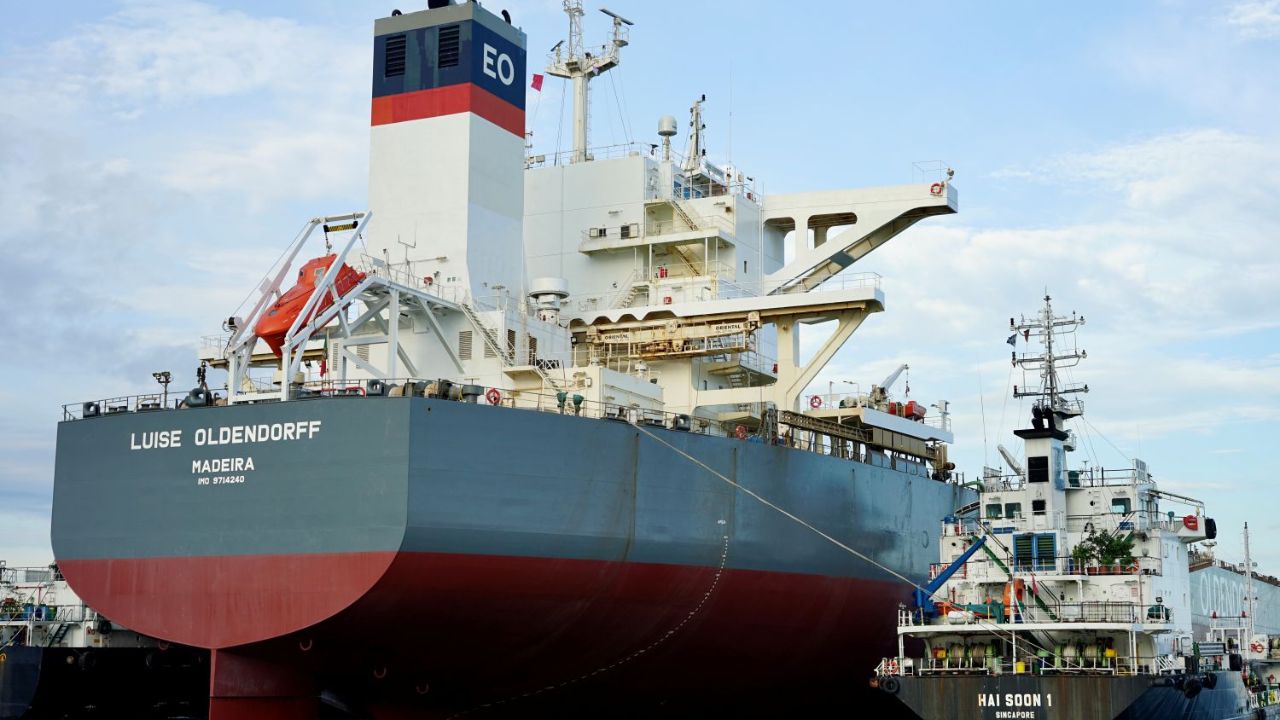
Initiative Uses Recycled Cooking Oil in Mix with Traditional Marine Fuel
Two Brazilian giants, Petrobras and Vale, are joining forces to test an innovative biofuel in cargo ships, made from used cooking oil. The initiative represents an important step towards making the maritime transport sector cleaner and more environmentally responsible.
Petrobras Bets on Green Alternatives for Navigation
Petrobras and Vale conducted a test with a new marine biofuel, designed to reduce greenhouse gas emissions in maritime transport. The experience took place aboard the bulk carrier Sea Victoria, one of the ships chartered by Vale, during a two-thousand-kilometer trip from Malaysia to China.
The fuel used is a mixture of Bunker RMG 380, traditionally used in navigation, with about 24% of a biodiesel produced from recycled cooking oil, also known as bio-oil. The test is part of Petrobras’ strategy to increase the use of low-carbon fuels and reinforces the company’s commitments to energy transition.
-
Oil production grows in Rio, but reserve replacement raises a warning sign

-
Petrobras is expected to complete the drilling of the Morpho well in the Foz do Amazonas in August 2026, the first well in the Equatorial Margin, an oil frontier that the ANP estimates at more than 30 billion barrels and could redraw the map of Brazil.

-
Oil returns to the center of concerns with tension between the US and Iran

-
IEA reduces forecast for global oil demand in 2026 after impacts of the Middle East crisis



Green Technology Drives Construction of Solutions for the Future
This action is part of a larger context of seeking sustainable fuels in the maritime sector, which is responsible for a significant portion of global CO₂ emissions. According to Petrobras, the use of biofuel demonstrated positive results and represents an advance in the development of cleaner solutions for long-distance navigation.
Additionally, the bio-oil used was produced at the Presidente Getúlio Vargas Refinery (REPAR) in Paraná, using technology developed in collaboration with Petrobras Research Center (CENPES). The initiative also aligns with Vale’s commitments, which has been investing in innovation and decarbonization of its logistics chain.
Partnership Between Petrobras and Vale Expands Scope of Testing
The collaboration between the two companies aims to go beyond this initial experiment. Vale reported that it will continue to monitor the efficiency of the new fuel and that it is open to expanding the use of this technology in other vessels. Petrobras emphasized that this type of partnership is essential to accelerate the adoption of renewable fuels in the industrial sector.
According to Offshore Energy, this initiative could serve as a model for other countries and companies facing similar challenges in the search for more sustainable transportation methods with lower environmental impact.
Petrobras Accelerates Energy Transition with Innovation in Biofuels
This project with Vale is yet another of Petrobras’ various fronts in the field of sustainability. The company has invested in research and development of biofuels, green hydrogen, and carbon capture, reinforcing its role in the transition to a low-carbon economy. The use of recycled cooking oil is just one example of how waste can be transformed into energy solutions.







Be the first to react!