Portuguese
  Spanish


Investments in geological research and artificial intelligence advance in the Amazon and the Equatorial Margin, expanding scientific knowledge, integrating unique data, and creating a technical foundation for strategic decisions on natural resources and energy production in Brazil.
Petrobras confirmed an investment of R$ 2.8 million in a scientific project aimed at revising the Stratigraphic Map of the Marajó Basin, in Pará, conducted by the Geological Service of Brazil in partnership with universities, including UFPA.
With an estimated duration of 18 months, the initiative seeks to expand geological knowledge of the region by integrating existing data and filling relevant gaps regarding sedimentary systems, mineral resources, and energy potential, consolidating a more robust technical foundation for future studies.
At the same time, the state-owned company is advancing in the Equatorial Margin, where it plans to invest US$ 2.5 billion by 2030, in addition to planning the drilling of 15 new wells in the coming years, treating the region as a new strategic frontier for reserve replenishment.
-
OPEC+ Boosts Oil Supply by 188,000 Barrels per Day in July 2026, Leading to Price Drop from $112 to $89 per Barrel in Under Two Months

-
TotalEnergies Signs 20-Year Deal to Purchase 2 Million Tons of LNG from Alaska, Boosting Project Viability
-
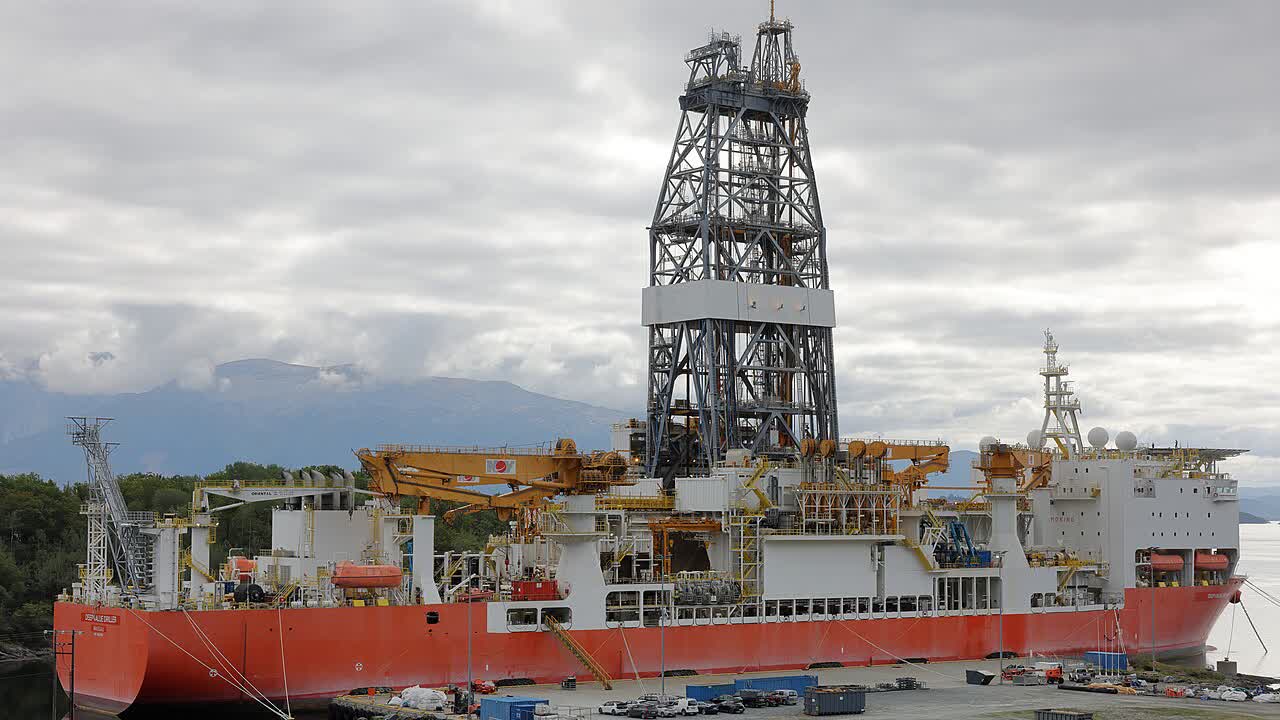
Turkey Deploys Çağrı Bey Drilling Ship to Explore New Oil Frontier Off Somalia’s Coast
-
Golden Pass LNG Ships First Liquefied Gas Cargo from the U.S., Completing $10 Billion QatarEnergy and ExxonMobil Investment

Geological studies in Marajó gain new momentum
In the case of Marajó, Petrobras and the SGB classify the project as an initiative for research, development, and innovation, without immediate commercial purpose, aimed at updating and standardizing geological information considered essential for advancing scientific knowledge.
In this context, the revision of stratigraphic maps takes on a central role by organizing the nomenclature of geological units and their temporal position, allowing for greater precision in academic research, territorial planning, and technical studies related to the use of natural resources.
Covering approximately 53,000 square kilometers, the Marajó Basin is located at the confluence of the Amazon and Tocantins rivers, between the Amazon and Parnaíba basins, presenting areas that are still poorly understood in their tectonic and sedimentary evolution.
Thus, the study aims to consolidate dispersed data and deepen the analysis of less explored sections, especially in the rift section, considered strategic for understanding the geological formation and development of the region.
Artificial intelligence and technology in geological mapping
To enhance the accuracy of the analyses, the project incorporates tools of artificial intelligence in the mapping of seismic facies, combined with advanced methods of geochronology and thermochronology, expanding the capacity to interpret the available geological data.
At the same time, the research will be conducted by a multidisciplinary team composed of 21 specialists, with 15 from SGB itself and six affiliated with Brazilian universities, bringing together different expertise in a collaborative model of scientific investigation.
This arrangement integrates surface reading, subsurface data, and refined geophysical interpretation, creating a more complete and consistent approach to the analysis of the geological structure of the basin.
Furthermore, the participation of UFPA stands out for its accumulation of regional knowledge, while collaboration with institutions such as UFAM, USP, UnB, UFRJ, and UFRGS broadens the technical and scientific reach of the project.
Review of sedimentary basins enters the national agenda
The planned update for Marajó integrates a broader agenda for reviewing geological knowledge of Brazilian sedimentary basins, resuming previous initiatives by Petrobras that were marked by relevant publications, such as the Geosciences Bulletin of 2007.
Unlike initial surveys, the new effort is based on a collection consolidated over decades of exploration and scientific production, allowing for a more in-depth and integrated review of the available information.
Strategically, Petrobras maintains exploration as the central axis of its long-term planning, with the Business Plan 2026-2030 forecasting US$ 109 billion in total investments.
Within this amount, US$ 7.1 billion will be allocated to exploratory activities, focusing on basins in the South and Southeast, in the Equatorial Margin, and in international assets, reinforcing the importance of reserve replenishment.
Political repercussions and economic expectations
The initiative has provoked different reactions among Pará lawmakers, reflecting distinct views on the potential impact of the project on regional development and the state’s economy.
According to Senator Beto Faro, the investment could reposition Marajó in the national energy landscape, although he emphasizes that the existence of natural resources does not guarantee social advances without governance, planning, and institutional capacity.
On the other hand, Deputy Joaquim Passarinho assesses that the investment arrives late given the potential already identified in the region, arguing that economic development and environmental preservation must advance simultaneously.
Senator Zequinha Marinho highlights the need for a structured project for the archipelago, pointing out that the initiative could attract investments, generate opportunities, and strengthen local production chains.
Despite the differences in approach, there is convergence regarding the need for institutional planning and efficient management to transform potential discoveries into concrete benefits for the population.
Equatorial Margin and progress of the Morpho well
While studies focus on land, Petrobras maintains the Equatorial Margin as a strategic front in the offshore environment, advancing with projects considered priorities for the future of Brazilian energy production.
In this scenario, the company resumed drilling the well Morpho, in block FZA-M-59, after the interruption caused by the leak of a biodegradable fluid recorded at the beginning of the year.
Subsequently, operations were resumed and began to follow a new schedule, with an expected completion in mid-June 2026, after adjustments to the initial planning.
Thus, Petrobras operates simultaneously on two complementary fronts, combining the expansion of scientific knowledge in underexplored areas with the advancement of exploration projects deemed strategic.
In the short term, the project in Marajó maintains a technical and academic character, while, from a broader perspective, the data generated should support decisions related to mineral resources, water management, and public planning.