Portuguese
  Spanish


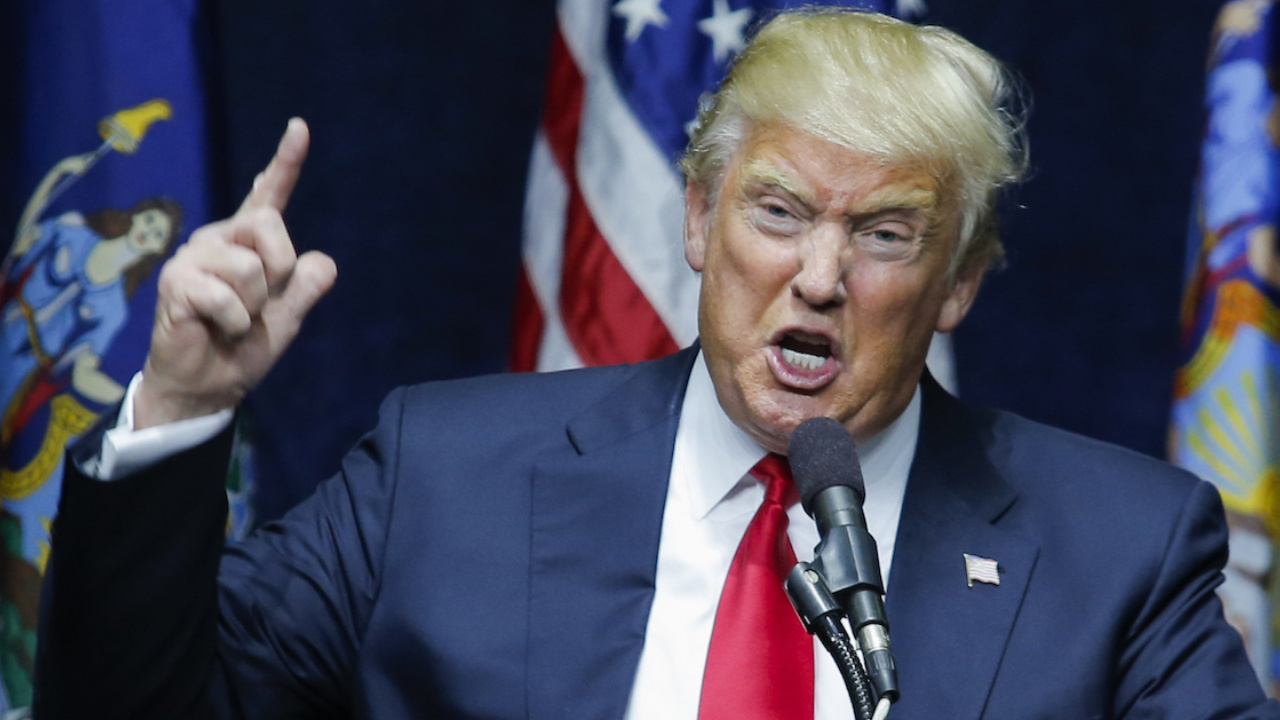

Oil, Trump, and Venezuela Return to the Center of Global Debate After Meeting at the White House Reveals Caution of American Oil Companies Facing Political, Legal, and Operational Risks in the South American Country.
Oil has once again taken a strategic position in the international debate by revealing, once more, the difficulties of transforming political speeches into concrete investments. Despite repeated statements from Donald Trump about the intention to reposition Venezuela as a key player in the global energy market, executives from major American oil companies showed strong resistance to the idea.
The recent meeting at the White House exposed a scenario of caution, marked by legal insecurity, a history of expropriations, and uncertainties about the political future of the South American country.
Even though Venezuela holds the largest proven oil reserves in the world, the economic and institutional reality remains a decisive factor in deterring billion-dollar investments, even in light of promises to relax sanctions.
-
With a record production of nearly 3 million barrels per day, Petrobras resumes importing diesel in July, highlighting the bottleneck in Brazilian refining.

-
Qantas and Airbus Invest in Company Aiming to Convert Unsorted Household Trash into Jet Fuel

-
Brazil’s ANP Opens 86 New Oil Blocks in the Equatorial Margin, Expanding the Amazon River Mouth Frontier

-
OPEC+ Boosts Oil Supply by 188,000 Barrels per Day in July 2026, Leading to Price Drop from $112 to $89 per Barrel in Under Two Months

Trump Bets on Venezuelan Oil to Influence Global Prices
During the meeting with energy sector leaders, Trump reiterated that lifting oil production in Venezuela could have positive impacts on international energy prices. According to him, increasing supply would help reduce costs for consumers and reinforce the energy security of the United States.
“One of the things that the United States will achieve with this will be an even greater drop in energy prices,” said the president, defending the gradual reopening of the Venezuelan oil sector under American supervision.


However, despite the confident rhetoric, the executives’ reaction was far from the expected enthusiasm. No significant financial commitments were announced, disappointing Trump’s expectation of attracting at least US$ 100 billion in private investments.
History of Expropriations Pushes Industry Giants Away
The caution of oil companies has deep roots. The sector carries recent memories of forced nationalizations, billion-dollar losses, and prolonged legal disputes. This history came back to the forefront during the meeting.
The CEO of ExxonMobil, Darren Woods, was straightforward in assessing the current scenario. “Our assets have been confiscated there twice, so you can imagine that a third re-entry would require quite significant changes from what we have seen historically and the current situation. Nowadays, it is unfeasible for investment.”
Exxon, which currently focuses its efforts in Guyana — where it produces about 1.3 million barrels per day of high-quality oil — made it clear that it sees no minimal conditions for resuming operations in Venezuela in the short term.
Chevron Stays While Other Companies Assess Risks
Among major American oil companies, Chevron is the only one that has maintained an active presence in Venezuela. Currently, it accounts for approximately one-fifth of national production, which remains below 900,000 barrels per day — less than 1% of global supply.
The company has signaled interest in gradually expanding its operations, provided there is regulatory stability and predictability in financial flows. In parallel, other international companies are also watching the situation closely.
The Spanish company Repsol, which produces about 45,000 barrels daily, indicated it could triple this volume in the coming years, as long as suitable conditions are ensured. The Italian company Eni maintains an active stake but has not announced immediate expansion.
American Control Over Oil Sales and Revenues
Another central point of Trump’s strategy involves direct control over the revenues from Venezuelan oil. The White House confirmed it is working to selectively reverse sanctions while establishing mechanisms to supervise external sales.
According to American authorities, the amounts raised from the sale of oil would be deposited in accounts controlled by the United States. The justification is to maintain political and diplomatic influence over the interim government currently led by Delcy Rodríguez, a former ally of Nicolás Maduro.
In recent weeks, at least two tankers transporting Venezuelan oil were seized for being subject to current sanctions, reinforcing strict control over the export chain.
Limited Production and Structural Challenges Persist
Although Venezuela possesses vast reserves, production remains compromised by decades of disinvestment, mismanagement, and international sanctions. Deteriorated infrastructure, technology shortages, and a loss of skilled labor make a rapid recovery difficult.
Even the more optimistic executives recognize that any significant expansion will require years of continuous investment. Exxon itself stated it plans to send only an initial technical team to assess operational conditions, without signaling an immediate return.
Bill Armstrong, leader of an independent drilling company, summarized the ambiguous sentiment of the sector: “We are ready to go to Venezuela. In real estate terms, it is prime territory.”
Still, this willingness is met with elevated political risks and a regulatory environment considered unstable.
Between Political Discourse and Market Reality
The episode highlights the contrast between Trump’s strategy for oil, the internal situation in Venezuela, and the pragmatic logic of the energy market. While the U.S. government seeks to use Venezuelan oil as a geopolitical tool, oil companies continue to prioritize predictability, legal security, and financial return.
Thus, oil, Trump, and Venezuela remain connected by a complex equation, in which strategic interests collide with the harsh economic and institutional reality of the South American country.