Portuguese
  Spanish


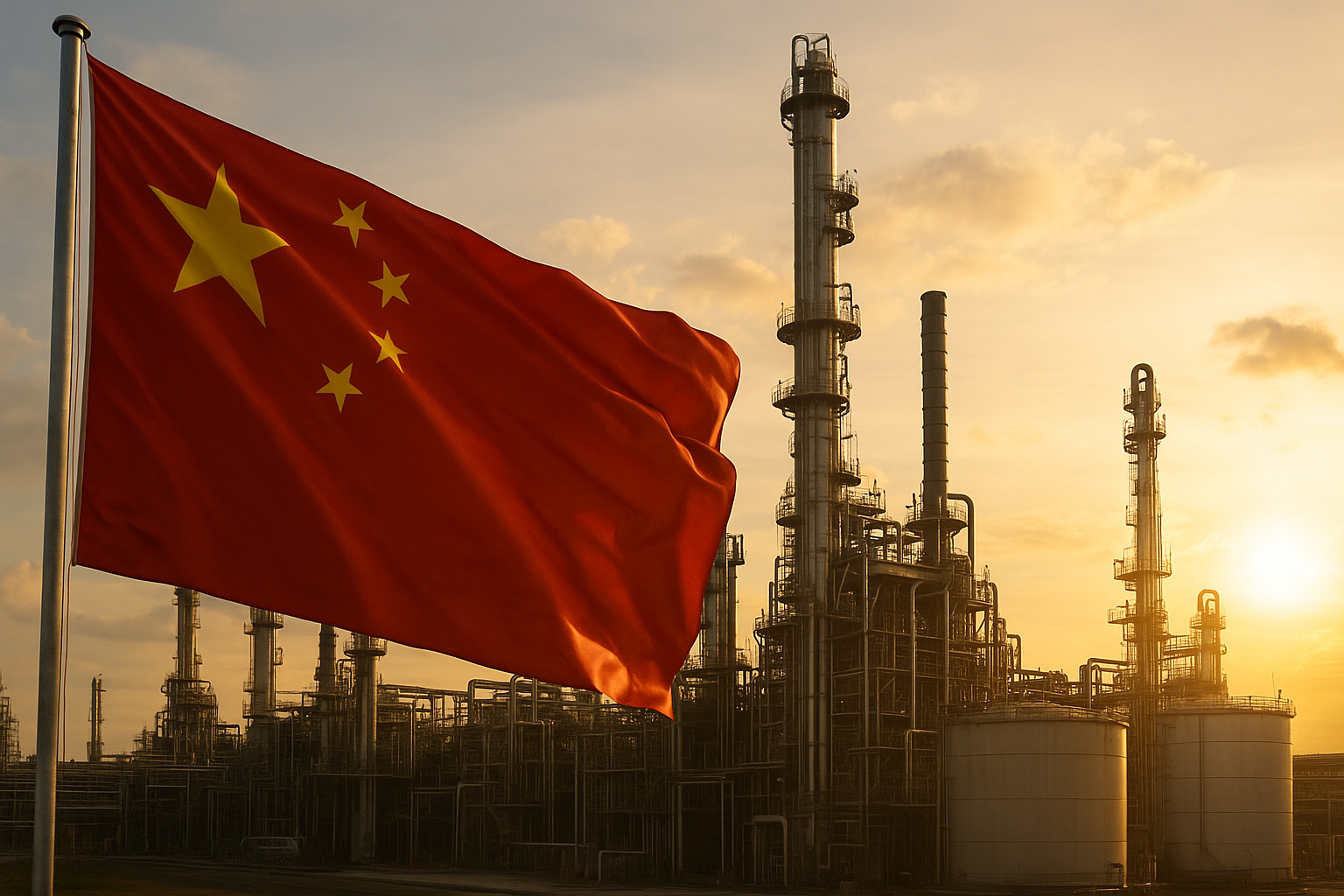

The oil sector has always played a central role in Brazil’s economic and political history. From the early discoveries in the early 20th century to the consolidation of the pre-salt, the country has built a deep relationship with this energy source. At the same time, major global powers began to observe Brazilian oil as a strategic asset. In this context, China’s growing presence in the sector exposes an ambitious and carefully planned strategy.
Historically, Brazil has structured its oil policy with a strong state presence. The creation of Petrobras in 1953 marked the beginning of a model based on energy sovereignty. According to the federal government’s website, the slogan “the oil is ours” reflected concerns about ensuring national control over strategic resources. For decades, this model limited foreign participation, especially in sensitive areas of the production chain.
However, starting in the 1990s, this scenario began to change. The opening of the sector, driven by economic reforms and the need to attract investments, allowed international companies to enter. Still, it was not until the 21st century that the Chinese presence began to grow exponentially.
-
Oil production grows in Rio, but reserve replacement raises a warning sign

-
Petrobras is expected to complete the drilling of the Morpho well in the Foz do Amazonas in August 2026, the first well in the Equatorial Margin, an oil frontier that the ANP estimates at more than 30 billion barrels and could redraw the map of Brazil.

-
Oil returns to the center of concerns with tension between the US and Iran

-
IEA reduces forecast for global oil demand in 2026 after impacts of the Middle East crisis



According to data released by the National Agency of Oil, Natural Gas and Biofuels, ANP, the participation of Chinese state-owned companies in the Brazilian oil sector increased by more than 1,000% in just over a decade. This advancement did not happen by chance. It reflects an energy policy coordinated by the government in Beijing.
Oil as a Pillar of China’s Energy Strategy
To understand the Chinese movement in Brazil, it is necessary to observe China’s internal context. Since the early 2000s, the country has experienced rapid economic growth and intense urbanization. As a consequence, energy demand has steadily increased. According to the International Energy Agency, China became the world’s largest oil importer starting in 2017.
Faced with this external dependence, the Chinese government has come to treat oil as a national security issue. According to the website of the State Council of China, strategic documents published over the past decade reinforce the need to diversify suppliers and ensure direct access to reserves abroad. Brazil emerges, in this scenario, as a strategic partner.
Furthermore, the Chinese strategy relies heavily on state-owned enterprises. Companies such as CNPC, CNOOC, and Sinopec operate as arms of the State in international projects. Investment in oil is not only aimed at financial returns, but also at stability in supply and geopolitical influence.
In Brazil, these companies began to participate in auctions, acquire stakes in pre-salt fields, and establish partnerships with Petrobras. According to the Ministry of Mines and Energy, the influx of Chinese capital helped to make large-scale projects viable during times of fiscal restraint and declining internal investments.
The Decade of Pre-Salt and the Expansion of Chinese Presence
The discovery of pre-salt in 2006 marked a turning point. The reserves located in ultra-deep waters placed Brazil among the top oil-producing countries in the world. This new status increased international interest and, consequently, Chinese action.
According to Petrobras, the investments needed to explore pre-salt required robust partnerships and access to long-term financing. In this context, Chinese banks and state-owned oil companies began to play a relevant role. China not only invested in production but also in financing the supply chain.
Additionally, oil supply contracts established between Brazilian and Chinese companies reinforced interdependence. According to the website of the National Bank for Economic and Social Development, BNDES, agreements structured throughout the 2010s allowed for increased oil exports to the Asian market, especially to China.
This movement explains the significant growth of Chinese participation in the sector. More than an “invasion,” it is a gradual expansion, sustained by planning and long-term vision.
Oil, Geopolitics, and Strategic Risks
Although investments bring economic benefits, China’s advance in the Brazilian oil sector also raises strategic debates. Oil remains a sensitive commodity, associated with sovereignty and foreign policy. Therefore, the growing presence of foreign state-owned enterprises draws attention.
According to analyses published by the Institute for Applied Economic Research, Ipea, the concentration of foreign investments in strategic sectors requires solid regulatory frameworks and clear governance. The challenge is not the external capital itself, but the country’s ability to preserve decision-making autonomy.
Moreover, the global landscape is undergoing transformations. The energy transition is progressing, but oil remains relevant. According to the Organization of the Petroleum Exporting Countries, OPEC, recent reports indicate that global oil consumption will continue to be significant in the coming decades, even with the expansion of renewables.
In this context, Chinese interest in Brazilian oil remains. Brazil offers institutional stability, large reserves, and long-term potential. For China, it is a strategic combination that is hard to ignore.
Brazil’s Role in Light of Chinese Expansion
In light of this scenario, Brazil faces a strategic choice. On one hand, Chinese investments increase production, generate revenue, and strengthen the trade balance. On the other hand, they demand increased attention to regulation, governance, and the definition of national priorities.
According to the Brazilian government, recent policies aim to balance the attraction of foreign capital with the preservation of national interest. More transparent auctions, local content requirements, and clearer environmental rules are part of this effort.
Throughout history, Brazil has demonstrated the ability to adapt its oil policy to global changes. The Chinese presence represents yet another chapter in this trajectory, marked by disputes, partnerships, and strategic redefinitions.
Thus, oil remains a central axis of the relationship between Brazil and China. More than a simple business expansion, the movement reveals a long-term energy strategy from Beijing while challenging Brazil to strengthen its position as a protagonist, and not just as a supplier, in the global energy landscape.