






 Portuguese
  Spanish


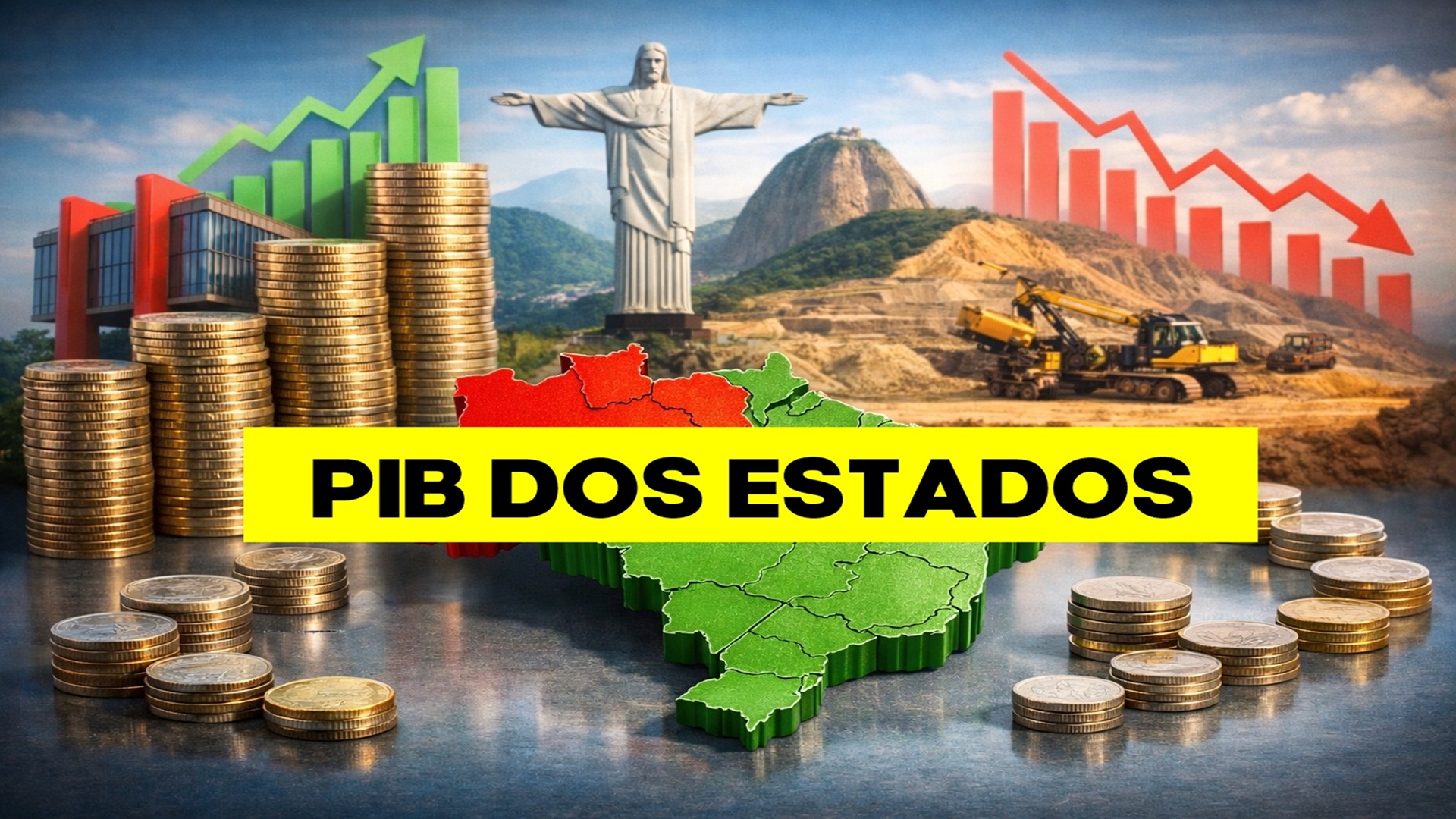


While São Paulo, Rio de Janeiro and Minas Gerais concentrate the largest share of Brazilian GDP in 2025, northern states appear in the last positions of the ranking, showing historical differences in productive structure, investment, infrastructure and regional economic dynamism in the country
The Gross Domestic Product of Brazil reached R$ 10.9 trillion, according to the most recent regional data from IBGE, revealing a high economic concentration in the Southeast and large disparities among states and regions of the country.
The survey uses nominal GDP values by federal units, based on the Regional Accounts System, with 2023 as the most recent base year officially released in 2025.
Regional Concentration Dominates National GDP
The Southeast accounted for R$ 5.80 trillion, more than half of the Brazilian GDP. South, Northeast, Central-West and North follow, with significantly smaller shares.
-
Brazil to Issue “Panda Bonds” in China, Aiming to Raise Up to 5 Billion Yuan at Lower Interest Rates Than Dollar Debt
-
NATO Faces Internal Tensions as U.S. Pushes for Increased Defense Spending, Targeting 5% of GDP by 2035, with Warnings for Countries Near 2% Level

-
Brazil to Introduce B16 Diesel with Increased Soybean Oil Content for Trucks by 2026
-
Brazil’s July Bolsa Família Payments May Include Extra $150 and $50 for Families with Children, Pregnant Women, and Updated CadÚnico Registration


São Paulo alone concentrated 31.5% of the national economy, highlighting the productive, financial and industrial centralization of the country in a few state hubs.
Largest State GDPs in Brazil
São Paulo leads with R$ 3.44 trillion, followed by Rio de Janeiro, with R$ 1.17 trillion, and Minas Gerais, which reached R$ 972 billion.
Next are Paraná, with R$ 671 billion, Rio Grande do Sul, with R$ 650 billion, and Santa Catarina, which totaled R$ 513 billion.
Bahia recorded R$ 431 billion, establishing itself as the largest economy in the Northeast, while Goiás reached R$ 337 billion, leading the Central-West outside the Federal District.
States with Lowest Participation in GDP
On the other end, Roraima showed the lowest state GDP, with R$ 25 billion, followed by Acre, with R$ 26 billion, and Amapá, with R$ 28 billion.
Tocantins totaled R$ 64 billion, while Rondônia reached R$ 76 billion. These states maintain individual participation below 1% of the national GDP.
The concentration highlights structural, logistical and productive challenges that limit the economic expansion of these federal units.
Economic Inequality Remains Structural
The data reinforces that aggregate growth does not automatically translate into balanced regional distribution, maintaining historical differences between industrial centers and peripheral regions.
Experts point out that infrastructure, human capital, and productive diversification remain decisive factors for altering this scenario in the long term.
GDP of Brazilian States – Descending Order
| Position | State | GDP (R$) |
|---|---|---|
| 1 | São Paulo | 3.44 T |
| 2 | Rio de Janeiro | 1.17 T |
| 3 | Minas Gerais | 972 B |
| 4 | Paraná | 671 B |
| 5 | Rio Grande do Sul | 650 B |
| 6 | Santa Catarina | 513 B |
| 7 | Bahia | 431 B |
| 8 | Federal District | 365 B |
| 9 | Goiás | 337 B |
| 10 | Pernambuco | 270 B |
| 11 | Mato Grosso | 273 B |
| 12 | Pará | 254 B |
| 13 | Ceará | 232 B |
| 14 | Espírito Santo | 210 B |
| 15 | Mato Grosso do Sul | 184 B |
| 16 | Amazonas | 162 B |
| 17 | Maranhão | 149 B |
| 18 | Rio Grande do Norte | 102 B |
| 19 | Paraíba | 97 B |
| 20 | Alagoas | 90 B |
| 21 | Piauí | 81 B |
| 22 | Rondônia | 76 B |
| 23 | Tocantins | 64 B |
| 24 | Sergipe | 61 B |
| 25 | Amapá | 28 B |
| 26 | Acre | 26 B |
| 27 | Roraima | 25 B |
Sources:
Brazilian Institute of Geography and Statistics (IBGE) – Regional Accounts System (SCR 2025), data from 2023. Brazil in Maps, compilation and statistical visualization.





a região nordeste somando todos os estados é o terceiro PIB do Brasil produz, 1 513 um trilhao e quinhentos e treze bilhões de reais