






 Portuguese
  Spanish
 3 min of reading
  0 comments



The Brazil-Germany Chamber of Commerce in São Paulo Launches, in January 2026, a Practical Agenda of In-Person and Online Training Focused on Green Transition, Competitiveness, and Funding Acquisition.
The PMEs Go Green program begins, in January 2026, a structured agenda of training with six workshops planned until March. Right at the start, three meetings kick off the cycle. Thus, the initiative offers practical training, combining in-person and online events, for small and medium enterprises looking for sustainable innovation and competitiveness. Furthermore, the program brings together market specialists, from Emerge and the Brazil-Germany Chamber of Commerce in São Paulo.
In this context, the PMEs Go Green program is an initiative of the Brazil-Germany Chamber of Commerce in São Paulo and the Fundação ECO+. Additionally, the project is part of the AL-INVEST Verde program, funded by the European Union, which reinforces its institutional credibility. Therefore, the central focus is to promote sustainable growth and job creation in Latin America, supporting the transition of SMEs to a low-carbon economy.
Moreover, the program operates through technical assistance, applied training, and access to networking. Consequently, companies receive support to meet the demands of the global market. At the same time, the series of workshops has been designed to address real pain points of entrepreneurs, especially the lack of knowledge about funding lines and the technical difficulty in formatting innovation projects.
-
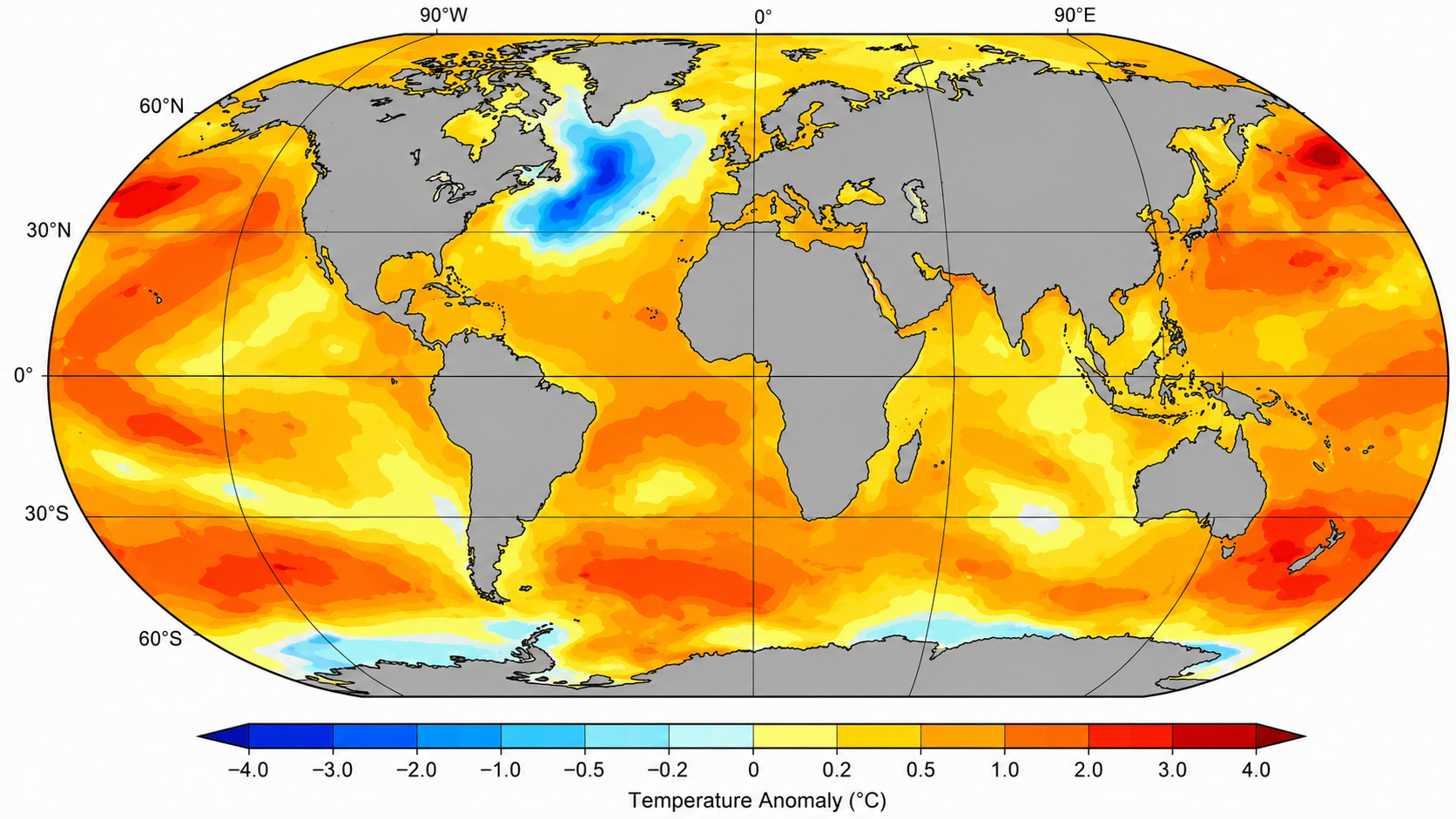
Rare phenomenon in the North Atlantic cools while the planet warms and reignites fear of abrupt climate changes in Europe

-
The most profitable tournament in history may have an invisible climate cost, and the 2026 World Cup is already surrounded by environmental doubts.

-
Underground fungal network spans 110 quadrillion kilometers and reveals an invisible infrastructure larger than previously imagined.
-
Sustainable mansion in Colorado made with over 1,500 recycled tires, clay, cans, and bottles has 414 m², solar energy, rain sensors, a stable with 23 stalls, and is for sale for $1.3 million.




Workshop Schedule
- Incentives and Grants for Innovation and Sustainability
Date: January 28, 2026 (in-person).
Location: AHK São Paulo.
Thus, the meeting will be led by Michel Jabour, head of innovation funding at Emerge. In this way, the aim is to map non-repayable funding sources and subsidized credit lines available to SMEs that wish to innovate sustainably. - Green and Digital Services for Support Entities
Date: January 29, 2026 (online via Zoom).
In this sense, the event will be conducted by Fernando Paraíso, director of innovation and sustainability at the Brazil-Germany Chamber of Commerce in São Paulo. Thus, the content will address how to integrate sustainable and digital solutions into the portfolio, enhancing competitiveness. - How to Submit a Project to PIPE/FAPESP
Date: February 4, 2026 (in-person).
Location: Onono – Center for Innovation Experiences.
Therefore, under the guidance of Emerge, the session will be hands-on. Additionally, participants will learn about eligibility criteria and best practices for submitting proposals to FAPESP, within the framework of the Innovative Research in Small Businesses Program (PIPE).
Service and Registration
Finally, registrations are free, but spots are limited. Thus, interested parties must register on the official program website. In this way, the initiative ensures transparency, information accuracy, and editorial compliance, in line with Google Discover and Google News policies, delivering exactly what it promises.






Be the first to react!